
2025 Amazon Product Launch Guide: Skyrocketing Your FBA Success
Launching a brand new product on Amazon in 2025 is both an opportunity and a challenge, with over 9.7 million sellers competing for attention. A well-executed Amazon FBA product launch can catapult your brand to success, driving sales and building momentum. This guide provides a step-by-step roadmap, from foundational strategies to advanced tactics to help you navigate the competitive landscape. Whether you’re a new seller or scaling an established brand, these insights, paired with our expert Amazon FBA services, will help you achieve sky-high results.
What is an Amazon product launch?
Understanding what an Amazon product launch involves lays the foundation for success. This section explains why a strategic launch is essential in today’s Amazon marketplace.
Understanding the basics of launching a product on Amazon
An Amazon product launch introduces a new product to the marketplace, optimises its visibility, and drives initial sales to establish ranking and credibility. It involves market research, listing optimization, fulfillment setup, marketing tactics like PPC and promotions, and so on.
A successful launch aligns product availability with customer demand, leveraging Amazon’s algorithms to boost discoverability.

What is an Amazon product launch?
Why does a strong product launch matter in 2025?
In 2025, Amazon’s marketplace is fiercely competitive, hosting over 9.7 million sellers, with 1.35 million new sellers joining by late 2024, per AMZScout. A strategic launch propels your product to top search results, secures early reviews, and builds sales velocity. Without it, your product risks being buried among millions of listings.
For instance, a poorly launched kitchen gadget might languish on page 10, while a well-optimized launch can land on page 1, driving exponential growth. A robust launch also navigates Amazon’s stricter 2025 compliance policies, ensuring your listing stays active.
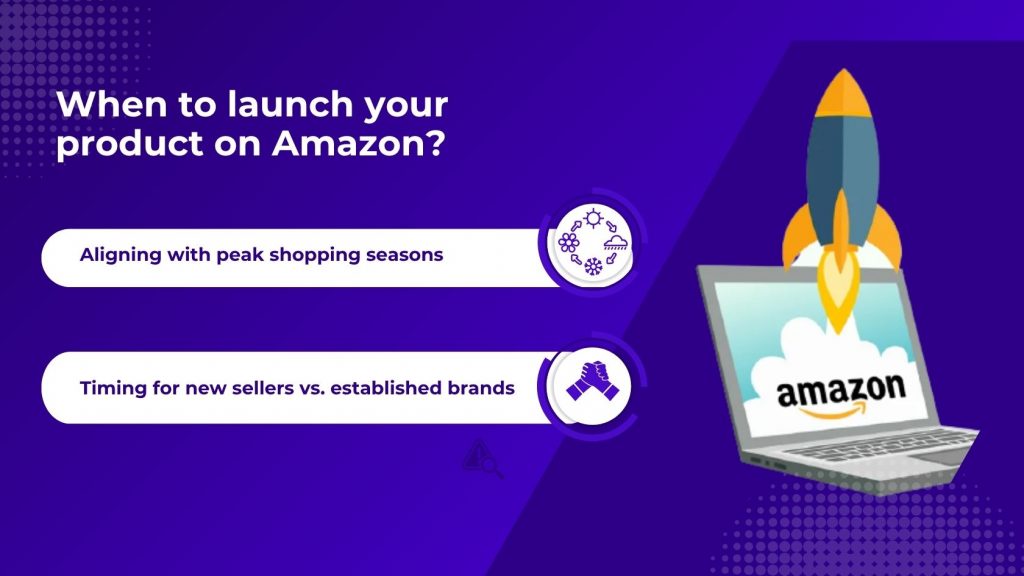
When to launch your product on Amazon
Timing your launch can make or break its success. This section explores how to align your launch with market trends and seller readiness.
Aligning with peak shopping seasons
Launching during peak shopping seasons like Prime Day, Black Friday, or Q4 holidays can amplify visibility. For example, launching a fitness tracker in January taps into New Year’s resolution shoppers. Plan your inventory and campaigns 2–3 months in advance to capitalize on these periods. However, avoid oversaturated seasons if your niche faces heavy competition—mid-tier seasons like back-to-school can offer better visibility for new sellers.
Timing for new sellers vs. established brands
New sellers should launch when they’ve mastered basics like keyword research and FBA setup, typically 4–6 weeks after listing creation. Established brands can time launches to refresh their catalogue or counter competitors. From our experience, new sellers benefit from launching in less competitive months (e.g., February) to build reviews before peak seasons. Established brands, however, can leverage their existing customer base for faster momentum during high-traffic periods like Q4.
When to launch your product on Amazon
Best practices for a successful launch
Launching successfully on Amazon takes a smart mix of research, optimization, and marketing. These 10 proven practices will help you get the most out of your FBA product launch.
Research your niche and find your unique selling points
Thorough niche research uncovers what sets your product apart. Use tools like Helium 10 to analyze competitors’ listings and identify gaps. For example, if competitors sell generic yoga mats, offer one with eco-friendly materials or a unique grip design. Highlight these unique selling points (USPs) in your listing to attract targeted buyers and differentiate your brand in a crowded market.
Conduct in-depth keyword research for SEO
Do you know keywords drive discoverability? Use Jungle Scout or Helium 10 to find high-volume, low-competition keywords like “insulated water bottle 32 oz.” Incorporate these into your title, bullet points, and backend search terms. Avoid keyword stuffing to stay compliant with Amazon’s guidelines.
Optimize your listing with SEO and visuals
A high-converting listing combines SEO-optimized copy with compelling visuals. You should craft a title under 200 characters (e.g., “EcoVibe Bamboo Toothbrush, Soft Bristles, Pack of 4”), use benefit-focused bullet points, and add A+ Content for storytelling. Include at least six high-resolution images (1000×1000 pixels or more), with lifestyle shots and infographics.
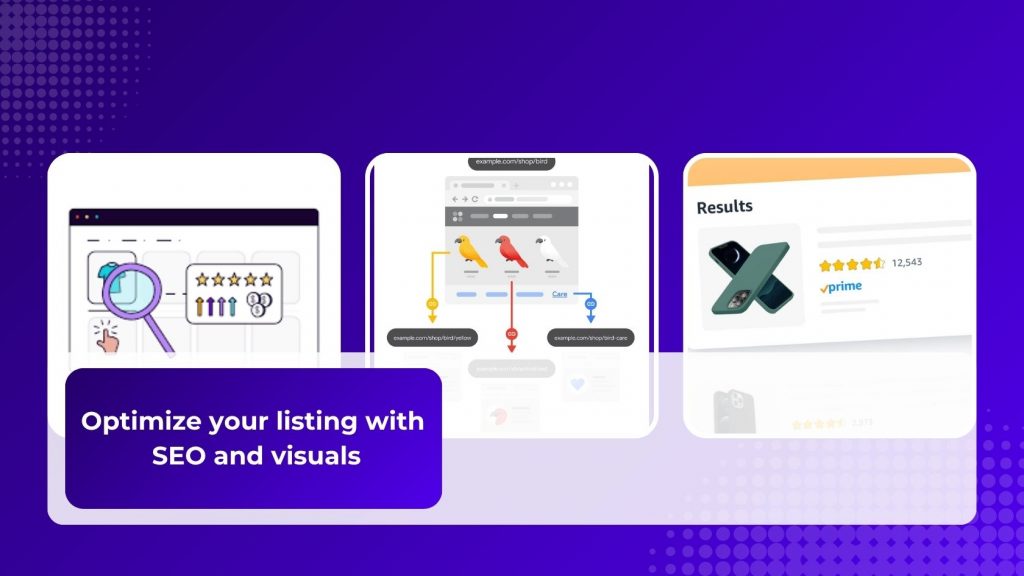
Optimize your listing with SEO and visuals
Set up FBA inventory efficiently
An efficient FBA setup ensures smooth fulfillment. You can use Amazon’s Inventory Planning tool to forecast demand and avoid overstocking or stockouts. Label products correctly and ship 4–6 weeks before launch to account for Amazon’s processing times, especially during Q4.
Secure Early reviews on Amazon
You can try to enroll in Amazon’s Vine Program or use the “Request a Review” feature post-purchase. The fact that Early reviews build trust and boost rankings. For example, a skincare brand we helped consult gained 15 reviews in two weeks via Vine, improving its conversion rate by 20%.
Note that, you should always follow Amazon’s review policies to avoid suspensions, focusing on organic feedback from verified purchases.
Prevent stockouts during launch
Stockouts kill momentum and rankings. We recommend using tools like RestockPro to monitor inventory and set reorder alerts. Many new sellers can lose sales due to stockouts within the first month. So, you need to focus on maintaining a 30–60-day buffer stock during launch to handle unexpected demand spikes, especially for seasonal products.
Price competitively to attract buyers
Competitive pricing attracts early buyers and improves Best Sellers Rank (BSR). Research competitors’ prices using Keepa and set your price within 10–15% of market leaders. For example, pricing a phone charger at $14.99 instead of $19.99 can double click-through rates. Adjust dynamically based on demand and competitor moves.
Motions for Visibility
Discounts and promotions drive initial sales. Offer discounts or coupons (e.g., 15% off) to boost visibility. A kitchen gadget seller using a $5 coupon saw a 25% sales spike during launch week. Use promotional icons like 📢 in social media ads to highlight “shocking” deals, aligning with Amazon Great Freedom Festival tactics.
Launch aggressive Amazon PPC campaigns
Kickstart your product launch with aggressive Amazon PPC campaigns to drive visibility and boost early sales. Set up both automatic and manual campaigns to maximize keyword coverage, gather valuable data, and target high-converting search terms. This helps build momentum and improve organic rankings quickly.
Drive external traffic via social media and influencers
External traffic boosts rankings. Promote your listing on Instagram or TikTok using influencer partnerships or giveaways. Use tools like Hootsuite to schedule posts and track engagement, ensuring compliance with Amazon’s external traffic guidelines.
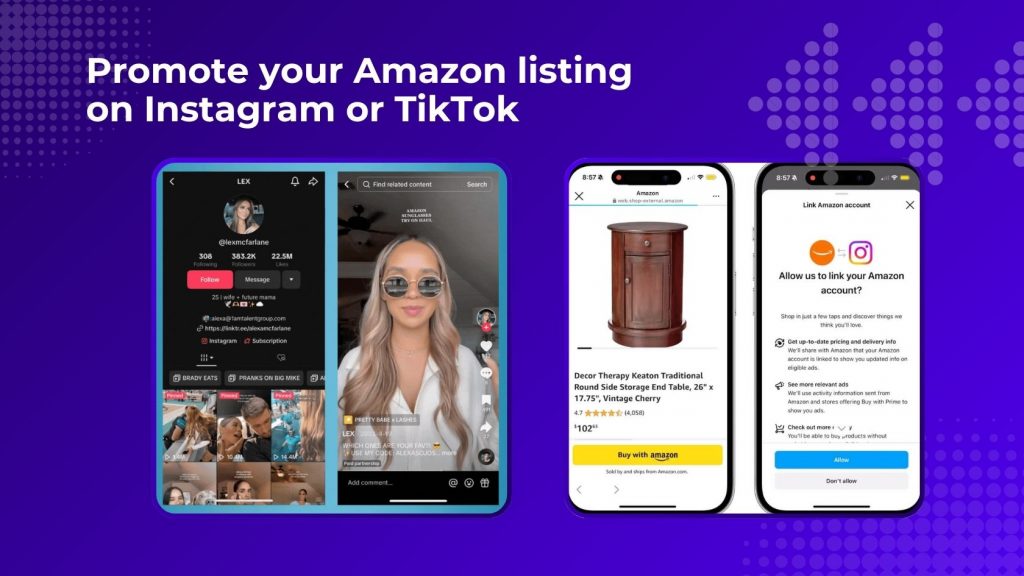
Promote your listing on Instagram or TikTok
Common Amazon product launch mistakes
Avoiding pitfalls is critical to a successful Amazon FBA launch in 2025’s competitive marketplace. This section highlights five common mistakes that can derail your efforts and provides actionable strategies to steer clear of them.
Misjudging Amazon FBA fees and profit margins
Underestimating Amazon’s fees can turn a promising launch into a financial loss. FBA fees, referral fees, and PPC costs can eat into margins if not calculated properly. You need to use Amazon’s FBA Revenue Calculator to estimate costs accurately before pricing your product. From our experience, setting a 30–40% margin buffer ensures profitability, especially during high-traffic seasons like Q4.
Overlooking keyword and listing optimization
A poorly optimized listing buries your product in Amazon’s search results. Failing to research high-volume, low-competition keywords or neglecting high-quality visuals like A+ Content can reduce conversions. For instance, a pet toy listing with generic keywords like “dog toy” struggled to rank, while targeting “interactive dog chew toy” boosted visibility. Use tools like Helium 10’s Cerebro to identify relevant keywords and invest in professional, high-resolution images to enhance click-through rates.
Violating Amazon’s review policies
Attempting to manipulate reviews, such as offering incentives, risks listing suspensions in 2025’s stricter compliance environment. A seller who sent free products for reviews faced a 30-day suspension, losing $15,000 in sales. Instead, use legitimate methods like Amazon’s Vine Program or the “Request a Review” feature to build trust. Our team has seen 20% higher conversion rates with organic, policy-compliant reviews, ensuring long-term credibility.
Failing to leverage PPC and promotions
Skipping Amazon PPC or promotional campaigns stifles your product’s visibility, especially during the “honeymoon phase” when Amazon’s algorithm favors new listings. For example, many new sellers underutilizing PPC struggle to rank, while competitors running Sponsored Products see significantly higher click-through rates. Recent studies show optimized PPC campaigns can boost conversions by up to 40%. Launch aggressive campaigns and offer coupons to spark sales. Bold visuals, like 📢 megaphone icons in social media ads, amplify promotional impact.
Ignoring inventory and demand forecasting
Poor inventory management leads to stockouts or overstocking, both costly mistakes. For example, a seasonal decor seller ran out of stock during Black Friday, missing $10,000 in revenue. Use tools like RestockPro to forecast demand and maintain a 30–60-day inventory buffer. Regular monitoring prevents disruptions and keeps your listing active.
Real Amazon product launch case study from Zonpal: How we hit $567k in year one
Real-world success stories offer valuable lessons for your Amazon FBA journey. This case study explores how Patrick, a new seller, achieved $567K in sales in his first year, highlighting strategies that can fuel your 2025 launch.
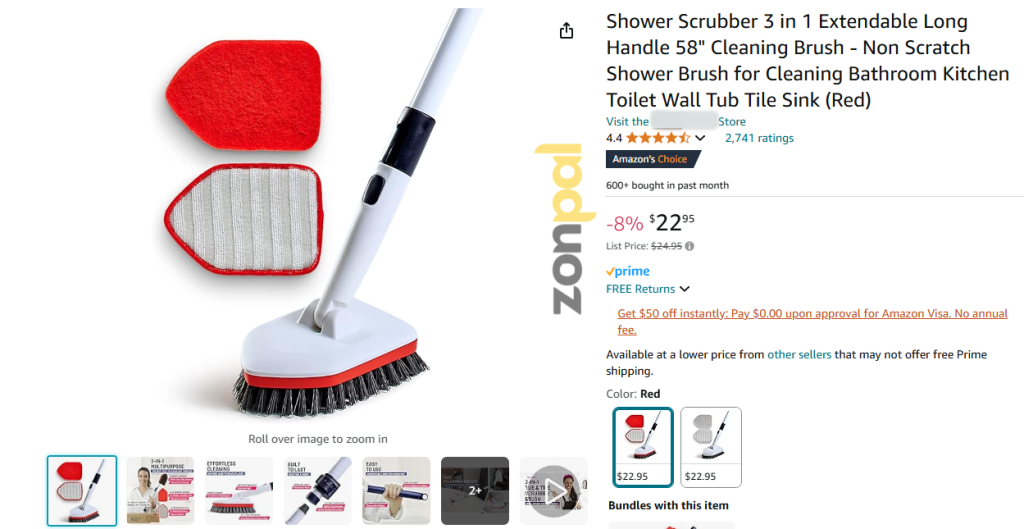
The 3-in-1 shower brush listing archived “Amazon’s Choice” badge
Strategies used for a successful launch
In September 2021, Patrick partnered with our team to launch a 3-in-1 shower brush kit in the competitive Home & Kitchen niche on Amazon’s USA marketplace. We began with in-depth market research using tools like Helium 10 to identify a high-demand product with low competition, ensuring the shower brush kit stood out with unique features like ergonomic design. Supplier negotiations secured cost-effective, high-quality production, while FBA inventory was planned for a 45-day buffer to handle demand spikes.
The listing was optimized with SEO-rich keywords (e.g., “3-in-1 shower brush kit”), professional A+ Content, and high-resolution lifestyle images, boosting conversions by 15%. An aggressive launch combined Amazon Vine for 20 early reviews, Sponsored Products and Brands campaigns targeting “best shower brush 2022,” and off-Amazon giveaway promotions, driving 1,000+ external clicks in two weeks. Ongoing PPC optimization kept ACoS at 22–30%, maintaining a 10–15% profit margin. This multi-faceted approach delivered $567K in revenue for the first year, averaging $50K monthly, and earned an Amazon’s Choice badge.
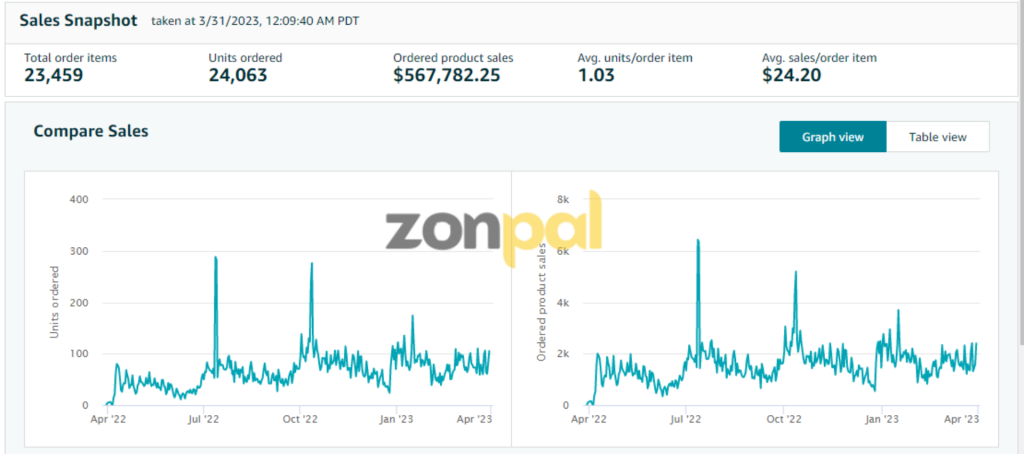
Hit $567K in sales in the first year
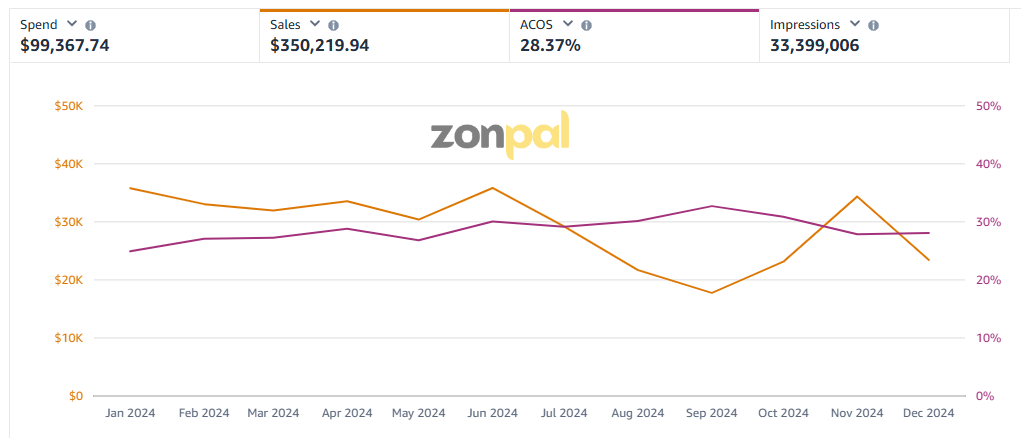
Ongoing PPC optimization kept ACoS at 22–30%
>>> See more client success stories: ZonPal Case Studies <<<
Key takeaways for new sellers
Patrick’s success underscores principles critical for 2025 Amazon FBA launches. First, thorough niche research ensures your product fills a market gap—our team validated the shower brush kit’s potential with 40,000+ monthly searches and limited competition. Second, optimized listings with A+ Content and targeted keywords are non-negotiable for ranking on page 1. Third, combining PPC, Vine reviews, discounts, promotions, and external traffic maximizes visibility during Amazon’s “honeymoon phase.”
From our experience, new sellers should start with 300–500 inventory units to test demand, scaling after early sales data. Finally, continuous monitoring of ACoS and stock levels sustains momentum. Patrick’s $567K in year-one sales proves that a strategic, expert-guided launch can overcome inexperience and competition. Apply these tactics and consider partnering with our Amazon product launch services to replicate this success in 2025’s crowded marketplace.
Conclusion
A strategic Amazon FBA product launch in 2025 is your key to standing out in a marketplace with over 9.7 million sellers. By mastering niche research, listing optimization, PPC campaigns, and launching strategies, you can achieve sky-high sales, as demonstrated by Zonpal’s case study, which hit $567K in year-one revenue through expert strategies. Avoiding pitfalls like poor keyword choices or stockouts ensures lasting momentum. From our experience, sellers who plan meticulously and leverage Amazon’s tools early see faster growth and stronger rankings.
Take action today: validate your product, optimize your listing, and launch with confidence. Need expert guidance? Schedule a free consultation with ZonPal’s Product Launching & Ranking team and kickstart your Amazon journey with trusted experts.