
By Vũ Duy | Founder, Zonpal | 8+ years Amazon FBA | 80+ international brands
I started selling on Amazon in late 2017. Since then, I have failed, recovered, and gone on to work with 80+ brands across the US, UK, Australia, and Canada.
In all those years, one pattern keeps showing up: most seller failures do not come from a bad product or insufficient capital. They come from mistakes that are entirely avoidable if you know what to look for.
This is not a theoretical list. These are things I have seen repeated across dozens of sellers, including myself in the early years.
Table of Contents
- Choosing products based on gut feeling instead of data
- Not understanding how Amazon’s rules actually work
- Investing in inventory but cutting corners on images and listing copy
- Not running PPC, or running it without understanding the numbers
- Not tracking performance metrics, or not knowing which ones matter
- Short-term expectations in a long-term game
- Trying to do everything alone when you can’t be strong at everything
Mistake 1: Choosing products based on gut feeling instead of data
This is the most common mistake I see, and it is also one I made myself early on.
A lot of sellers pick products by instinct: “This looks interesting, let’s try it.” Or they hear someone in a community say a certain niche is hot right now and jump in without checking the actual numbers.
Amazon does not run on gut feeling. Every niche is measurable: monthly unit volume, number of competitors holding the top spots, average margin, whether demand is seasonal. All of it can be quantified with tools like Helium 10 or Jungle Scout, or even Amazon’s own Product Opportunity Explorer in Seller Central.
The real problem is not a lack of tools. It is that many sellers skip the product research step entirely because it feels slow, or because they have already convinced themselves the product is right before looking at any data. Get this wrong and everything that follows becomes irrelevant.
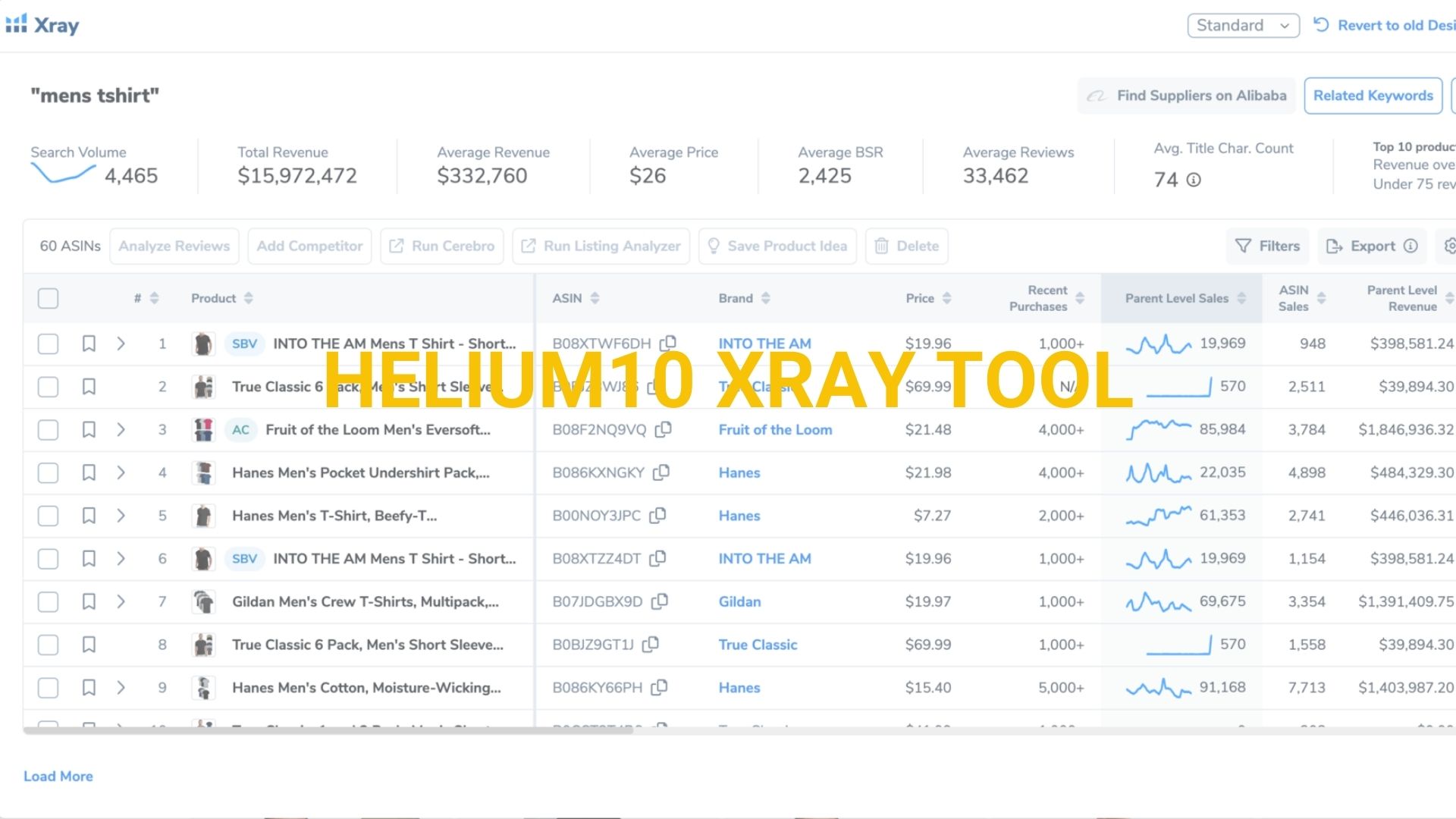
Helium10 Xray helps map pricing patterns, stock fluctuations, and search volume
Mistake 2: Not understanding how Amazon’s rules actually work
Amazon’s policies are detailed, and enforcement is strict. This is not a “first warning, then action” platform. One violation can take down a listing or get your entire account suspended.
I have seen accounts suspended because the main product image had a watermark. I have seen listings removed because the title contained a prohibited term the seller did not know about. I have seen health supplement sellers get blocked for missing category-specific certifications they were not aware they needed.
If you have sold on other platforms before, the level of tolerance you are used to does not apply here. Amazon’s policies vary by category and change regularly, so what was acceptable last year may not be today.
The simplest way to protect yourself: Before listing any product, read through Amazon’s Product Compliance Requirements for your specific category. If you are not sure about something, ask someone with experience before you submit, as dealing with a suspension after the fact takes far more time and effort than getting it right the first time.
Mistake 3: Investing in inventory but cutting corners on images and listing copy
On Amazon, shoppers cannot pick up your product. They make a buying decision based entirely on images and text. Yet many sellers spend thousands on manufacturing and shipping, then use phone photos, a rushed title, and bullet points copy-pasted directly from their supplier’s spec sheet.
The result is a listing that looks untrustworthy, a low conversion rate, and ad spend that produces impressions but no orders.
A real example from Zonpal:
We worked with a brand new Home & Kitchen brand on Amazon US, starting from scratch. One of the first priorities we pushed for was a professional photography set and A+ Content built out before the launch date, not after.
The product itself was not dramatically better than the competition. What was better was the listing: clearer, more professional, and immediately communicating what the customer was actually buying.
The result was $567K+ in sales in the first year with just 4 SKUs. The main listing earned Amazon’s Choice.
Listing creation and optimization is not a cost to minimize. It is the lever that determines whether all your other investment pays off.
Not sure where your listing stands? Zonpal offers a free listing audit with specific, actionable feedback – no vague generalities. Request your free audit here.
Mistake 4: Not running PPC, or running it without understanding the numbers
There are two groups of sellers who get this wrong.
The first group assumes a good product will sell itself and skips advertising entirely. That may have been true…several years ago. Today, a new product without Amazon PPC is essentially invisible, particularly in the early weeks when there is no sales history or review count for the algorithm to work with.
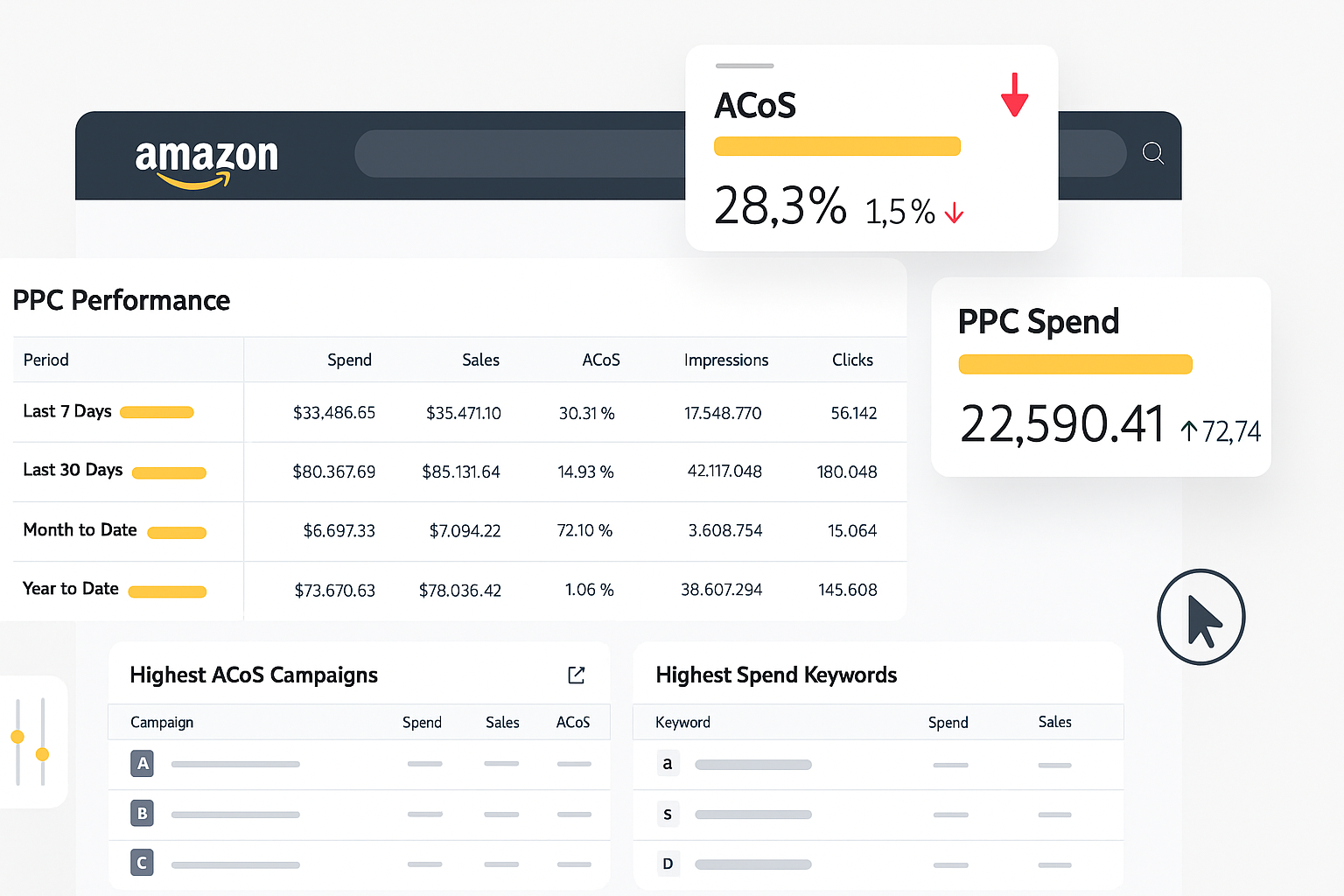
The second group does run ads, but treats them as a set-and-forget expense. No ACoS monitoring, no pausing underperforming keywords, no bid adjustments based on actual conversion data. The result is budget being spent with no clear picture of what is working or why orders are not coming in.
From direct experience: I once took over PPC management for a US client whose new product was losing money from day one of launch. After three months of restructuring the campaign architecture and tightening up the listing, the product moved from loss to breakeven, then into profit. It is still one of that brand’s core SKUs today.
Amazon PPC management is a skill that requires learning, consistent data review, and time to optimize. If you are new to it, start with a small budget and focus on understanding the reporting before you scale spend.
Mistake 5: Not tracking performance metrics, or not knowing which ones matter
Seller Central gives you a large amount of data. The problem is that most sellers open it, feel overwhelmed by the volume of numbers, and close it without acting on anything.
In practice, running a healthy Amazon account comes down to tracking a handful of core metrics consistently: CTR (click-through rate on your listing), Conversion Rate, ACoS, refund rate, and keyword ranking for your main product.
Those numbers tell you exactly where the problem is:
- Low CTR: usually means the main image is not compelling enough in search results
- Low Conversion Rate: usually means the listing copy or images are not convincing buyers once they land on the page
- High ACoS: usually points to campaign structure or bid levels that need adjustment
Without tracking these, you are making decisions blind. You might spend months optimizing the wrong thing while the real bottleneck sits untouched.
Mistake 6: Short-term expectations in a long-term game
Amazon is not TikTok Shop, where a single viral post can generate thousands of orders in a day. Amazon is a compounding platform: reviews, keyword rankings, and sales history all take time to build. The algorithm rewards consistency and track record, not sudden spikes.
When new clients start with us, one of the first things we align on is this: treat the first 12 months as foundation-building, not harvesting. Sellers who come in expecting profitability by month two or three often quit just as momentum is starting to build, which is the worst possible time to stop.
From the accounts Zonpal manages: It typically takes 6–12 months for a new listing to reach a stable orbit in terms of rank, sales volume, and review count. Only after that point does it make sense to focus on margin optimization and scaling. The sellers who win on Amazon are rarely the ones who moved fastest. They are the ones who stayed in long enough.
Mistake 7: Trying to do everything alone when you can’t be strong at everything
Amazon FBA involves a lot of moving parts: product research, sourcing, listing creation, product photography, PPC management, account management, inventory logistics, and customer issue resolution. Each of those requires distinct knowledge and skills.
Most people can do two or three of them well. Very few can do all of them at a high level. And yet many sellers try to handle everything themselves, or hand things off to someone without relevant experience, primarily to keep costs down.
That approach typically produces one of two outcomes: a listing that cannot compete because key elements were never properly optimized, or a policy violation somewhere in the process that leads to a listing removal or account suspension.
I am not saying this to sell services. I am saying it because I tried to do everything myself for years and spent three of them losing money. Knowing your strengths, and knowing when to bring in someone who is better positioned to handle a specific part of the operation, is part of running a serious business. That might be a specialist, a freelancer, or an experienced Amazon agency, the form matters less than the decision to stop carrying every function alone.

The short version: 7 things to avoid as an Amazon FBA seller
- Base product decisions on data, not intuition or community hype
- Read Amazon’s compliance requirements for your category before you list anything
- Invest seriously in product images and listing copy from the start, not as an afterthought
- Run Amazon PPC with a strategy and review the numbers regularly
- Track CTR, Conversion Rate, and ACoS so you can identify where the real problem is
- Plan for 6–12 months of foundation-building before expecting consistent profitability
- Know when to bring in outside expertise rather than stretching yourself across every function
Amazon remains a genuine opportunity. But the environment is significantly more competitive than it was five to seven years ago. The sellers who succeed are not the ones with the cheapest products. They are the ones who understand how the platform works, prepare properly, and stay consistent long enough to see the results compound.
If you are in the early stages of selling on Amazon, or hitting a wall in a specific area and want a second opinion, Zonpal offers a free account audit for eligible sellers and brands. We look directly at your listing, PPC setup, and account health, identify what is holding you back, and give you specific recommendations, not generic advice.
Book your free Amazon account audit with Zonpal
Related reading: