
By Vũ Duy | Founder, Zonpal | 8+ years running Amazon FBA accounts across the US, UK, and Australia
Every year, a new wave of people asks the same question: what is Amazon FBA, and is it still worth starting in 2026? I get this question from sellers based in Vietnam who want to go global, and from US-based founders who already sell online but have never touched Amazon.
The short answer is that Amazon FBA (Fulfillment by Amazon) is a service where you send inventory to Amazon’s warehouses, and Amazon handles storage, packing, shipping, customer service, and returns for every order. You focus on sourcing, branding, and demand. Amazon runs the logistics.
That definition is accurate, but it tells you almost nothing about how the model actually behaves once real money is involved. After 8 years of running FBA accounts and working with dozens of brands, here is what the model actually looks like from the inside.
What Amazon FBA actually means in practice
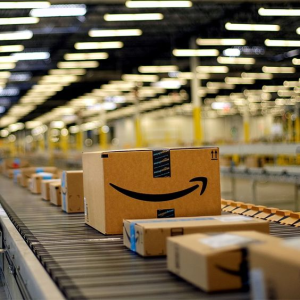
Amazon FBA is not a marketing channel. It is a fulfillment and logistics infrastructure that you rent access to. You still need a product, a brand, a listing, and a way to generate demand. Amazon just removes the operational burden of getting that product into a customer’s hands.
Here is what Amazon takes care of once your inventory arrives at their warehouse:
- Storage across their fulfillment network
- Pick, pack, and ship for every order
- Customer service for shipping-related questions
- Returns processing and restocking (when eligible)
- Prime eligibility, which affects both conversion rate and organic ranking
That last point matters more than most new sellers realize. Prime eligibility is not just a badge. It changes how Amazon’s algorithm treats your listing, and it changes buyer behavior at the point of purchase. Products with the Prime badge convert at meaningfully higher rates than the same product sold without it, simply because Prime members have already built the habit of filtering for that badge.
What FBA does not do is pick your product, write your listing, run your ads, or manage your reviews. Those are still entirely on you, or on whoever runs your account.
How the model works day to day
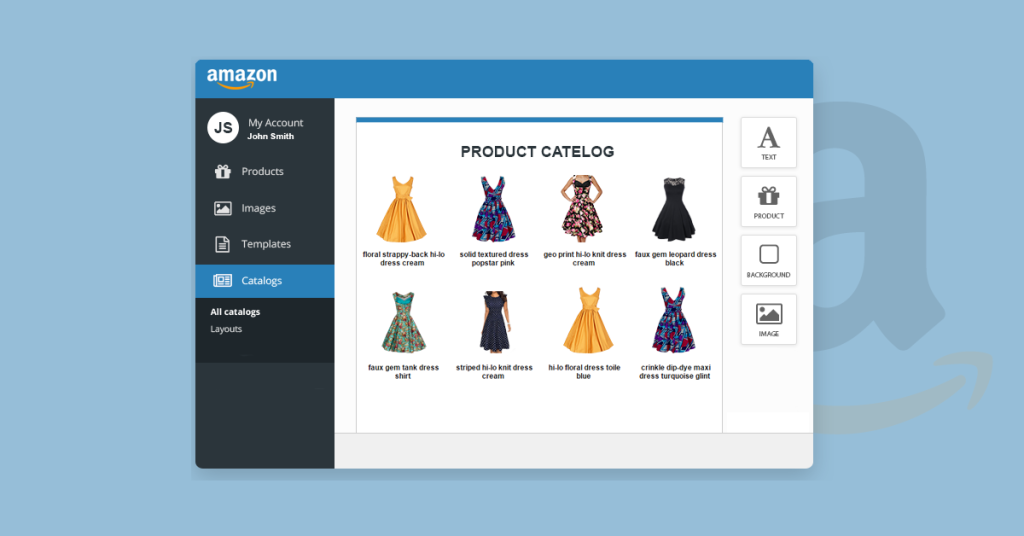
On paper, the flow looks simple: source a product, create a listing, ship inventory to Amazon, let orders come in. In practice, running FBA well means managing several moving parts at once, and most of the failure points happen in the gaps between them.
A typical operating cycle looks like this:
- Sourcing and manufacturing, usually with lead times of 30 to 60 days depending on the product and factory
- Inbound shipment planning, deciding how much inventory to send and to which fulfillment centers
- Listing optimization, covering images, title, bullet points, backend keywords, and A+ Content
- Demand generation, primarily through Amazon PPC and external traffic
- Inventory monitoring, tracking sell-through rate so you neither stock out nor overpay for storage
- Review and reputation management, since social proof directly affects conversion rate
Each of these steps has its own failure mode. Order too much inventory and you pay long-term storage fees on stock that sits idle. Order too little and you go out of stock right as your ranking starts to build, which can undo weeks of momentum in a few days. We have seen this exact scenario play out with accounts before we took them over: a strong launch, a stockout at week six, and a ranking drop that took two months to recover from.
This is why product research is not a one-time task you do before launch. It is an ongoing discipline that touches sourcing decisions, reorder timing, and even how you price against competitors. If you are still at the stage of validating whether a product idea has real demand, our product research process is built around exactly this kind of continuous validation, not a single spreadsheet exercise done once.
What Amazon FBA actually costs
This is the part most beginners underestimate. Amazon FBA involves several layers of fees, and they stack on top of each other before you ever see a profit.
The main cost categories are:
- Referral fees: a percentage of each sale, generally in the range of 8 to 17 percent depending on category, with most categories falling around 15 percent
- FBA fulfillment fees: charged per unit based on size and weight, covering pick, pack, and ship
- Storage fees: monthly charges based on cubic footage, which increase during the fourth quarter
- Long-term storage fees: penalties applied to inventory that sits in Amazon’s warehouses beyond a certain number of days
- Advertising spend: not a mandatory fee, but for most competitive categories, running PPC is effectively required to get initial traction
Add these together and a product that looks profitable on a spreadsheet with just “cost of goods plus shipping” can end up breaking even, or worse, once the full fee stack is applied. We have reviewed new seller accounts where the founder had never modeled referral fees and FBA fulfillment fees together, and the real margin was less than half of what they expected.
The practical takeaway: before you commit to a product, build a full landed cost model that includes referral fees, fulfillment fees, estimated PPC spend as a percentage of revenue, and a buffer for storage during peak season. If the margin still works after all of that, you have a real product. If it only works before fees, it is not ready yet.
Where sellers get this wrong
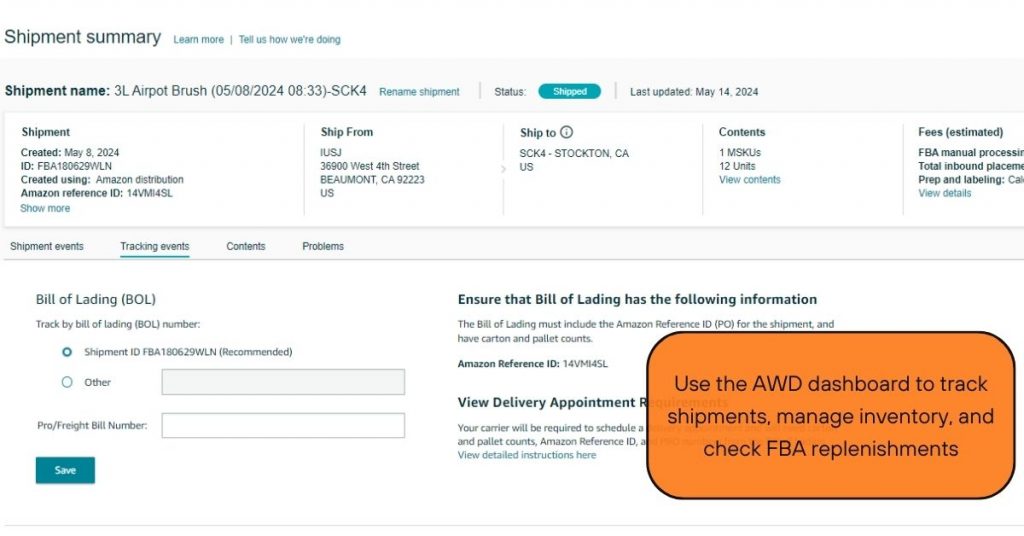
Across 8 years and 80-plus brands, the mistakes repeat themselves with remarkable consistency. A few show up more often than the rest.
Treating FBA as passive income. Amazon FBA is a real operating business. It requires inventory planning, cash flow management, and constant listing maintenance. The “set it and forget it” version of this model does not hold up once competition increases in your category.
Underinvesting in the listing itself. Sellers will spend thousands of dollars on inventory and then use phone-camera photos and a rushed title. On Amazon, your listing is your entire storefront. A weak main image can cost you conversion rate that no amount of ad spend will fix.
Ignoring cash flow timing. You typically pay your supplier upfront or with a deposit, wait for production and shipping, then wait again for Amazon to pay out your sales on their biweekly cycle. Sellers who do not plan for this gap often run into working capital problems even when the underlying product is selling well.
Running PPC without understanding the numbers. Turning on Amazon PPC without a target ACoS, without organized campaign structure, and without regular bid adjustments is one of the fastest ways to burn cash without building sustainable rank. This is one of the reasons we built out a dedicated PPC management process instead of treating advertising as an afterthought.
Is Amazon FBA still worth it in 2026?
Yes, but the bar for entry has moved. In 2018, a decent product with a basic listing could rank on the strength of price and a few reviews. That is no longer enough in most categories.
What has changed is the level of competition and the sophistication required to compete. Categories that were wide open in 2018 to 2020 are now dominated by sellers who understand data, run tight inventory models, and invest properly in brand assets. That does not mean the opportunity is gone. It means the operator matters more than it used to.
Amazon FBA still gives independent sellers and small brands access to a distribution network and customer base that would otherwise take years to build on their own. The infrastructure Amazon provides, from Prime shipping to payment processing to customer trust, is still one of the fastest ways to get a physical product in front of buyers who are actively searching to buy. The model works. It just requires more discipline to execute than it did five years ago.
How to apply this if you are just starting out

If you are still deciding whether to start, here is the order we would recommend working through, based on what tends to separate accounts that survive their first year from ones that do not.
- Validate demand with real data before committing to a product, not gut feeling
- Build a full cost model including every fee layer, not just cost of goods
- Plan your first 90 days of cash flow, including the gap between paying suppliers and receiving Amazon payouts
- Treat your listing (images, title, copy) as a core investment, not an afterthought
- Set up PPC with a clear target ACoS from day one instead of adjusting blind
None of these steps are complicated on their own. What is difficult is doing all of them consistently while also sourcing, managing inventory, and handling the operational load of a growing account. That combination is exactly where most first-time sellers lose momentum.
Final thoughts
Amazon FBA is a real business model with real infrastructure behind it, not a shortcut and not passive income. Understood correctly, it gives independent brands a distribution channel that took Amazon decades and billions of dollars to build. Understood incorrectly, it becomes an expensive lesson in cash flow and fee structures.
If you are weighing whether to start, or whether your current account needs a different operating approach, it helps to talk to people who have actually run these accounts day to day. You can learn more about how our team approaches this work, and the brands we have worked with, on our about us page.