
If you’re running an e-commerce business, you’ve probably heard of the term SKU, one of the most important elements in product and inventory management.
Although it looks like just a small code, the SKU (Stock Keeping Unit) is actually the backbone of your inventory system, helping you track stock efficiently, reduce errors, and optimize your sales operations.
So what exactly is an SKU? Why is it so critical for sellers on Amazon and other e-commerce platforms? And how can you create a proper SKU system that simplifies inventory control?
Let’s explore with Zonpal, an Amazon-focused agency specializing in FBA and FBM solutions.
1. What Is an SKU?
SKU (Stock Keeping Unit) is a unique identifier assigned to each product variation to distinguish and manage them within a business’s inventory system.
Each SKU is made up of a combination of letters, numbers, and characters, representing product-specific details such as:
- Product type
- Color
- Size or dimensions
- Product line or warehouse location
Example:

A set of 2 loofah sponges sized 16 x 12 cm could have an SKU like BT1612-002.
This code allows you to instantly identify product details without needing to check the physical label, making your inventory system faster, more accurate, and easier to scale.
2. What’s the Difference Between SKU, Barcode, and ASIN on Amazon?
This is one of the most common questions that new Amazon sellers often get confused about, especially when they first start managing their product listings and inventory. Many beginners assume that SKU, Barcode, and ASIN are the same thing, since all of them involve numbers and product identification.
However, each serves a different purpose and operates at a different level in the e-commerce ecosystem.
While the SKU helps you organize and manage your own stock internally, the Barcode (UPC/EAN) is used globally for retail scanning and product identification, and the ASIN is Amazon’s unique code to display and track your product listings within its massive marketplace.
Understanding these differences from the start will save you time, prevent listing errors, and help you manage your Amazon FBA or FBM business more efficiently in the long run.:
| Term | Full Name | Main Function | Created By |
| SKU | Stock Keeping Unit | Internal code used to manage and track products in your own inventory system | Created by the seller |
| Barcode (UPC/EAN) | Universal Product Code / European Article Number | Global standard code used for retail identification and scanning | Issued by GS1 or the manufacturer |
| ASIN | Amazon Standard Identification Number | Amazon’s unique identifier for products listed on the platform | Assigned by Amazon |
In short:
- SKU is your internal tracking code.
- Barcode / UPC is the global retail code used worldwide.
- ASIN is the Amazon-specific code used for product search and display within Amazon’s ecosystem.
3. Why Are SKUs So Important in E-Commerce and on Amazon?
In the fast-paced world of e-commerce, proper inventory management can make or break a business. For sellers on Amazon, where competition is fierce and efficiency is everything, Stock Keeping Units (SKUs) play a critical role in keeping operations organized, accurate, and scalable.
Let’s break down why SKUs are more than just product codes, they are the foundation of a smooth-selling business.
3.1. Efficient and Accurate Inventory Management
When you manage hundreds or even thousands of products, an SKU system allows you to instantly know what products are in stock, where they are located, and when to restock.
Without a well-structured SKU setup, you risk creating chaos in your fulfillment process.
On Amazon, poor SKU management can lead to:
- Shipping the wrong product to customers.
- Running out of stock without realizing it.
- Struggling to track revenue and sales by individual product lines.
By contrast, a clear SKU system provides visibility and control — ensuring your Amazon store runs like a well-oiled machine.
3.2. Streamlined Operations and Smarter Reporting
Each SKU acts as a data point in Amazon’s Seller Central system.
It helps Amazon and you automatically generate key operational metrics such as:
- Inventory levels by region,
- Sales performance per SKU, and
- Profit margins per product.
With this data, sellers can easily identify:
- Which products are selling fast,
- Which need improvement in pricing, content, or visibility, and
- Which should be discontinued to cut losses.
Having these insights allows for data-driven decision-making, not guesswork, helping you scale smarter, not harder.
3.3. Supporting Logistics and Fulfillment
For sellers using Amazon FBA (Fulfillment by Amazon), SKUs are the core of how Amazon handles your inventory.
Every item that enters Amazon’s warehouse is scanned, stored, and tracked using its SKU code.
Amazon uses your SKU to:
- Identify and store products in the correct warehouse.
- Match inventory with customer orders for fast delivery.
- Track returns and refunds accurately through the fulfillment network.
If your SKUs are duplicated or incorrect, Amazon’s system might mislabel, misplace, or delay your shipments, resulting in lost time, lower performance scores, and frustrated customers.
4. The Structure of a Standard SKU Code
There are no universal rules for creating SKUs, but a well-structured SKU should typically include 3–5 core pieces of information that make it easy to read, understand, and manage at a glance.
At Zonpal, we recommend using a clear and scalable format like this:
[Brand] – [Product] – [Variant / Size / Color] – [Content or Batch]
Example: ZP-MUG-BL-01
Explanation:
- ZP: Zonpal (brand name)
- MUG: Product type (Mug)
- BL: Color (Black)
- 01: Quantity per unit or product batch number
Advantages of This System:
- Easy to read, easy to expand: Anyone in your team can instantly identify product details.
- Cross-platform compatible: Works seamlessly across Amazon, Shopify, ERP systems, and other sales platforms.
- Ideal for scalability: Perfect for businesses managing multiple brands, regions, or product lines.
A good SKU system doesn’t just keep your catalog organized — it creates a foundation for automation, efficiency, and global expansion.
5. Key Principles for Creating and Managing SKUs
In e-commerce, especially on Amazon, a Stock Keeping Unit (SKU) serves as the unique identifier for every product across your entire inventory and sales management system.
A well-structured SKU system is more than just an internal code, it’s the foundation of efficient operations.
When built properly, it enables you to:
- Track inventory accurately across warehouses and platforms.
- Streamline fulfillment and daily operations.
- Prevent stock discrepancies and product mix-ups.
- Simplify data analysis for better business decisions.
On the other hand, a poorly designed or inconsistent SKU system can lead to inventory errors, product confusion, inaccurate reports, and even wasted ad spend.
In short, your SKU system determines how smoothly your entire e-commerce business, from warehouse to marketing, runs every day.
To ensure efficient and accurate management, sellers should follow these essential principles when creating and maintaining SKUs:
5.1. No Duplicates
The first and most important rule: every Stock Keeping Unit (SKU) must be unique.
An SKU is a product’s unique identifier — even if two items differ only by color, size, or version, each must have its own SKU.
Example:
- Black T-shirt, size M → ZP-TEE-BK-M
- Black T-shirt, size L → ZP-TEE-BK-L
If you accidentally assign the same SKU to multiple products, the system may merge inventory data incorrectly, leading to mismatched quantities between what’s actually in stock and what appears on your online listings.
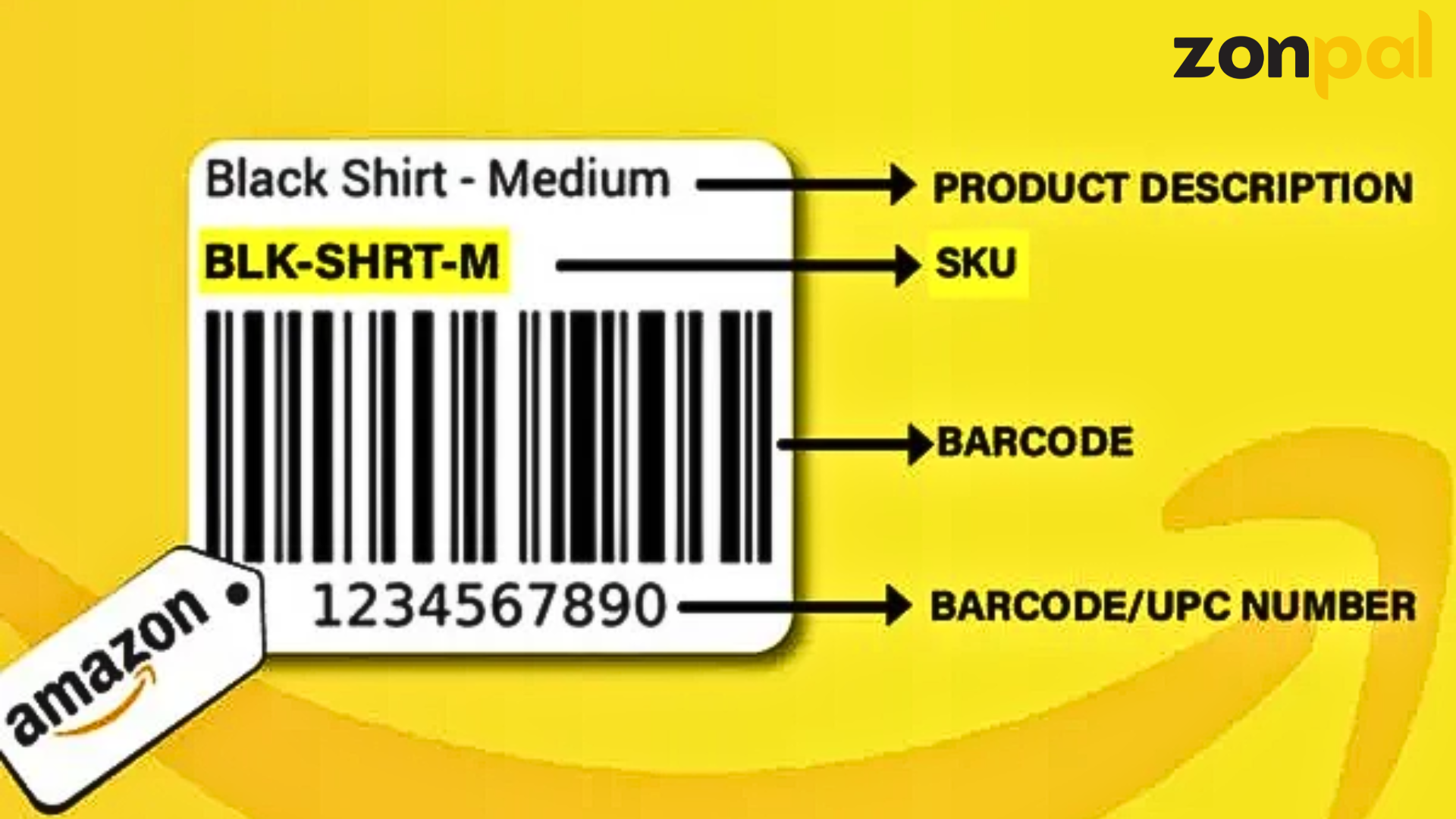
An SKU isn’t just a random code! It’s a structured, logical, and systematic sequence of characters designed for efficient tracking.
This is especially risky for multi-channel sellers (Amazon, Shopee, TikTok, Shopify, etc.), where all platforms synchronize through one inventory management software — a single duplicated SKU could disrupt your entire fulfillment workflow.
5.2. Keep the Format Consistent
A good SKU system isn’t just accurate — it’s consistent.
For example, if you use a dash “-” to separate elements (like ZP-MUG-BL-01), make sure every other SKU follows the same structure.
Define your structure early on, such as:
[Brand Code] – [Category] – [Color] – [Size or Variant] – [Sequence Number (if needed)]
Example:
- ZP-MUG-BL-01 → Black mug, model 01
- ZP-MUG-WH-02 → White mug, model 02
Maintaining a consistent format makes it much easier to filter data, restock, audit, and generate reports accurately.
Moreover, if multiple team members manage the catalog, a unified format minimizes input errors and keeps your database clean.
5.3. Avoid Special Characters
Amazon and most inventory management platforms (ERP, OMS, or Fulfillment systems) do not accept special characters like #, /, @, *, !, or spaces.
These symbols can cause system errors, break formatting, or fail to process when exporting data to Excel, CSV, or syncing via APIs across marketplaces.
Restrict your SKU structure to:
- Uppercase letters (A–Z)
- Numbers (0–9)
- Hyphens (-)
✅ Correct example: ZP-HAT-BK-01
❌ Incorrect example: ZP#HAT/BLACK*01
Following this rule ensures your SKUs work seamlessly across platforms — Amazon, eBay, Shopify, TikTok Shop, and more — without technical issues.
5.4. Easy to Read and Remember
Remember: SKUs are created for people, not just machines.
If your SKU is too long or complex (e.g., A000XZ12C8), your warehouse, marketing, or logistics teams will struggle to recognize the product quickly.
A good SKU should allow anyone to identify the product at a glance.
Example: ZP-CUP-GLD-01 is far easier to understand than ZPCPG1A101.
Clarity beats complexity — especially when managing hundreds or thousands of SKUs.
Simplified codes make everyday tasks like inventory checks, fulfillment, and reporting much faster and more accurate.
5.5. Link SKUs with Barcode (UPC/EAN)
For international sellers, mapping internal SKUs with global Barcode systems (UPC, EAN, or FNSKU) is essential.
Every product listed on Amazon requires a global identifier so the FBA (Fulfillment by Amazon) system can scan and process inventory accurately.
If your SKU isn’t correctly mapped to its corresponding barcode, the system may:
- Ship the wrong product to customers.
- Update incorrect stock quantities.
- Trigger “inventory mismatch” errors in Seller Central.
Always ensure that every SKU in your catalog has a corresponding Barcode stored in an internal mapping sheet (e.g., Google Sheets or warehouse management software).
This ensures smooth logistics synchronization, tracking, and fulfillment across all your selling channels.
6. How Amazon Handles SKUs in Seller Central
Within Amazon’s Seller Central system, every time you create a new product listing, Amazon will ask you to enter an SKU.
If you skip this step, Amazon will automatically generate a random SKU for your listing.
You should have a unique SKU for your product on Amazon.
While this might seem convenient, it’s not recommended, because once your catalog expands, these random SKUs make it extremely difficult to manage, organize, or scale your business efficiently.
When working with professional partners like Zonpal, our expert team helps you:
- Build a structured and logical SKU system right from the start.
- Link each SKU with the correct fulfillment model — FBA (Fulfilled by Amazon) or FBM (Fulfilled by Merchant).
- Synchronize SKUs with logistics, reporting, and analytics systems for seamless operations.
With a well-optimized SKU structure, you can confidently manage thousands of products on Amazon without confusion, data errors, or inventory control issues, ensuring your business scales smoothly and sustainably.
7. Zonpal’s Role in Amazon SKU and Inventory Management
With years of experience managing hundreds of international Amazon stores, Zonpal understands that effective SKU management isn’t just about creating codes — it’s about building a systematic operational mindset.
How Zonpal Supports Vietnamese Brands:
- Design internationally standardized SKU structures.
- Optimize warehouse and logistics systems for both FBA (Fulfilled by Amazon) and FBM (Fulfilled by Merchant).
- Integrate SKUs across platforms — from Amazon Seller Central to Google Sheets, ERP systems, and internal reporting tools.
- Train internal teams on smart warehouse management and SKU best practices.
The Results:
By applying Zonpal’s SKU and warehouse management system, brands can:
- Reduce inventory and fulfillment errors by 30–40%.
- Save time in reconciliation and inventory tracking.
- Accelerate fulfillment processes and ensure accurate sales reporting across all channels.
Conclusion
The SKU system is the backbone of every inventory operation in e-commerce.
On Amazon, a well-structured SKU strategy not only reduces costs but also provides a scalable foundation for long-term growth.
If you’re building your Amazon store and want to systematize your product management and operations, Zonpal is ready to partner with you — from SKU strategy and inventory setup to complete FBA/FBM management.
Zonpal – From Vietnam to Global
Empowering Vietnamese brands to manage inventory smarter, sell more efficiently on Amazon, and grow sustainably on the global stage.