
When we first reviewed this account, it was doing under $3,000 AUD a month in an Amazon Australia marketplace category with clear demand. Two months later, that same account was generating close to $480,000 AUD in monthly revenue: a 162x increase. No new product launch, no viral moment, no paid influencer campaign. Just a structured operational rebuild.
This is the story of what was actually broken, what we changed, and why most sellers looking to scale in Australia never get here. If you are evaluating whether to bring in outside help for your Amazon account, this breakdown should give you a clear sense of what real operational work looks like, and what to ask any agency before you sign a contract.
The starting point: a healthy product, a broken account
The brand had a solid product with decent reviews (4.3 stars, around 90 ratings) and reasonable margins on paper. The problem was not the product. The problem was everything around it.
When we ran our initial audit, we found:
- PPC campaigns running with no negative keyword structure, burning spend on irrelevant search terms
- A main image that failed to meet Amazon’s current image guidelines, which was suppressing organic visibility
- Inventory gaps that had triggered stranded units and long-term storage fees
- A listing with no A+ content and a title stuffed with keywords in a way that hurt readability and conversion
- Backend search terms left mostly blank
None of these issues individually would tank an account. Together, they compounded. The account was essentially invisible to both Amazon’s algorithm and to shoppers who did land on the page. This is a pattern we see often with brands who launched well, then plateaued because nobody owned the ongoing account health.
Why 90% of “growth stalls” are operational, not product problems
We want to be direct about this because it matters for how you evaluate any partner: most stalled Amazon accounts are not failing because the product is bad. They are failing because of operational neglect that accumulates over 6 to 18 months.
Sellers running accounts solo, or working with a virtual assistant handling a dozen disconnected tasks, rarely catch these issues early. A suppressed listing does not send an alert. A poorly structured PPC campaign does not announce that it is wasting 40% of spend. You have to know where to look, and you have to look regularly.
This is the core argument for bringing in a dedicated operator: not because you cannot learn Amazon yourself, but because catching these issues before they compound requires consistent, structured attention that most in-house teams cannot sustain alongside everything else running a brand demands.
The 90-day plan: what we actually did
We did not run a single “big fix.” We ran a sequenced plan across three phases, because fixing everything at once on Amazon usually causes more damage than it solves. Changing too many variables simultaneously makes it impossible to know what is actually driving results, and can trigger algorithm resets that hurt ranking further.
Phase 1: Stop the bleeding (days 1 to 14)
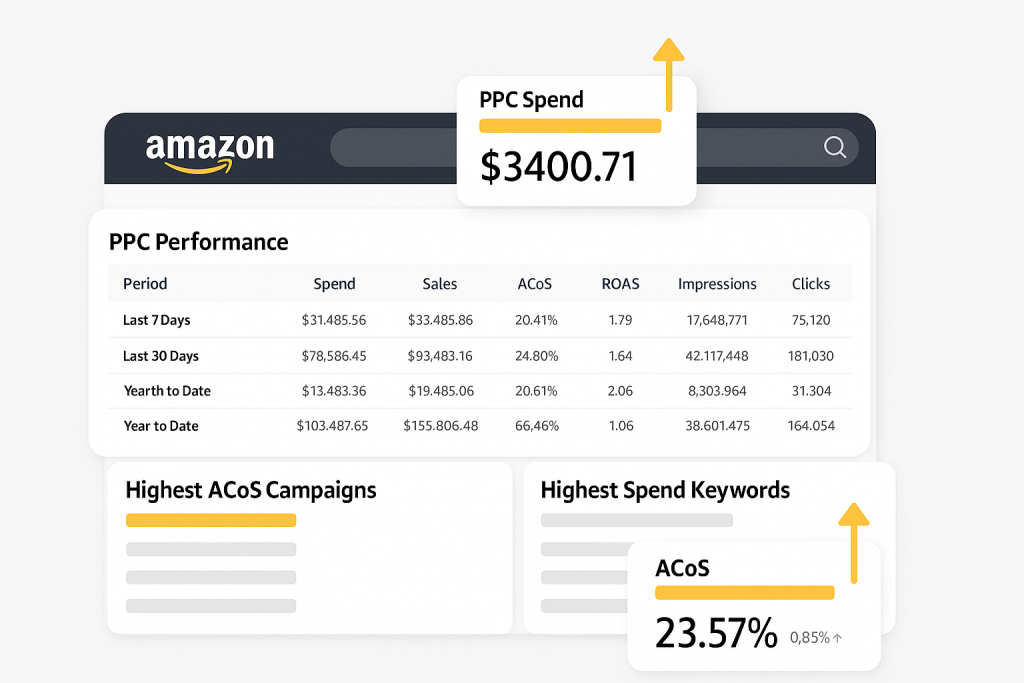
We paused underperforming PPC campaigns, rebuilt the negative keyword list, and fixed the compliance issue on the main image. We also cleared the stranded inventory and resolved the long-term storage fee triggers. This phase is not glamorous, but it stops active losses before you invest in growth.
Phase 2: Rebuild the foundation (days 15 to 45)
This is where most of the structural work happened. We rewrote the listing from the title down: search-intent-driven title, benefit-led bullet points, and a full backend search term overhaul using data from Amazon’s own search query performance reports. We built out A+ content with comparison charts and lifestyle imagery, since the brand had never used this feature despite being eligible.
We also restructured PPC from scratch into a tiered campaign architecture: separate campaigns for branded, high-intent exact match, broad discovery, and defensive competitor targeting. Budget allocation shifted from a flat spend across everything to weighted spend based on actual conversion data pulled weekly.
Phase 3: Scale what works (days 46 to 60)
Once we had clean data showing which keywords and placements converted, we scaled budget aggressively into those specific campaigns while keeping discovery campaigns running at a controlled spend to keep finding new converting terms. We also pushed inventory levels up to match the new demand curve, coordinating restock timing so the account never went out of stock during the ramp.
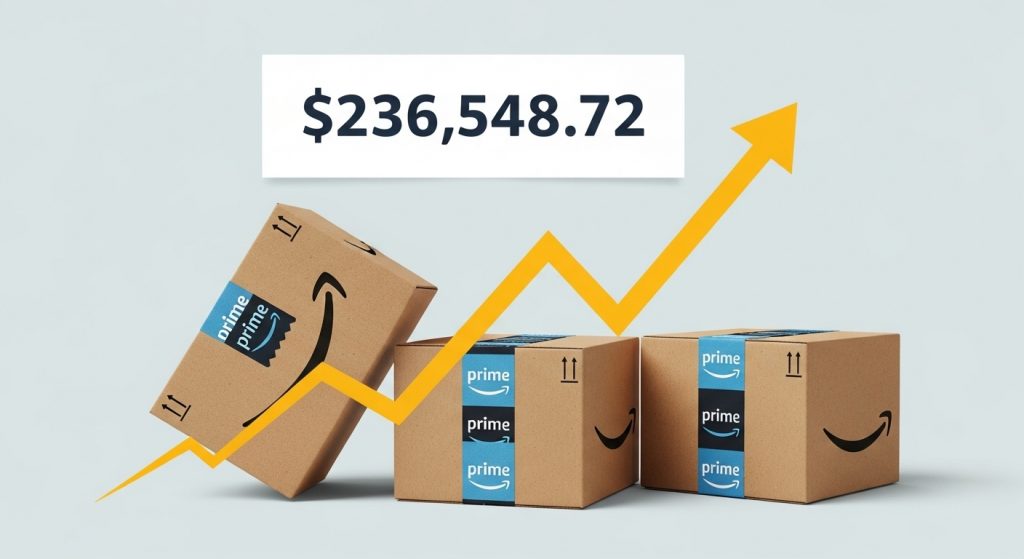
By day 60, the account had gone from under $3,000 AUD a month to close to $480,000 AUD in monthly revenue. Advertising cost of sales (ACOS) dropped from over 55% to under 18% over the same period, meaning the growth was not simply bought with unsustainable ad spend. It was profitable growth.
What made this possible: the checklist we run on every account
We are sharing this because it is exactly what you should expect any agency to be doing for you, and what you should ask about before signing with one. If a prospective partner cannot answer these questions clearly, that is a signal.
- Do they run a full audit before proposing any strategy? If a company quotes you a growth plan before reviewing your account data, be cautious.
- Do they separate diagnosis from execution phases? Fixing issues in sequence, not all at once, protects your ranking during the transition.
- Do they show you weekly conversion and ACOS data, not just top-line revenue? Revenue growth funded by unsustainable ad spend is not real growth.
- Do they coordinate inventory planning with demand forecasting? Scaling PPC into an account that goes out of stock two weeks later wastes the entire ramp.
- Can they explain, in plain language, why a listing is underperforming? If the answer is vague, the diagnosis was probably vague too.
We cover this checklist in more depth in our guide to Amazon account management services, if you want a fuller breakdown of what full-service management should actually include.
The ROI conversation sellers should be having
A common objection we hear from brand owners considering outside help is cost. It is a fair question. But the framing usually needs to shift.
In this case, the account moved from under $3,000 AUD a month to $480,000 AUD a month in two months. Even accounting for a meaningful management fee and increased ad spend, the return dwarfed the investment many times over. The real cost was not the agency fee. The real cost was the 12 to 18 months the account had already spent stagnant before we got involved.
This is the math we encourage every seller to run before deciding whether to manage an account solo, hire in-house, or bring in an agency: what is 12 more months of a flat or declining account actually costing you, compared to the cost of fixing it properly now? We walk through this calculation in more detail in our piece on Amazon PPC management: agency versus in-house, which covers the tradeoffs in both directions honestly, including where in-house makes sense.
What this means if you are evaluating an agency right now
Not every account has 162x sitting untapped. This case is a strong result specifically because the underlying product and market demand were already solid, and the account had simply never been operated properly. If your product has weak reviews, a saturated category, or genuine demand problems, no operational fix will produce this kind of jump, and any agency claiming otherwise should raise red flags.
What you should take from this case is the process, not the number. A structured audit, a sequenced fix, and data-driven scaling is repeatable. The 162x is what happens when that process meets an account that had a lot of room to recover.
Final thoughts
Growth like this rarely comes from one clever tactic. It comes from fixing the fundamentals in the right order and having the discipline to scale only once the data supports it. That is the operational work we do for accounts across Australia, the US, and the UK.
If you want to see more results like this across different categories and starting points, we’ve documented several in our case studies, including accounts with very different starting conditions than this one. It’s a useful place to start if you’re trying to gauge what a properly run account can actually look like.