The European Council has officially ratified one of the most significant customs reforms in the history of the bloc’s digital economy: the abolition of tax exemptions for low-value e-commerce parcels.
This move is designed to do more than just plug budget deficits. It is a strategic strike against the “order splitting” tactics used by non-EU retailers to evade taxes, and a firm step toward establishing a “level playing field” for domestic European businesses. For global exporters, particularly those in Vietnam and China, the rules of the game are changing forever.
1. The End of the €150 threshold: A manifesto for fair trade
The removal of the €150 customs duty-free threshold marks a historic turning point in the European Union’s (EU) trade policy. It signals the end of the “privileged era” for cheap, imported goods that have flooded the market for over a decade.
For years, the exemption for shipments valued under €150 created a “highway” for low-cost products to enter Europe. Originally designed to reduce administrative burdens for small postal items, this rule became a massive competitive advantage for cross-border e-commerce giants.
1.1. The Pressure from the “Tidal Wave” of Cheap Goods
Statistics from 2024 served as a wake-up call for EU policymakers:
- Record Volumes: The EU received a staggering 4.6 billion small parcels in a single year.
- Concentrated Origin: Over 90% of these shipments originated outside the bloc, primarily from ultra-low-cost retail platforms. This explosion not only clogged logistics systems but made it nearly impossible to enforce quality and safety standards.
1.2. Why the Old Mechanism Failed the Digital Era
As Cyprus Finance Minister Makis Keravnos noted, the old customs rules have become “completely obsolete.”
- Outdated Architecture: They were built when e-commerce was in its infancy and could not foresee a scenario where billions of parcels travel directly from factories to doorsteps.
- Budgetary Leakage: The “tax-free” status of billions of items created a massive financial hole in the bloc’s collective budget.
- The Level Playing Field: Domestic EU businesses have had to shoulder the full weight of financial obligations, taxes, and strict environmental standards. Meanwhile, non-EU goods reached consumers significantly cheaper by “dodging” the very taxes that fund European infrastructure.

The old tariff rules have become completely “obsolete,” no longer suitable for the digital age.
1.3. Immediate Impact on the Market
This change means that every single item, whether a smartphone case or a tiny fashion accessory, will be taxed from the first Euro upon entering the EU.
- Consumers: Will face higher prices and more rigorous customs clearance procedures.
- Cross-Border Sellers: Must now provide absolute data transparency and recalculate their cost-benefit analysis to remain competitive.
2. The Transition Roadmap: The €3 Flat Tax Starting July 1, 2026
Because the synchronized EU Customs Data Hub is not expected to be fully operational until 2028, policymakers have introduced an interim solution to immediately curb the flow of untaxed goods.
2.1. July 1, 2026: The €3 Flat Customs Duty
Starting July 1, the tax-free privilege for e-commerce orders under €150 will vanish. In its place, the EU will apply an interim fixed customs duty of €3 per item category.
The complexity lies in the “category-based” calculation:
- Not Per Package: The tax is not applied to the total order value but to each distinct type of item within a single parcel.
- Based on HS Codes: The classification is based on Harmonized System (HS) codes. For example, if a package contains both clothing and electronic accessories, the €3 tax will be multiplied by the number of different category groups present.
2.2. 2028 and Beyond: Total Transparency via Digitalization
The €3 flat tax is a temporary measure designed to simplify administration while the tech infrastructure is being built. After 2028, once the EU Customs Data Hub is live:
- Normal Tariffs Apply: The flat tax will be replaced by standard customs tariffs based on the actual value and characteristics of each product.
- Full Digitization: Every transaction will be traceable and taxes calculated automatically, ensuring total transparency across all member states.
2.3. Implications for Amazon Seller Strategies
This shift forces businesses (especially Amazon Sellers) to rethink their economic models:
- Packaging Strategy: Bundling different types of items into one small parcel could lead to unexpectedly high tax costs due to the “per category” €3 rule.
- Product Pricing: The profit margins of “ultra-cheap” items (under €10) will be hit the hardest, as a €3 tax represents a massive percentage of the sale price.
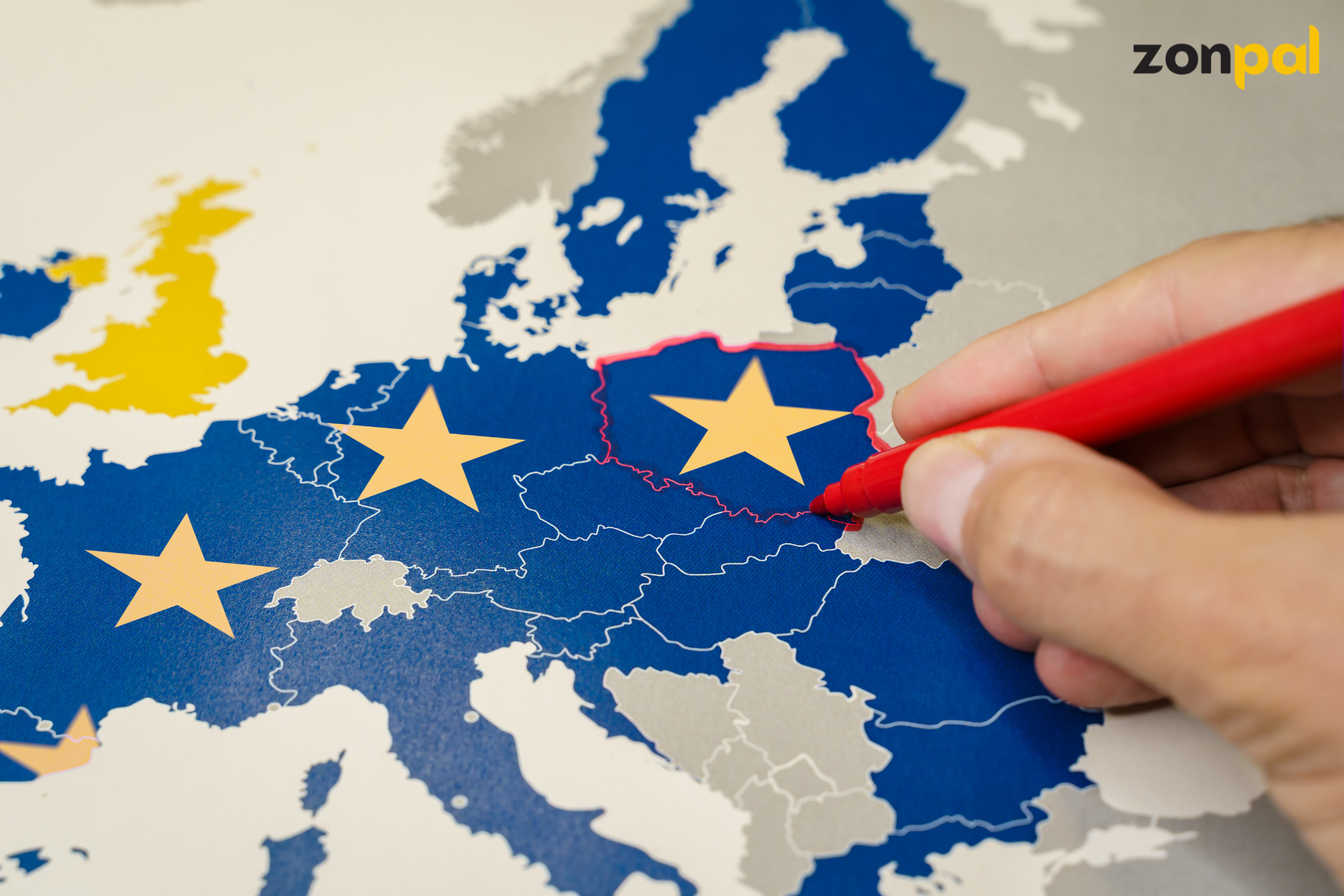
This roadmap is a confirmation that the EU will no longer be a “haven” for business models that exploit tariff loopholes.
3. Double Impact: Market Dynamics and the Consumer
The new regulations are predicted to bring profound changes to the European landscape.
- For the EU Budget and Customs
The reform will solidify a stable revenue stream and ensure fair distribution among member states. By centralizing management through the future EU Customs Authority, the pressure of manual inspections will decrease, replaced by automated, data-driven oversight.
- For the Consumer
The era of “too good to be true” prices is ending. European consumers will see a significant increase in the cost of low-end goods due to added taxes and handling fees. This may lead to a shift in consumer behavior toward higher-quality, locally stored items.
4. Zonpal Amazon Agency: Your Solution for Global Tax Barriers
The policy shift from the EU is a clear sign that cross-border e-commerce is entering a phase of strict control and professionalization. For Vietnamese businesses and Amazon Sellers, a new strategy is required to maintain a competitive edge.
Zonpal Amazon Agency provides a comprehensive adaptive solution:
- Pricing Structure Optimization: We help you recalculate your selling price to absorb the new tax costs while remaining competitive on the Amazon EU marketplace.
- Customs Data Standardization: Our experts assist in accurate HS Code classification for every product category, ensuring your goods flow smoothly through EU checkpoints without delays.
- Strategic FBA (Fulfillment by Amazon): Instead of sending individual small parcels from abroad—which are subject to the €3/item tax—Zonpal advises on bulk warehousing within the EU. This optimizes total import taxes and drastically improves delivery speeds.
- 24/7 Policy Updates: We keep your business ahead of geopolitical shifts and digital economy regulations within the European Union.

Let Zonpal Amazon Agency be your companion.
Don’t let tariffs be a barrier; let Zonpal turn them into an opportunity to prove the prestige of Vietnamese brands in Europe!
5. Opportunities for Growth: Why “Going Global” Still Works
While taxes increase costs, they also clear the market of “noise.” When low-quality, untaxed goods are forced to raise their prices, EU consumers will begin to prioritize quality and brand reputation over raw price.
Advice for the Modern Seller:
- Shift to Intra-Bloc Warehousing: Importing in bulk to a central hub in the EU allows for more professional tax management compared to B2C shipping from abroad.
- Focus on Product Value: As the price gap narrows, “Made in Vietnam” quality and the brand story will become the deciding factors for customers.
- Digitize Processes: Use data management tools today to ensure you are ready to connect with the EU Customs Data Hub by 2028.
6. Conclusion: The End of the “Wild West” of E-commerce
The EU’s decision to abolish the small parcel tax exemption is a definitive signal: the era of “Wild West” e-commerce, built on legal loopholes and extreme low prices, is closing.
In 2026 and beyond, the European market will only have room for businesses that are compliant, transparent, and offer genuine brand value. For those who adapt, the “level playing field” is not a threat, it is an invitation to compete on merit.