As 2025 drew to a close, the global economy witnessed a definitive shift in digital consumption habits. From ultra-fast fashion and high-tech electronics to daily household essentials, e-commerce applications have transcended being a mere “convenience” to becoming the beating heart of all commercial transactions.
Based on average Monthly Active Users (MAU), the top 10 e-commerce applications of 2025-2026 now collectively reach over 2 billion people every month. This staggering figure represents a monumental concentration of technological power and a shift in how the world’s 8 billion inhabitants discover, evaluate, and purchase goods.
1. Amazon: The Unshakable “Sovereign” of Global E-commerce
In the 2025 e-commerce landscape, Amazon stands as a colossus. With an impressive 651.7 million Monthly Active Users (MAU), the Seattle-based giant does not merely lead the market, it commands a vast, nearly insurmountable distance between itself and its closest pursuers.
This dominance is not the result of luck but the culmination of a decades-long strategic vision built upon three pillars of core strength
1.1. High-Velocity Logistics: The Revolution of Time
Amazon has successfully transformed shipping from a backend support service into a lethal competitive weapon. By leveraging its superior logistics infrastructure and AI-driven smart warehousing, Amazon has fundamentally redefined the concept of “fast.”
Hours, Not Days: In key metropolitan markets, customer wait times have been slashed to the absolute minimum, often measured in hours.
Last-Mile Optimization: By mastering demand-forecasting technology and owning its last-mile delivery network, Amazon maintains absolute customer satisfaction. Speed has become a “habit-forming” value proposition, making it difficult for consumers to return to slower, traditional shopping methods.
1.2. The Prime Ecosystem: The Art of User Retention
Amazon doesn’t just sell products; it sells a frictionless lifestyle through the Prime membership.
- A Closed-Loop System: Prime is a comprehensive ecosystem where members enjoy free shipping alongside a massive library of entertainment content, cloud storage, and countless value-added services.
- Loyalty and Sticky Revenue: These added benefits create a powerful “gravitational pull,” turning occasional shoppers into lifelong members who spend significantly more and more frequently.
- High Exit Barriers: Once a user is deeply embedded in the Prime ecosystem, the “opportunity cost” of switching to a competitor becomes too high, ensuring a stable and sustainable revenue stream for Amazon.
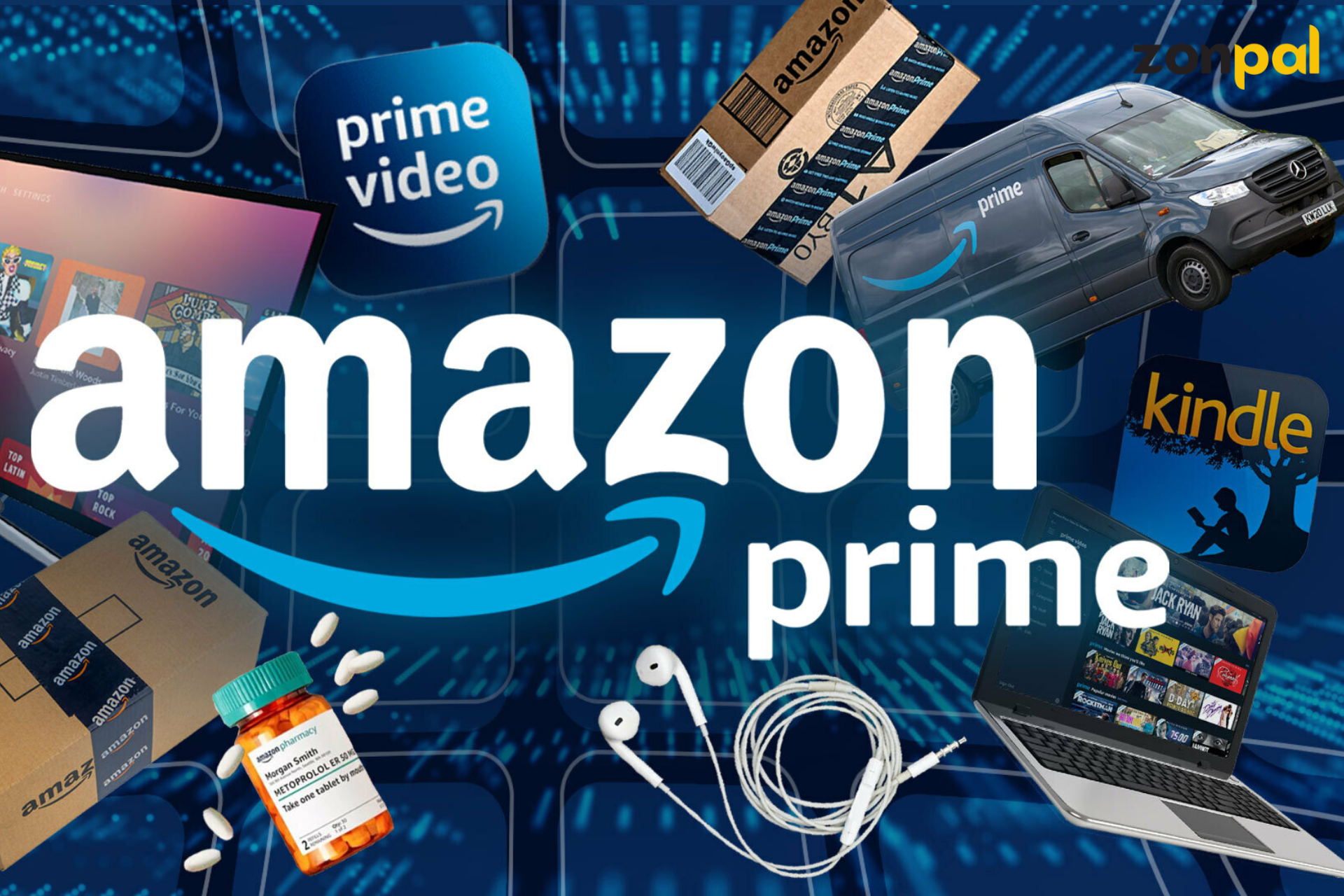
Amazon sells a frictionless lifestyle through the Prime membership
1.3. Global Reach and Absolute Trust
Despite not being headquartered in Asia, the home turf of aggressive rivals like Shopee or Temu, Amazon maintains an iron grip on the world’s two most lucrative e-commerce markets: North America and Europe.
The Gold Standard of Trust: In Western consumer psychology, Amazon is synonymous with reliability, safety, and professionalism.
The “Official” Marketplace: Amazon’s ability to standardize service quality globally makes it the preferred destination for both high-intent buyers and international brands looking to scale. This status as a “regulated, high-quality playground” allows Amazon to hold its throne even against the rise of low-cost, high-volume models from the East.
2. The Expansion of Asian E-commerce Giants (7 out of 10 Positions)
The 2025 global e-commerce landscape marks a historic shift in the geopolitical balance of digital trade. For the first time, 70% of the world’s top 10 shopping applications are Asian-owned, signaling the end of Western platform hegemony. This “Asian Wave” is not merely about lower prices; it represents a fundamental redefinition of the consumer journey through the lens of “Shoppertainment”, a seamless blend of commerce, social interaction, and gamified entertainment.
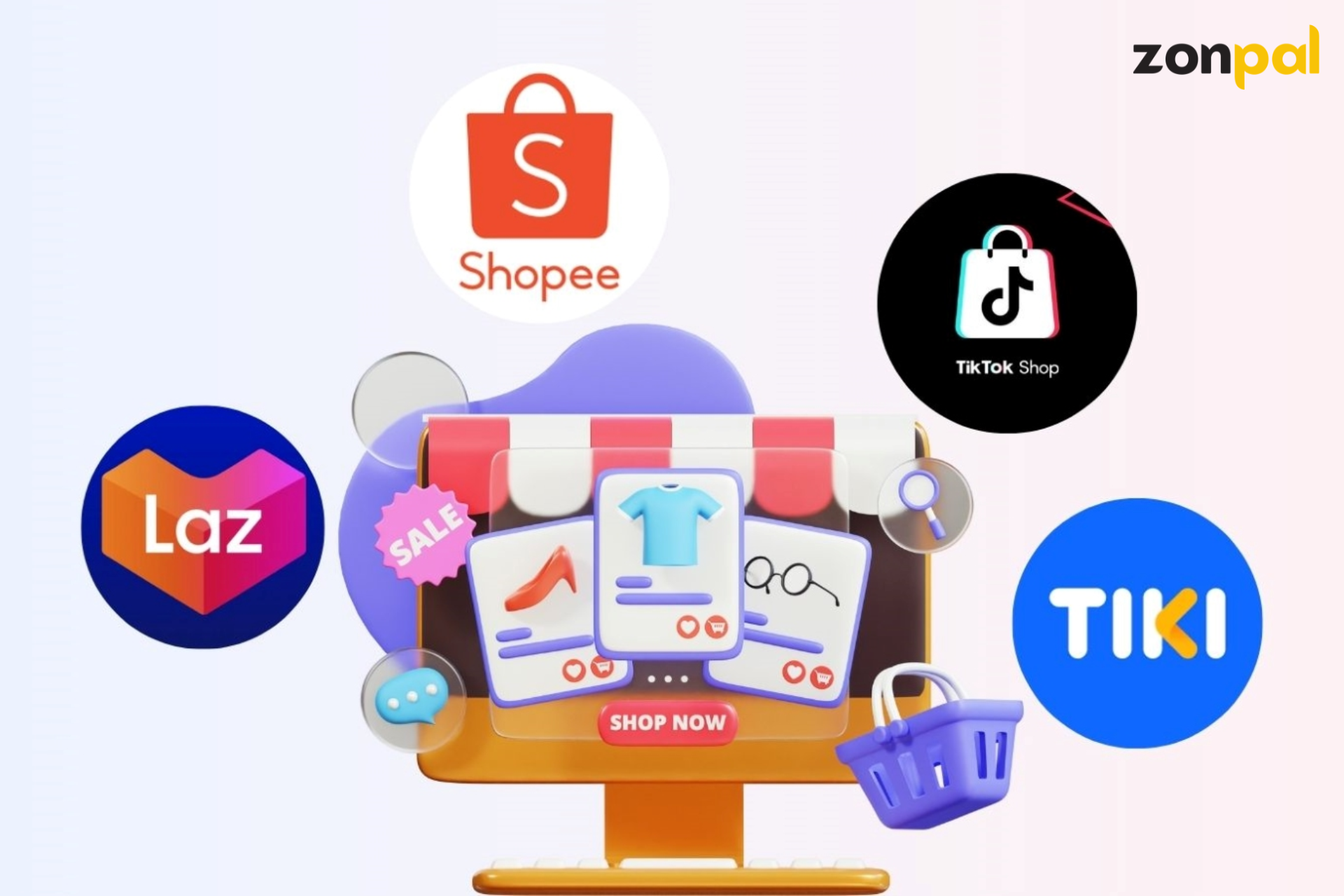
The Expansion of Asian E-commerce Giants
2.1 Shopee: The Titan of Localization (392.8 Million MAU)
Dominating the Asian group, Shopee has maintained its throne by being the undisputed master of Deep Localization.
Unlike many Western platforms that adapted desktop sites for mobile, Shopee was built from the ground up for the smartphone. This “Mobile-First” priority aligns perfectly with the digital habits of Southeast Asia’s “Leapfrog” generation. Shopee does not treat Southeast Asia as a single market. Instead, it tailors its interface, payment methods (like ShopeePay), and marketing campaigns to the specific cultural nuances of each country. From “Shopee Live” sessions with local celebrities to hyper-local discount festivals, they have turned shopping into a daily social habit.
2.2 Temu & Shein: The Disruptors of the Value Chain
Temu (246.4 million MAU) and Shein (215.1 million MAU) have sent seismic shocks through the global retail industry by perfecting the “Factory-to-Consumer” (F2C) model. By cutting out wholesalers and traditional retailers, these platforms allow Chinese factories to ship directly to doorsteps in Ohio, London, or Hanoi. This removes layers of cost, enabling price points that were previously unthinkable.
Shein, in particular, uses real-time data to identify micro-trends on social media, producing small batches of new styles in a matter of days. This “Ultra-Fast Fashion” model, combined with Temu’s aggressive gamification (coupons, spinning wheels, and group buying), has redefined “Value” for the Gen Z consumer.
2.3 Lazada: The Stability of the Super-App (109.2 Million MAU)
Despite fierce competition, Lazada remains a pillar of stability within the Southeast Asian market, backed by the technological prowess of the Alibaba Group. The Super-App Ecosystem: Lazada is more than a storefront; it is an integrated ecosystem. By combining logistics (Lazada Logistics), fintech (LazWallet), and high-end brand curation (LazMall), it offers a level of “Professional Trust” that appeals to the growing middle class. Technological Infrastructure: Leveraging Alibaba’s AI, Lazada provides sophisticated personalized recommendations and cross-border solutions that make it a preferred partner for global brands entering the region.
3. Emerging Markets: The Rise of India and Latin America
The 2025-2026 rankings are a mirror of the exploding middle class in highly populated regions.
Flipkart (190.8 million MAU) & Meesho (159 million MAU): These platforms confirm the sheer power of the Indian market. While Flipkart focuses on a vast category range, Meesho has broken through via a social-selling model.
Mercado Libre (125.3 million MAU): Often called the “Amazon of Latin America,” this platform shows immense strength in a region with complex logistics but massive untapped potential.
Zonpal Amazon Agency: Your Key to the World’s Top E-commerce Tier
Looking at Amazon’s 651.7 million users, we see an “Ocean of Opportunity” for Vietnamese and international brands. However, to compete on this global stage, businesses need a strategy more professional than ever before.
Zonpal Amazon Agency provides the solutions to help you capitalize on the world’s leading platform:
- International Brand Building: Transforming local products into globally competitive brands.
- Data-Driven Optimization: Using advanced analytics to precisely target segments within Amazon’s 600M+ user base.
- End-to-End Operation: From smart inventory management to advanced PPC (Pay-Per-Click) advertising, Zonpal ensures sustainable growth and optimized ROI.
4. Expert Analysis: Why are Asian Platforms Growing So Fast?
The rapid ascent of giants like Shopee and Temu is not an accident. It is the result of a strategy that hits the psychological and behavioral triggers of the modern digital native.
4.1. Mobile-First Strategy: Total Optimization for the Smartphone
Unlike first-generation e-commerce platforms that focused on desktop interfaces, these new giants were built on the Mobile-First philosophy.
- The Primary Screen: In developing markets, smartphones are often the primary, or only, device used to access the internet.
- Frictionless UX: Every touchpoint, from search to checkout, is designed for smooth, one-handed operation. These apps are lean enough to load quickly even on unstable network connections.
4.2. Gamification: Turning Shopping into Entertainment
Shopee and Temu have made shopping “addictive” through Gamification.
- Continuous Interaction: Small in-app games (farming, seed-planting, lucky spins) reward users with coins or vouchers, forming a daily habit of opening the app.
- Shoppertainment: The integration of live-streaming and real-time interaction keeps users on the app longer. As “dwell time” increases, the rate of impulse buying increases proportionally.
4.3. Extreme Supply Chain Optimization: The Price Revolution
The primary draw for the masses is “unbeatable pricing.” These platforms have achieved this through a radical overhaul of the supply chain.
- D2C (Direct-to-Consumer): By connecting factories directly to consumers, they eliminate multiple layers of distributors, wholesalers, and high retail overheads.
- Scale Economies: The sheer volume of orders allows them to drive down production costs and negotiate ultra-low shipping rates, creating a price barrier that traditional retailers find impossible to cross.
5. Walmart: The Resilience of a Traditional Titan
While the digital “mammoths” of Silicon Valley often capture the headlines, Walmart’s performance in 2025 serves as a definitive case study in the power of Hybrid Resilience. Ranking at #10 with 93.9 million MAU, the Arkansas-based giant has proven that being a “legacy” retailer is not a death sentence, it is a formidable strategic advantage when coupled with a ruthless digital transformation.

Walmart’s primary “DNA” remains its massive network of over 4,700 physical stores across the United States.
In 2025, these are no longer just retail outlets; they have been reimagined as a Distributed Fulfillment Infrastructure. With 90% of the U.S. population living within 10 miles of a Walmart, the company has achieved what Amazon spent billions to build: proximity. This physical footprint allows for ultra-fast, “last-mile” delivery and seamless BOPIS (Buy Online, Pick Up In-Store) experiences that digital-only platforms struggle to match.
The Walmart app is not a separate entity but a digital “remote control” for the physical world. Features like in-store navigation, real-time local inventory tracking, and integrated pharmacy/grocery services have created a “sticky” ecosystem that keeps the traditional American household within the Walmart orbit.
Conclusion: The Shifting Architecture of Digital Power
The 2025 rankings are more than just numbers, they are a message about the relocation of digital economic power. Amazon remains the “Big Brother” in terms of value, infrastructure, and user quality, but the heat from Asian rivals is closer than ever.
For businesses, this is the “Golden Hour” to enter these platforms. Specifically, Amazon offers the highest-quality user base with the most robust purchasing power. With the right support from experts like Zonpal, the journey to conquering the global market is shorter and more efficient than ever before.