In the volatile e-commerce landscape of 2026, possessing a superior product is no longer the sole guarantee of success. The “rules of the game” have shifted toward the mastery of Distribution Channel Management.
The fundamental question for modern brands is no longer what to sell, but how to ensure the product appears in the right place, at the right time, for the right customer. The answer lies in the 4x4x4 Model, a comprehensive strategic framework that helps businesses redefine their distribution across fragmented channels.
1. The 4x4x4 Distribution Strategy of Channel Strategy in 2026
By 2026, channel strategy has evolved far beyond a binary choice between “brick-and-mortar” and “online marketplace.” Today, it is an art of orchestrating synergy between physical touchpoints and digital platforms to surround and optimize the Shopper Journey.
Mastering the 4x4x4 model is not just a management technique; it is the compass that guides a brand toward a sustainable and sharp distribution system.
1.1. Deeply Understanding Customer Segments and Habits
Every distribution channel attracts a specific segment with vastly different shopping mindsets. The 4x4x4 model allows businesses to peel back data layers to understand three distinct behaviors:
-
Offline Shoppers (In-Store): They seek sensory experiences. They need to touch, feel, and perceive the tangible value of a product (such as the texture of high-end ceramics). This group prioritizes immediate trust and face-to-face consultation.
-
Marketplace Shoppers (Amazon/Walmart): These are “deal hunters” who value convenience above all. Their decisions are driven by community reviews, social proof, and shipping speed.
-
Social Commerce Shoppers (TikTok/Instagram): They shop emotionally. They are converted by live-stream energy, storytelling, and creative content from KOCs/KOLs.
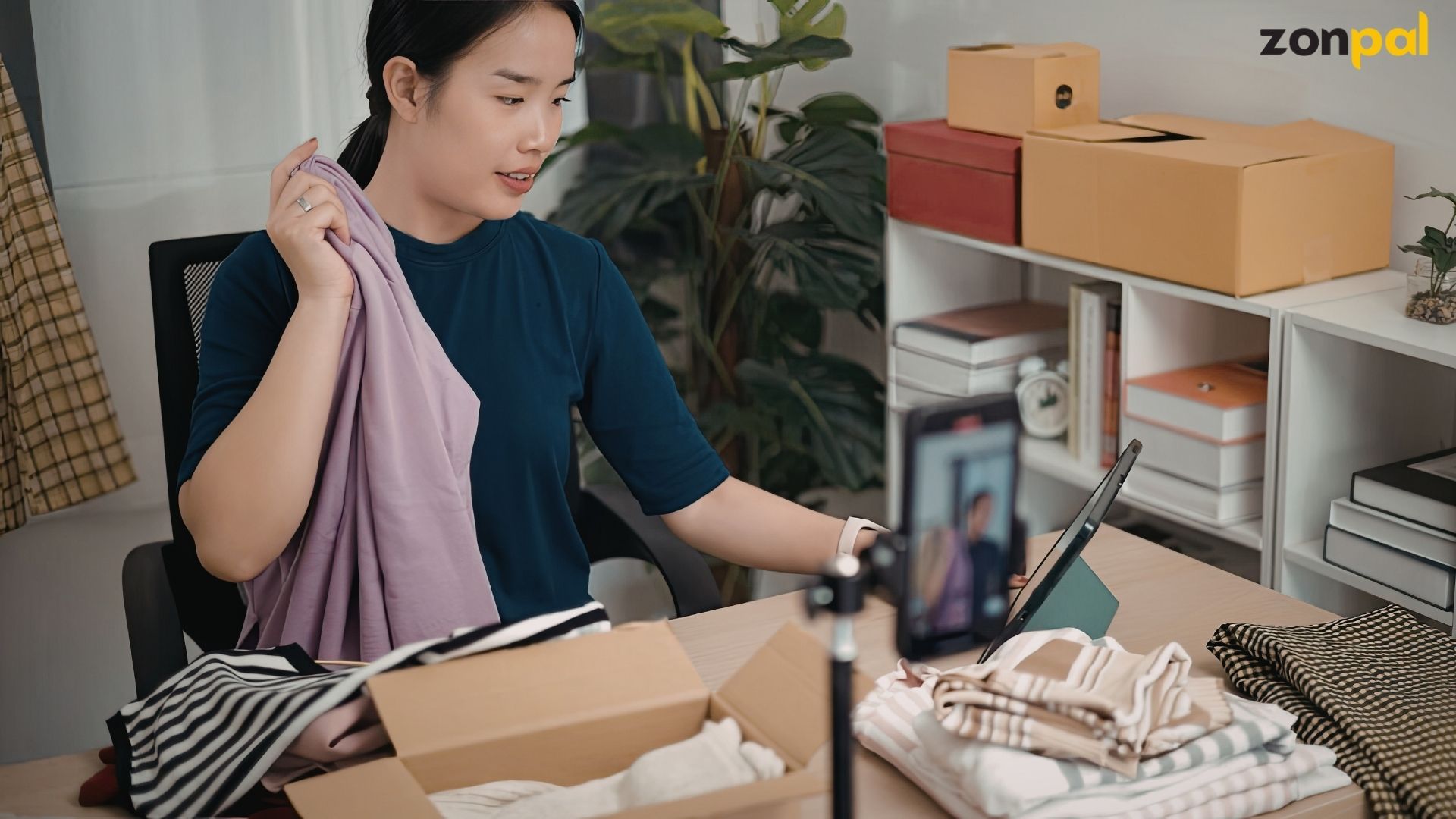
The era of KOL livestreaming is on the rise, helping to stimulate shopping demand.
1.2. Establishing a Specialized Assortment Strategy
A common mistake is “copy-pasting” a product catalog from a physical store onto every digital platform. The 4x4x4 model helps brands refine their assortment to match the “appetite” of each channel:
-
Entry-Level/Bait Products: Small, low-cost items (like souvenirs or accessories) used to acquire new customers on high-traffic platforms.
-
Hero Products: Stable, high-volume lines that appeal to the masses and are distributed across all channels.
-
Premium/Exclusive Lines: Limited editions or high-craftsmanship pieces reserved for Flagship stores or the brand’s official website to protect brand equity and image.
1.3. Eliminating Channel Conflict and Optimizing Resources
When a brand expands rapidly, channels often “step on each other’s toes” through price wars or customer poaching. A strategic model prevents this by:
-
Consistent Price Management: Establishing a “floor price” and synchronized promotion cycles so no channel becomes the “enemy” of another.
-
Smart Resource Allocation: Instead of blindly spreading the marketing budget, brands focus on the channel with the highest conversion rate for specific product lines.
-
Logistics Synchronization: Connecting inventory data across channels prevents “stockouts” on one platform while another is overstocked, significantly saving operational costs.
2. Decoding the 4x4x4 Model: The Three Pillars of Growth
The 4x4x4 framework divides the strategic roadmap into three components: Principles, Priorities, and Strategic Questions.
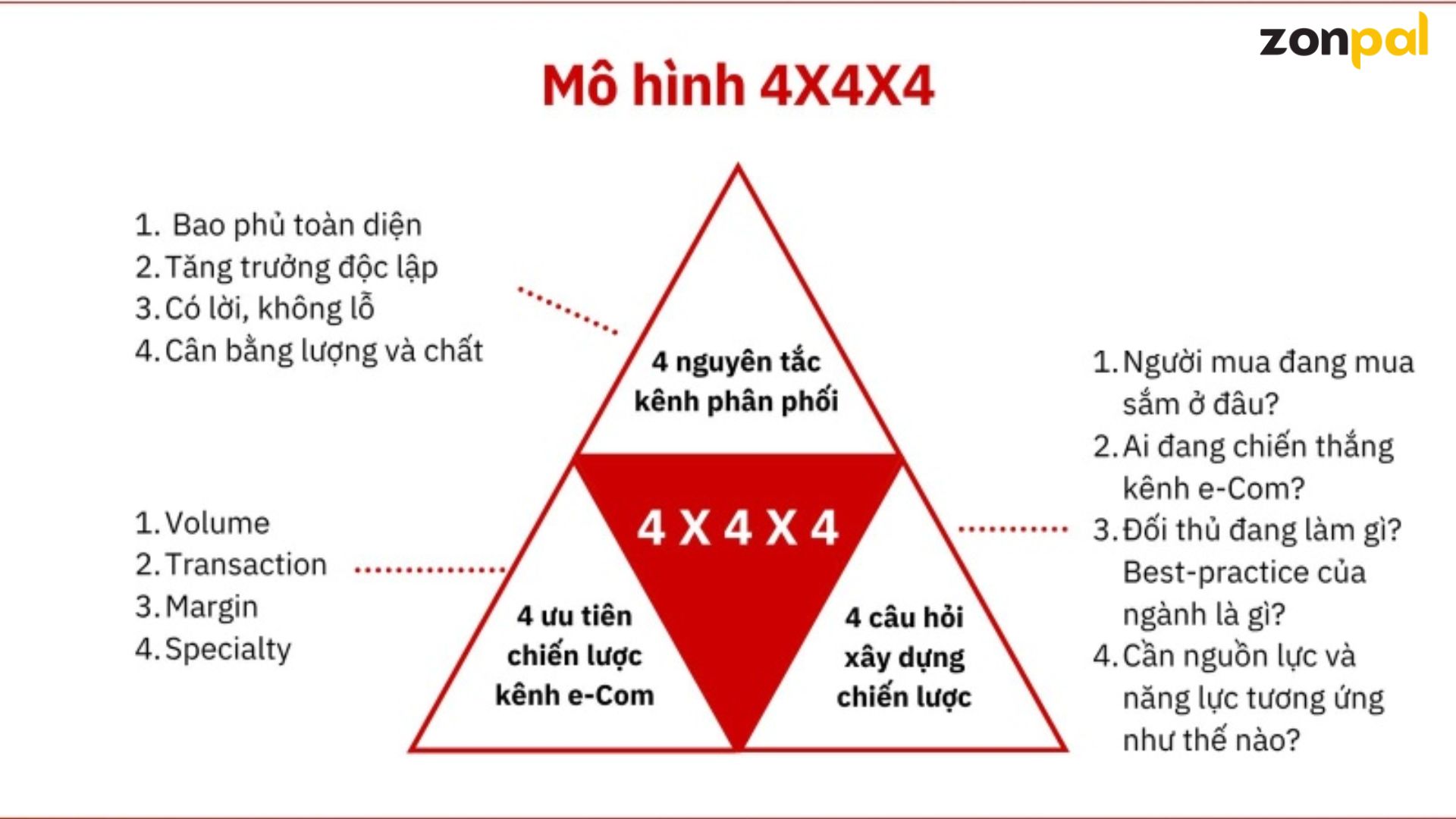
The 4x4x4 Distribution Strategy of Channel Strategy
2.1. The 4 Golden Principles of Distribution
To ensure a sustainable system, a business must adhere to these four pillars:
-
Comprehensive Coverage: The product must be present at every potential touchpoint where a customer has a need. However, this coverage must be selective to maintain brand prestige.
-
Independent Growth: Each channel (e.g., Amazon vs. the Brand Website) must have its own growth roadmap that does not cannibalize the sales of the other.
-
Profitability Over “Burn”: In the “cost-tightening” era of 2026, burning cash for growth is obsolete. Every channel must aim for financial autonomy and positive margins.
-
Balance of Volume and Quality: Beyond chasing order volume, brands must ensure the quality of service and customer experience remains consistent at every touchpoint.
2.2. The 4 E-com Strategic Priorities
When focusing on digital commerce, managers should pivot around four value axes:
-
Volume: Building enough scale to optimize operational and logistics costs.
-
Transaction: Increasing purchase frequency and basket value through up-selling and cross-selling techniques.
-
Margin: Strictly managing platform fees and marketing costs to protect the “bottom line.”
-
Specialty: Creating unique product lines exclusively for online channels to avoid direct price comparisons with traditional retail.
2.3. The 4 Strategic Questions Shaping the Future
To build a complete plan, a business must answer these practical questions:
-
Where are shoppers actually shopping? Are they on apps, via live-streams, or through Google searches?
-
Who is winning the E-com channel? Analyze the “market leaders” in your niche to understand their edge.
-
What is the competition doing? Study industry best practices to avoid common pitfalls.
-
Resources and Capabilities: What kind of team (Tech, Marketing, Operations) do you need to fulfill this strategy?
3. Zonpal Amazon Agency: Implementing the 4x4x4 Model Globally
Mastering the theory of 4x4x4 is step one; executing it on high-stakes global platforms like Amazon is a different challenge entirely. Zonpal Amazon Agency provides the solutions to turn this model into a professional reality:
-
Assortment Strategy Optimization: We help you filter and select the “Specialty” products best suited for the US/EU markets to maximize your Margin.
-
Cross-Border Multi-Channel Management: We help your brand achieve global coverage while ensuring independent and sustainable growth.
-
Capability Support: Zonpal acts as your high-quality “Outsourced” department, providing all the resources—from operations and content to PPC advertising—that your business needs.

Don’t let the model stay on paper. Let Zonpal take your products to the global stage today.
4. Understanding Shopper Behavior: The Key to Conversion
The 4x4x4 model serves as the definitive framework for this alignment, moving beyond simple demographics to master the intricate habits and “micro-moments” of diverse shopper groups.
4.1. The ROBO Phenomenon: The Rise of the “Analytical Architect”
ROBO (Research Online, Buy Online) has evolved from a simple comparison habit into a sophisticated form of digital due diligence. These shoppers are defined by a high degree of skepticism, a “trust bottleneck” that can only be cleared through empirical evidence.
-
Deep-Dive Due Diligence: The ROBO shopper does not just look at star ratings. They utilize AI assistants to summarize thousands of reviews, analyze price history graphs, and meticulously compare technical specifications against your competitors.
-
The Content Requirement: To convert this group, your listings must be “Data-Rich.” This means moving beyond poetic descriptions to provide specification-heavy A+ Content, high-resolution macro photography of material textures, and downloadable technical manuals or “heritage dossiers” that prove the product’s value.
-
The Logic of Conversion: For the ROBO shopper, the “Buy” button is only pressed once the cognitive friction of doubt has been entirely removed by facts.
4.2. The Impulse Revolution: Emotional Velocity in the “Shoppertainment” Era
On the opposite end of the spectrum is the Impulse Buyer, whose journey is fueled by the explosion of Amazon Live, short-form vertical video, and social commerce integration.
-
Emotional Spontaneity: These purchases are rarely planned; they are triggered by an immediate emotional resonance. Whether it is a “limited edition” drop or a charismatic influencer showcasing a “lifestyle aesthetic,” the decision to buy happens in seconds.
-
The Visual Trigger: Impulse buyers respond to high-energy, high-impact visuals. They don’t want to read a manual; they want to see how a ceramic vase transforms a room’s atmosphere in a 15-second cinematic clip.
-
The Psychology of “Now”: This group is the primary driver behind the Instant Gratification trend. If the checkout process is too long or the delivery time is more than 24 hours, the emotional “high” fades, and the conversion is lost.
4.3. Strategic Adaptation: Tailoring the Assortment Strategy
To thrive in 2026, businesses must segment their Assortment Strategy to serve both masters simultaneously. This requires a dual-track approach to product presentation and bundling:
-
For the Impulse Buyer (The “Joy” Seekers): Create curated Gift Combos and “Starter Kits.” These should be packaged with high aesthetic appeal and marketed as a “solution in a box.” Use “Limited Time Offers” and seasonal branding to trigger the fear of missing out (FOMO).
-
For the ROBO Shopper (The “Knowledge” Seekers): Offer Premium Bundles or individual high-end pieces accompanied by “Expert Guides” or “Certificate of Authenticity” documentation. Focus on durability, sustainability metrics, and the sociological narrative of craftsmanship.
5. Conclusion: The Shield of Strategy
The 4x4x4 model is not just a diagram; it is a survival guide for any seller looking to thrive in the digital commerce era. By balancing operational principles, prioritizing profitability, and answering the right market questions, a brand creates a “shield” against market volatility.
In 2026, the brands that win are the ones that manage their channels with precision.