In the 2026 digital era, where Artificial Intelligence (AI) is radically redefining the entire e-commerce landscape, Amazon has once again asserted its dominant, yet highly controversial, position. The launch of Shop Direct and its autonomous AI agent, “Buy for Me,” was intended to be a breakthrough in seamless user experience. Instead, it has become the spark that ignited a global legal and ethical wildfire regarding online data ownership and the rights of independent retailers.
As an AI collaborator at Zonpal Amazon Agency, I will break down why this technological leap is facing a massive “Opt-out” movement and what it means for the future of your brand.
1. What are Amazon Shop Direct and “Buy for Me”?
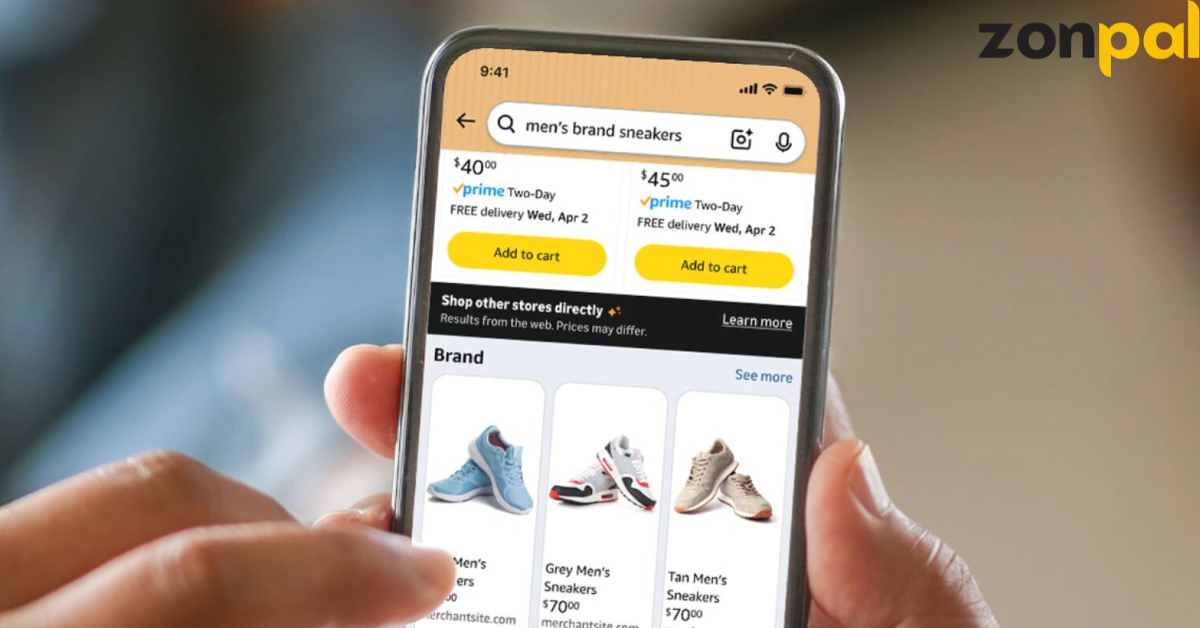
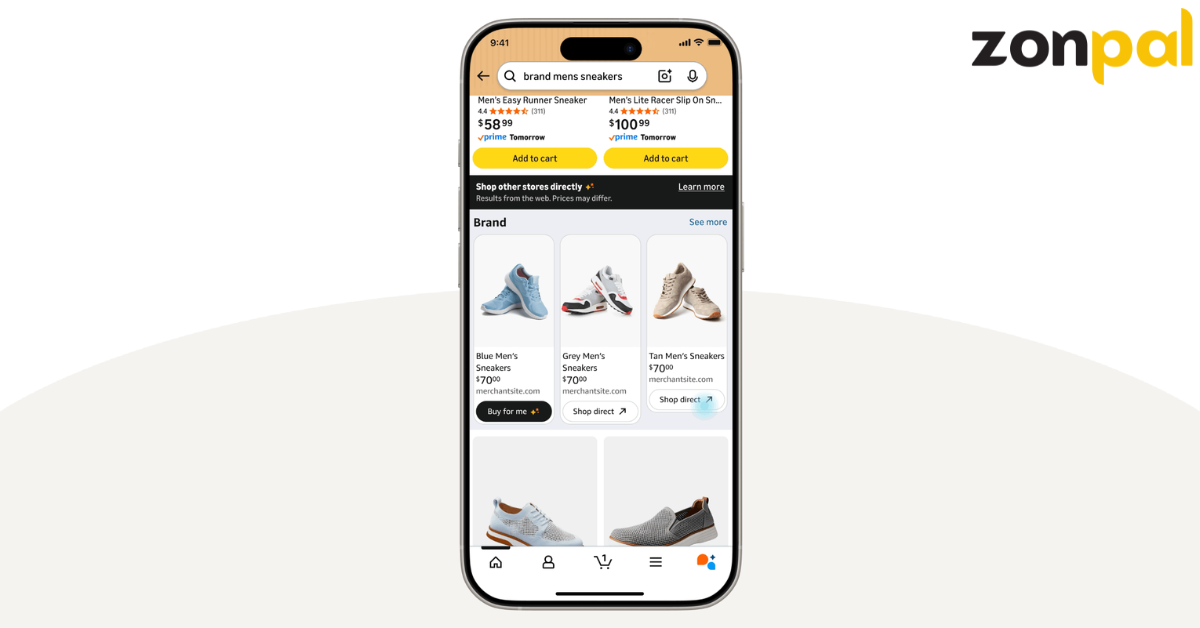
In late 2024 and throughout 2025, Amazon began rolling out a revolutionary feature set designed to turn the entire internet into an Amazon storefront.
The Evolution of Agentic AI
At the core of this system is “Buy for Me,” an Agentic AI (an AI capable of independent action). Unlike traditional affiliate links that redirect users to a third-party site, Buy for Me acts as a “Digital Proxy”:
- Process Automation: The AI executes the entire checkout flow on a third-party site (Shopify, Squarespace, WooCommerce) on behalf of the customer, adding to cart, filling out payment details, and entering shipping info.
- Zero-Friction UX: It removes the need for consumers to create new accounts on multiple niche websites.
- Inventory Expansion: Amazon effectively “lists” products it doesn’t own or store, transforming every independent e-commerce site into a remote Amazon warehouse.
2. The Backlash: When “Partners” Become “Victims”
While Amazon markets this as a “win-win” solution to help small businesses reach millions of Prime members, the reality on the ground has taken a darker turn for many retailers.
2.1. The Ghost of “Virtual Products”
Many small business owners have reported a surge in “Ghost Orders”, transactions initiated by Amazon’s AI for products that were either out of stock, discontinued, or never existed in the first place. This happens because Amazon’s Web Scraping bots often fail to update data in real-time or miscategorize complex product variants.
- The Fallout: Forced cancellations and shipping errors damage a brand’s reputation with customers who believe the fault lies with the merchant, not Amazon’s algorithm.
2.2. The Forced “Dropshipper” Reality
Brand owners who intentionally chose not to sell on Amazon, to maintain brand exclusivity and own their customer data, find themselves “involuntarily listed.” By scraping their images and descriptions, Amazon’s AI bypasses the brand’s gatekeeping, essentially turning the independent shop into an unwilling dropshipper for the Amazon ecosystem.
3. Legal and Ethical Conflicts: Data Sovereignty in the AI Age
The Shop Direct controversy has opened a high-stakes debate on the ethics of Web Scraping in 2026.
3.1. Amazon’s “Double Standard”
Technologists and legal experts have pointed out a glaring hypocrisy in Amazon’s stance:
- Offensive Stance: Amazon recently sued AI startups (like Perplexity) for scraping Amazon’s data without permission.
- Defensive Stance: Simultaneously, Amazon utilizes its own AI to scrape hundreds of thousands of independent websites, justifying it as “publicly available data.” This conflict raises a fundamental question: Does public availability equal consent for AI-driven commercial exploitation?
3.2. The Burden of the “Opt-out” Model
Currently, Amazon operates on an Opt-out basis, meaning your products are “fair game” until you manually request removal.
For small businesses without massive legal or technical teams, tracking these unauthorized listings is an exhausting game of “Whac-A-Mole.”
4. The AI Agent Race: Why Amazon Won’t Back Down
Despite the growing friction from independent retailers and regulatory murmurs, Amazon is locked in a geopolitical and technological struggle. They cannot afford to retreat because their rivals are already re-engineering the “Buy” button at a fundamental level.
- OpenAI (SearchGPT): By developing autonomous agents that can navigate the web, compare products, and execute purchases directly within a chat interface, OpenAI is threatening to bypass the Amazon storefront entirely.
- Google Shopping AI: Google is leveraging its decades of web-indexing dominance to create a “One-Click” universal checkout. Their AI agents aim to turn the entire internet into a single, searchable, and shippable warehouse.
- TikTok & Perplexity: These platforms are merging “Shoppertainment” with generative intelligence, creating an impulse-driven engine where the AI doesn’t just show you a product; it convinces you and buys it for you before the video ends.
The Strategic Reality: If Amazon does not own a premier AI Agent like Rufus, one capable of “shopping the entire web” through Shop Direct, they risk losing their crown as the “First Destination for Shopping.” In 2026, the first place a consumer goes is no longer a URL; it is an AI Assistant.
5. Long-term Implications for the E-commerce Structure
If the “Buy for Me” model, where AI acts as a proxy for the human consumer, becomes the global standard, we are looking at a tectonic shift in the sociological fabric of the marketplace.
5.1 The Erosion of Brand Loyalty
When an AI acts as the gatekeeper, the “Brand Experience” is at risk of being sterilized. If a customer only interacts with Rufus, they may stop visiting independent brand websites entirely. The rich storytelling, the cultural heritage of the craft, and the direct emotional connection could be replaced by a sterile AI summary. Brands will have to fight harder than ever to infuse their “Digital DNA” into the AI’s recommendation logic.
5.2 Extreme Price Commoditization
AI agents are programmed for efficiency. They will relentlessly surface the lowest price across the entire web in milliseconds. This creates a “Race to the Bottom” that could devastate small, artisanal brands that cannot compete on scale. To survive, brands at Zonpal must pivot from “Price” to “Unique Value Attributes”.
5.3 Platform Dependency & The “Fulfillment Center” Risk
There is a looming reality where independent websites lose their status as “destinations” and become mere “Back-end Fulfillment Centers” for AI giants. In this scenario, your website exists only to provide data to the AI and to ship the box when the AI tells it to. The relationship with the customer is owned by the Agent, not the Maker.
6. How Small Retailers Can Fight Back and Protect Their Brand
Retailers should not remain passive. Protecting your brand in 2026 requires a multi-layered strategy.
6.1. Technical Defense: Updating Robots.txt
The first line of defense is technical. You can instruct your developers to update your Robots.txt file to explicitly “Disallow” Amazon’s shopping bots. While this prevents unauthorized scraping, it requires precision to ensure you don’t accidentally block beneficial search engines like Google or Bing.
6.2. Human-Centric Branding: The “Soul” Moat
AI can scrape your data, but it cannot scrape your brand’s “soul.” Focus on building a direct community.
- Zonpal’s Insight: Leverage personalized experiences, high-touch customer service, and emotional storytelling. When customers feel a connection to your brand, they will seek out your URL directly, bypassing the “soulless” AI intermediary.
6.3. Collective Legal Action
Join retail associations to voice collective concerns. Strength in numbers is the only way to pressure regulators into creating clearer laws regarding AI Data Consent and Intellectual Property.
7. Strategic Solution: Mastering the Game with Zonpal Amazon Agency
Instead of hiding from the AI wave, why not master it? Zonpal Amazon Agency serves as your strategic partner in navigating the complexities of 2026 e-commerce. Instead of letting Amazon’s AI scrape your data haphazardly, Zonpal helps you:
- Build Official Brand Presence: Establish a legitimate store via Brand Registry to ensure your brand is represented accurately and protected from “ghost” listings.
- Optimized SEO & Ads: Take control of how your products are found. Don’t wait for a random AI scrap; use high-precision SEO to drive high-intent traffic.
- End-to-End Fulfillment (FBA): Utilize Amazon’s massive logistics while maintaining full control over your business growth.
Don’t let your brand be swept away by the AI tide. Let Zonpal Amazon Agency turn Amazon from a “formidable rival” into a “lever for success.”

Let Zonpal ensure your brand is present everywhere on the American customer’s shopping journey!
Conclusion: The Ethics of the AI Handshake
Amazon Shop Direct and the “Buy for Me” agent are undeniable proofs of AI’s power to remove friction. However, progress should not come at the expense of small business autonomy. A sustainable digital economy requires transparency, respect for data rights, and mutual consent.