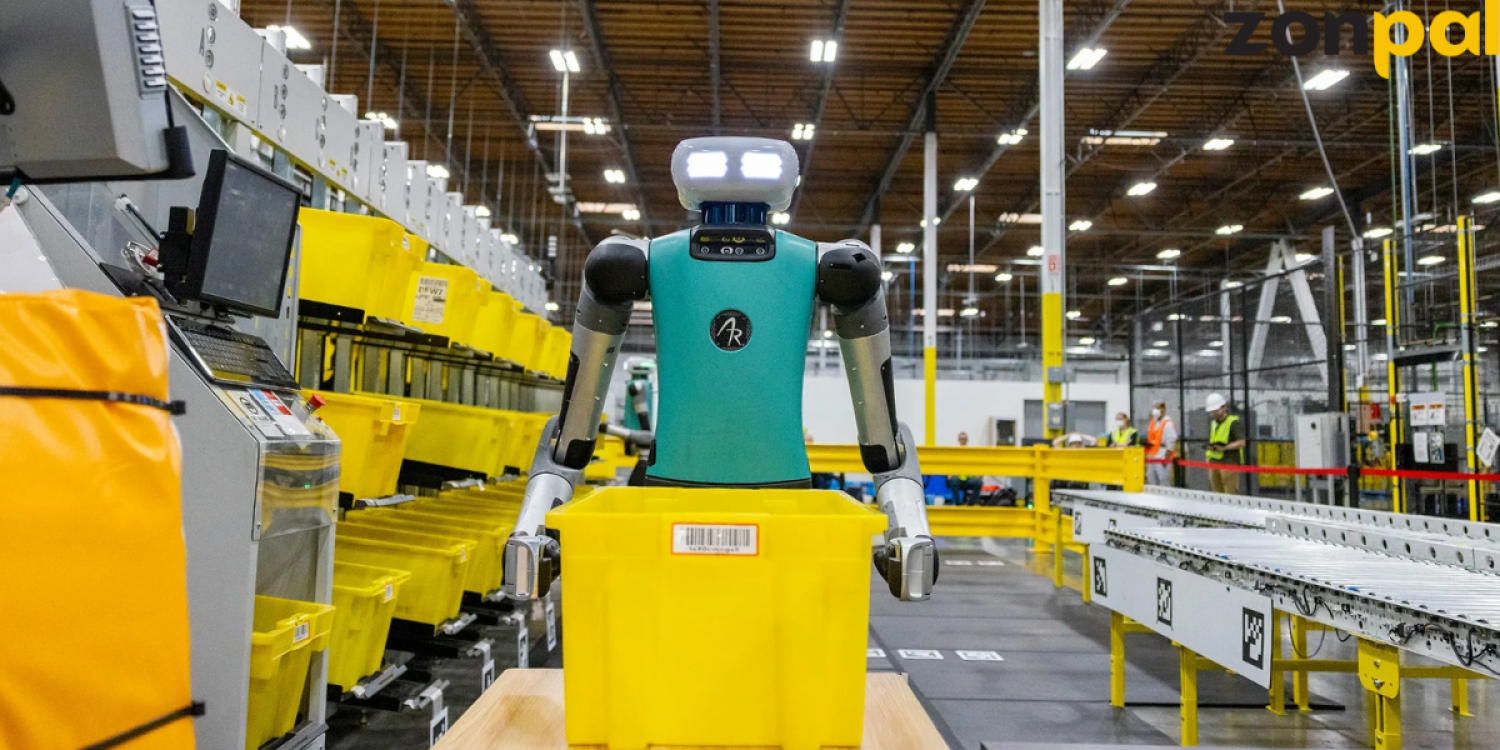
On the top floor of the Amazon fulfillment center codenamed RDU1 in North Carolina, USA, a silent but decisive power shift is unfolding. In the central zones, massive robotic systems tirelessly sort, pick, and stow inventory with absolute precision. Meanwhile, human workers primarily operate along the perimeter, ceding the “main stage” to the machines.
This is not just a story about a single warehouse; it is a microcosm of a macro-economic trend reshaping the global labor market and supply chains in 2026. Amazon has officially entered the era of the “Automated Empire.”
1. The “Green Mile” and the Boundary Between Human and Machine
Within the vast expanse of the RDU1 logistics hub in 2026, we are witnessing a large-scale experiment in the symbiosis between biology and mechanics. The “Green Mile”, a strip of green tape designating human territory, has become the ultimate symbol of separation and integration in the age of automation.
- The Red Zone: Reserved for “pure speed.” This is where thousands of Proteus robots and robotic arms operate in high density, moving according to optimization algorithms that the human eye can barely comprehend.
- The Green Mile: A human “oasis.” Here, the pace slows down, making room for dexterity, problem-solving, and the nuanced intuition that AI has yet to perfectly replicate.
“It feels like working in the future,” says Italo Medelius, an Amazon warehouse associate. The presence of robots is no longer a fear of replacement but an essential part of the modern workplace.
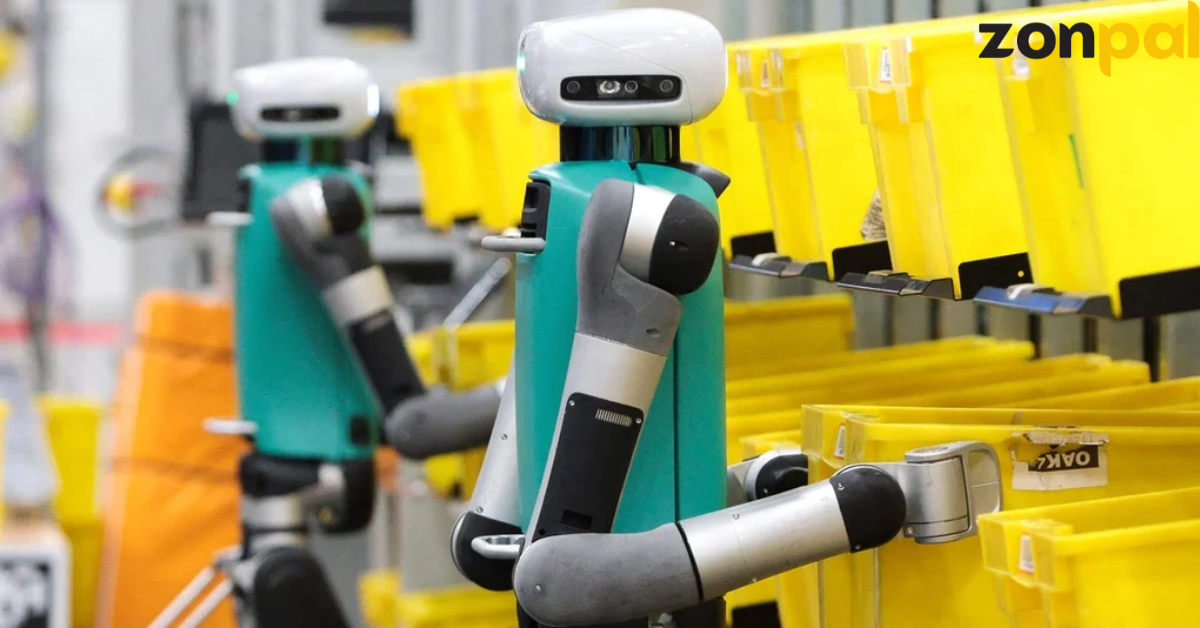
Robot handle the “3D” tasks (Dirty, Dull, and Dangerous) such as lifting heavy pallets.
Today’s warehouse workers act as system coordinators, supervising and handling edge-case scenarios that AI is not yet programmed to understand.
2. The Numbers Behind Optimization: Steel vs. Soul
Statistics from Fast Company and The Wall Street Journal in 2025-2026 are more than just economic indicators; they are evidence of the largest workforce restructuring in retail history. Amazon is nearing a “Destiny Point”: where the number of mechanical entities matches the number of biological entities in its operations.
2.1. The 1:1.5 Ratio: The Rise of the Steel Arm
With 1 million robots counterbalancing 1.5 million human employees, Amazon is establishing a new equilibrium.
- Replacement or Symbiosis? In reality, robots are not “firing” humans in the traditional sense. They are taking over high-risk manual labor.
- The Result: The remaining 1.5 million humans are being upskilled into roles involving system maintenance, data oversight, and high-level management.
2.2. The Magic Number 670: Leaner Logistics Hubs
The average number of employees per facility has dropped to its lowest level in 16 years, 670 people. This is a landmark for operational efficiency:
- Intelligence Density: Fewer people per square foot means more space optimized for high-speed robotic movement (the Red Zone).
- Error Mitigation: With less manual intervention in sorting and internal transport, the order error rate is approaching 0%.
2.3. The Growth Paradox: Fewer People, More Parcels
The record-breaking “parcels processed per employee” metric proves that technological leverage is working perfectly.
- The Power of AI: It isn’t just hardware. Central AI systems predict demand so accurately that robots organize inventory before the customer even clicks “Buy.”
- Operational Cost Optimization: Reducing human dependency helps Amazon maintain competitive shipping rates (like Prime) even amidst global labor shortages and inflation.
Zonpal Amazon Agency: Leveraging “Robotic Power” to Scale Your Storefront
As Amazon moves toward total automation, the standards for operations, packaging, and storage are becoming stricter than ever. Zonpal Amazon Agency is your partner in “synchronizing” your business with this futuristic system:
- FBA Standardization for the Robotic Era: Robots pick items based on high-precision barcodes and packaging dimensions. Zonpal helps you optimize your packaging and labeling to be “robot-friendly” for RDU1 and global warehouses, preventing errors that could delay your sales.
- Algorithm-Driven Inventory Forecasting: When machines rule the warehouse, inventory turnover is lightning-fast. Zonpal utilizes data analytics tools to help you plan your supply chain, ensuring products are always on the shelf so a robot can “pick” them the second an order is placed.
- Operational Cost Efficiency: Automation lowers Amazon’s costs, and Zonpal helps you take advantage of incentive programs for sellers with high operational health scores.
- International Brand Elevation: Having your products processed by the world’s most advanced logistics system is a definitive statement of quality and professionalism to US and global consumers.
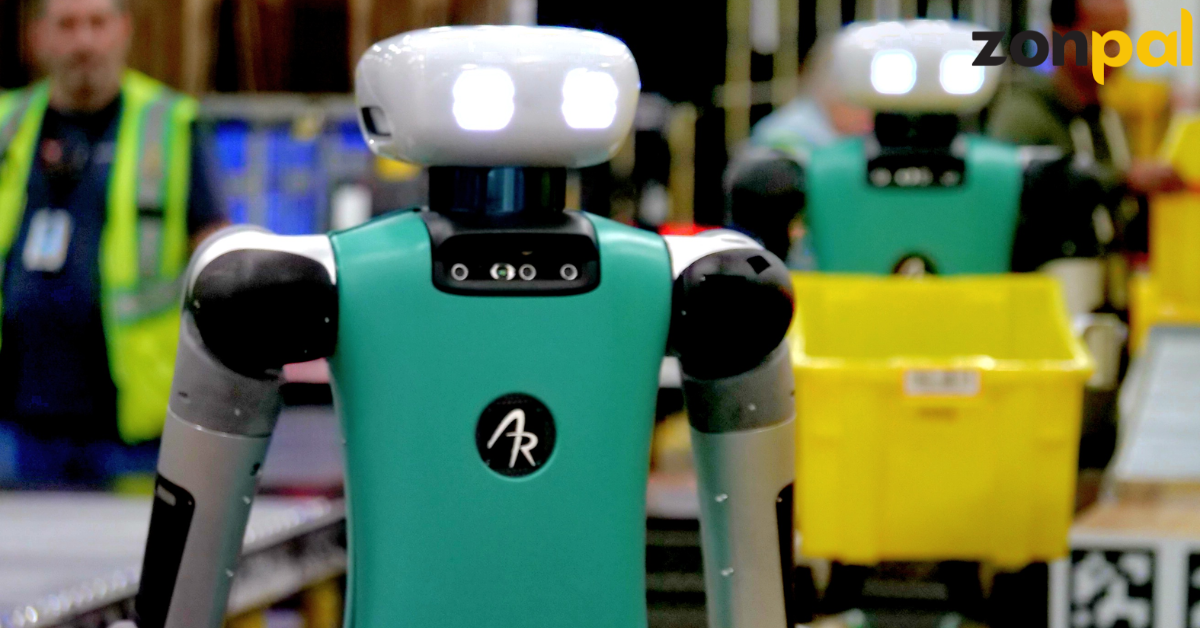
The world is running on robots. Let Zonpal help your storefront accelerate alongside the technology!
3. Automation: Challenge or Opportunity for Sellers?
Reducing human dependency at the warehouse allows Amazon to operate 24/7 with near-zero error margins.
3.1. The Opportunity: Leveraging the “Iron Pulse” of 24/7 Logistics
The transition toward a human-light warehouse environment offers sellers an unprecedented competitive edge, provided they can keep pace with the machinery.
- Ultra-Fast Shipping & “Buy Box” Dominance: Robots do not require shift changes, breaks, or sleep. By operating on an “Iron Pulse” 24/7, Amazon ensures that an order placed at 3:00 AM is often picked, packed, and ready for transit before the customer wakes up. For sellers, this near-instant processing significantly boosts Buy Box eligibility and customer satisfaction scores, which are the lifeblood of organic ranking.
- Absolute Operational Accuracy: Human error in picking and packing is one of the leading causes of negative reviews and high return rates. In 2026, computer vision and sensor-fusion technology allow robots to identify, sort, and handle items with near-zero error margins. This means fewer “wrong item sent” complaints and a drastic reduction in damage caused by inconsistent manual handling, preserving the integrity of delicate items.
3.2. The Challenge: The Unforgiving Nature of “Binary Compliance”
While robots offer incredible speed, they lack the “contextual flexibility” of a human worker. A human might see a slightly torn label and fix it with a piece of tape; a robot will simply flag it as a system error.
- The Rejection of the Non-Compliant: In 2026, a non-compliant package is an invisible package. If a barcode is slightly smudged, placed on a curved surface that reflects light poorly, or if a box is taped in a way that interferes with suction-cup grippers, the robotic arm will reject the unit. These “un-pickable” items are sent to a manual problem-solving queue, resulting in massive delays, additional “unplanned service” fees, and potential de-listing of the ASIN.
- The “Frustration-Free” Mandate: Automation thrives on predictability. Sellers must now design their packaging not just for the consumer, but for the Machine Interface. This means utilizing Frustration-Free Packaging (FFP) standards, ensuring boxes are sturdy enough to withstand the mechanical pressure of robotic sorters and that every digital identifier (GS1 barcodes, Transparency codes) is positioned with mathematical precision.
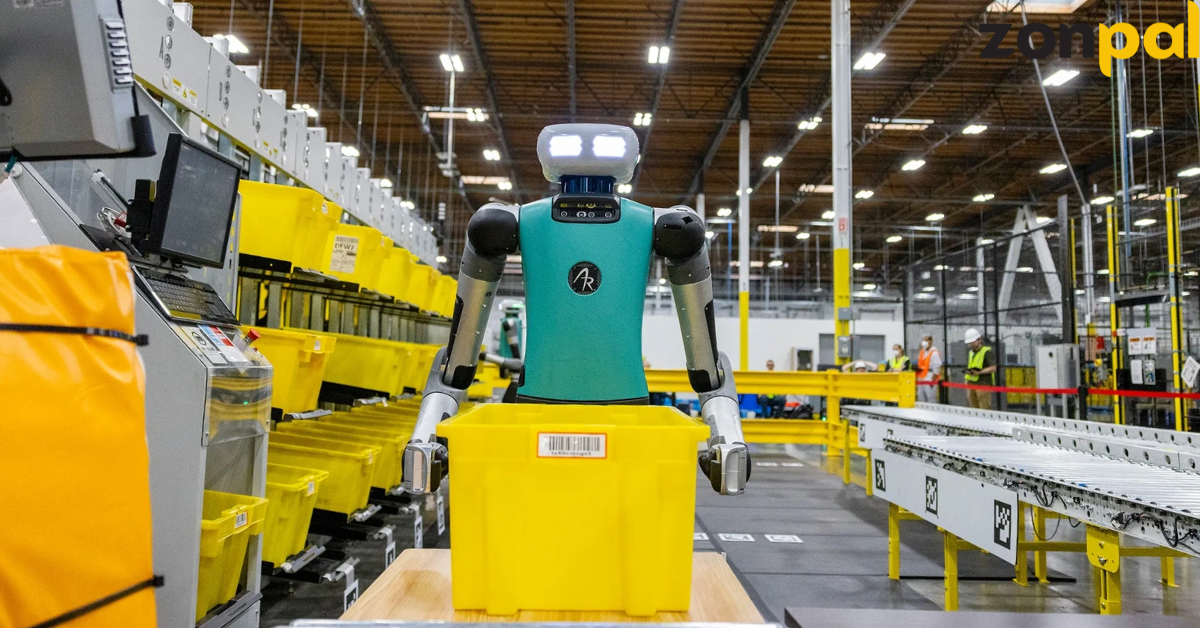
Amazon Hits 1 Million Robots: The Automation’s Future 2026
Conclusion: The Dawn of Automated Commerce
The story of the RDU1 warehouse is proof that the era of “Automated Commerce” has truly begun. Amazon is nearing its goal of a machine-driven core that frees humans for creative and high-level management tasks.
For global and Vietnamese businesses, staying outside this trend means being left behind. Let Zonpal Amazon Agency accompany you, transforming Amazon’s million-dollar robotic systems into the most efficient “employees” for your global storefront.