
A healthcare brand came to us with a familiar problem: strong product, decent reviews, but revenue stuck at around $300K to $400K a year on Amazon. The founder had built a solid line of health monitoring devices and daily-use wellness products, but growth had plateaued for nearly 18 months. This is the story of how we took that account from stall to roughly $1M in annual run rate, and what we think other healthcare and wellness brands can learn from it.
We’re keeping the brand anonymous per our client agreements, but every number and tactic here reflects what actually happened on this account.
Where the account was stuck
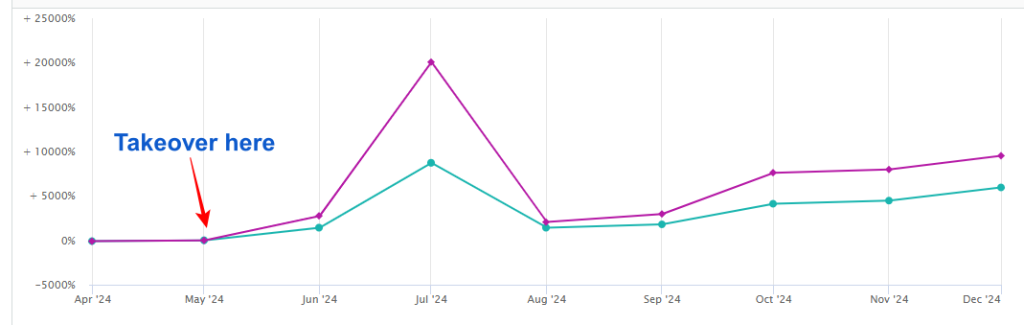
When we took over, the brand had three SKUs live on Amazon US, all in the health and household category. Reviews were healthy (4.3 to 4.6 stars), but organic ranking had flatlined on page 2 to 3 for the main keywords. PPC spend was high relative to sales, with an ACoS hovering around 45%.
The founder had been running the account mostly hands-off with a freelancer handling occasional listing tweaks. There was no coherent PPC structure, no inventory forecasting model, and pricing had not been touched in over a year despite competitor moves. Classic symptoms of an account that grew fast early on, then got neglected once the founder’s attention shifted elsewhere.
Our first diagnostic call surfaced the real issue: this wasn’t a product problem, it was an operations and strategy problem. The product itself had strong repeat purchase potential in a category (health monitoring) where trust and compliance matter more than most.
Rebuilding the foundation first
Before touching ad spend, we rebuilt three things: listings, backend data hygiene, and inventory planning. In healthcare and medical-adjacent categories, listing accuracy isn’t optional. Amazon scrutinizes health claims closely, and one flagged listing can tank an entire catalog’s visibility overnight.
We audited every claim against FDA guidance and Amazon’s health and personal care policies, rewrote bullet points to lead with benefit-driven language backed by what the product could legitimately claim, and restructured backend search terms that had been left mostly blank. We also fixed a recurring stockout pattern that was quietly killing organic rank every 6 to 8 weeks.
This groundwork took about 5 weeks. No dramatic revenue jump yet, but conversion rate on the flagship SKU moved from 9% to just over 13% within that window, simply from clearer listings and consistent stock levels.
The PPC restructure that changed the trajectory
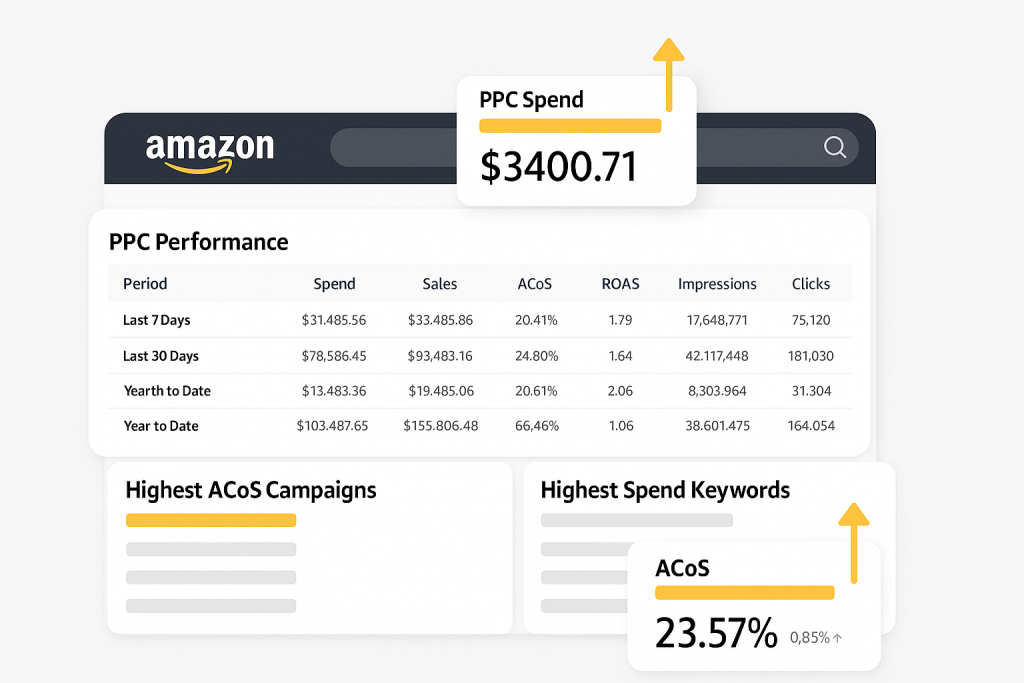
Once the foundation was solid, we rebuilt the PPC account from scratch. The previous structure had one broad-match “auto” campaign running everything, no negative keyword hygiene, and zero separation between branded, competitor, and category-generic terms.
We restructured into a tiered campaign model: tight exact-match campaigns on proven converters, a controlled phrase-match layer for discovery, and a small, capped budget for competitor conquesting. Within 60 days, ACoS dropped from 45% to around 22%, and total ad-attributed sales grew by roughly 3x on a flat budget increase of only about 20%.
The bigger unlock came from reinvesting the ad efficiency gains into TACoS-aware scaling. Instead of capping spend arbitrarily, we let ad spend grow in proportion to organic sales lift, which let the brand climb from page 3 to top-of-page-1 on its two highest-intent keywords within about 4 months.
Expanding the catalog with intent
Around month 5, we advised the brand to launch two new SKUs, but not randomly. We used search term and category gap data pulled from the existing account’s own PPC reports to identify adjacent products customers were already searching for alongside the flagship item.
One new SKU, a companion accessory to the main device, launched with an existing customer base already primed to buy it. It hit profitability within 6 weeks, much faster than a cold-start product usually would, because we bundled the launch with post-purchase email flows to existing buyers and a review-generation sequence through Amazon’s Vine program.
This is a pattern we see across healthcare and wellness accounts we work with: the fastest path to a second profitable SKU is almost always inside your own existing customer data, not a brand-new product idea.
The numbers that mattered
By month 10 of working together, the account had grown from roughly $30K a month to $85K a month in Amazon revenue, putting it on a run rate just above $1M annually. A few specific shifts drove that:
- ACoS dropped from 45% to a stabilized range of 18 to 22%, freeing up margin to reinvest in scaling ad spend without hurting profitability
- Organic ranking for the top 3 keywords moved from page 2-3 to top 5 positions on page 1
- Conversion rate on the flagship SKU improved from 9% to over 14% after listing and imagery rework
- Two new SKUs added roughly 25% of total monthly revenue by month 10
- Review velocity increased by about 4x through a compliant, Vine-driven review strategy
None of this came from one big lever. It came from fixing the boring stuff (listings, stock, negative keywords) before touching the exciting stuff (new SKUs, aggressive ad scaling). That order matters more than most sellers assume, and it’s a principle we cover in more depth in our guide to listing optimization.
Why healthcare and wellness brands need a different playbook
Healthcare products carry compliance risk that most categories don’t. A single unsubstantiated claim in a bullet point can trigger a listing suppression, and repeated flags can suspend an entire brand account. Any agency working in this space needs to understand FDA labeling rules and Amazon’s health and personal care policy, not just general PPC and SEO tactics.
We’ve also found that trust signals matter more here than in most categories. Buyers researching health products read reviews more carefully, check for third-party certifications, and are more price-sensitive to anything that looks like a markup on a “miracle” claim. Messaging has to stay grounded in what the product does, not what it promises.
How to evaluate an agency if you’re in this position
If your healthcare or wellness brand is stuck like this account was, here’s a practical checklist we’d recommend using when comparing agencies:
- Category experience: Ask for specifics on how they’ve handled FDA-adjacent claims or Amazon’s health and personal care restrictions. General e-commerce experience isn’t enough here.
- Diagnostic-first approach: A good partner audits before pitching a plan. If an agency proposes a strategy before reviewing your account data, that’s a red flag.
- Transparent reporting cadence: You should get regular, plain-language updates on ACoS, TACoS, organic rank, and conversion rate, not vanity metrics dressed up as wins.
- Compliance awareness: Ask how they handle listing copy review for health claims. If they don’t have a process, that’s a liability waiting to happen.
- Clear ROI framing: A serious partner should be able to show you what “success” looks like in dollar terms within 90, 180, and 365 days, not just “we’ll optimize everything.”
We built our own process around this exact checklist, largely because we kept seeing healthcare brands get burned by generalist agencies that didn’t understand the category’s constraints. Our approach to full account management starts with the same audit-first method we used on this case.
What we’d do differently on the next one
In hindsight, we would have moved on the PPC restructure a week or two earlier, running it in parallel with the listing fixes instead of fully sequential. The account lost a small amount of ad efficiency in that overlap window that could have been captured sooner.
We’d also start the new-SKU search term analysis by month 2 instead of month 5. The data that led to the successful companion product launch was sitting in the account from day one. Catching it earlier could have compressed the timeline to $1M ARR by roughly a month or two.
Final thoughts
This account didn’t grow because of one clever tactic. It grew because the fundamentals got fixed in the right order, ad spend got reinvested intelligently instead of arbitrarily capped, and catalog expansion was driven by existing customer data instead of guesswork.
If your healthcare or wellness brand feels stuck the way this one did, we’d recommend starting with an honest audit before committing to any agency. You can see more of how these engagements play out, including the specific milestones and timelines, on our case studies page.