
Most new sellers focus every ounce of energy on the launch. Get the product live, get the first sales, hit page one. Then month twelve rolls around and the reality sets in: keeping an amazon fba business alive is a completely different skill set than starting one.
We’ve watched plenty of accounts crash between month 8 and month 18, not because the product was bad, but because the seller never built the operational muscle to survive a bad quarter. This guide walks through what actually keeps an FBA business standing past year one, based on patterns we see across the accounts we manage.
What you need before you start
Surviving past year one isn’t about finding a magic product. It’s about setting up the business so it can absorb shocks: a supplier delay, a Amazon policy change, a competitor undercutting your price, a review bomb. If your model only works when everything goes right, it won’t make it to year two.
Before you go deeper, you need three things in place. First, a real budget, not just enough to buy inventory once, but enough to survive at least two full reorder cycles without new revenue. Second, a basic bookkeeping system, even a simple spreadsheet tracking COGS, Amazon fees, and ad spend by SKU. Third, a habit of checking your numbers weekly, not just when something feels wrong.
Sellers who skip this step tend to run their business by feel. They know sales “look good” but can’t tell you their actual net margin. That gap is where most account failures start.
Step 1: Pick a product and niche you can defend long-term
A lot of first-time sellers pick a product because it’s trending or because a course told them the numbers looked good. That’s fine for a first sale, but it’s a weak foundation for a business you want around in three years.
Ask yourself what happens when five more sellers copy your listing in six months, because they will if the category looks profitable. If your only advantage is price, you’re in a race to the bottom. If your advantage is a design tweak, a bundle, better packaging, or a brand story that builds repeat buyers, you have something harder to copy.
We’ve seen accounts in commodity categories (phone cases, generic kitchen tools) burn out fast once Chinese sellers flood the same keyword with near-identical listings at lower margins. The accounts that lasted picked a narrower niche where they could own the customer relationship, not just the listing.
Step 2: Build real margin into your model from day one
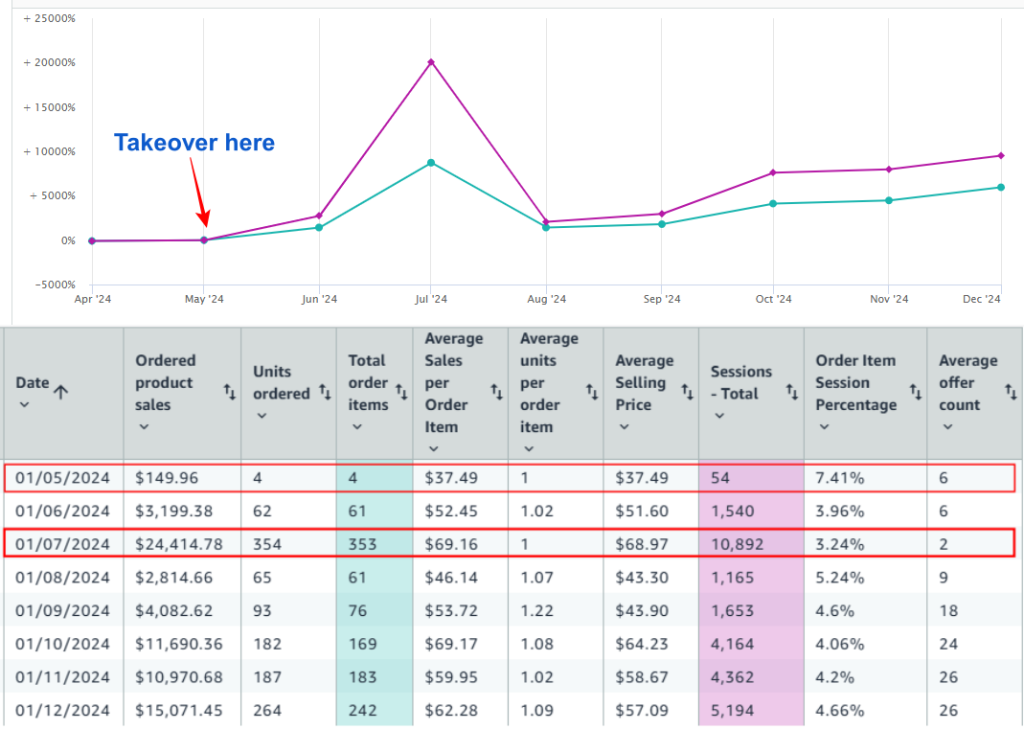
A business that nets 8% margin looks fine on a good month and falls apart the moment Amazon raises FBA fees or a competitor starts a price war. We generally recommend targeting a net margin in the 20 to 30% range before ad spend eats into it, giving you room to absorb the fee increases Amazon has pushed through nearly every year since 2022.
Run the full math before you commit to a supplier: landed cost, Amazon referral fee (usually 8 to 15% depending on category), FBA fulfillment fee, storage cost, and expected PPC spend as a percentage of revenue. If the number that’s left doesn’t give you comfortable room, don’t launch, renegotiate the supplier price or rework the product spec first.
One pattern we see often: sellers price aggressively to win the launch, then never raise the price back up because they’re afraid of losing the Buy Box. A year later they’re stuck at a margin that can’t survive a single bad month. Price for the business you want in year two, not just the launch week.
Step 3: Treat your listing and reviews as long-term assets
Your listing isn’t a one-time task you finish before launch. It’s an asset that needs maintenance, the same way a website does. Amazon’s algorithm and buyer expectations shift constantly, and listings that were optimized in 2023 often look dated by 2025.
Review your main image, bullet points, and A+ content every quarter, not just when sales drop. Check what your top three competitors changed. If a competitor added a comparison chart or lifestyle video and your listing still has stock photos, that gap will show up in your conversion rate before it shows up in your sales report.
Reviews deserve the same long-term thinking. A steady, natural flow of reviews (through Amazon’s Vine program or simple post-purchase follow-up, both compliant with Amazon’s terms) matters more than a burst of reviews at launch that then goes quiet. Sellers who stop asking for reviews after month three often watch their review velocity flatline while competitors keep climbing.
Step 4: Diversify demand so one channel doesn’t sink you
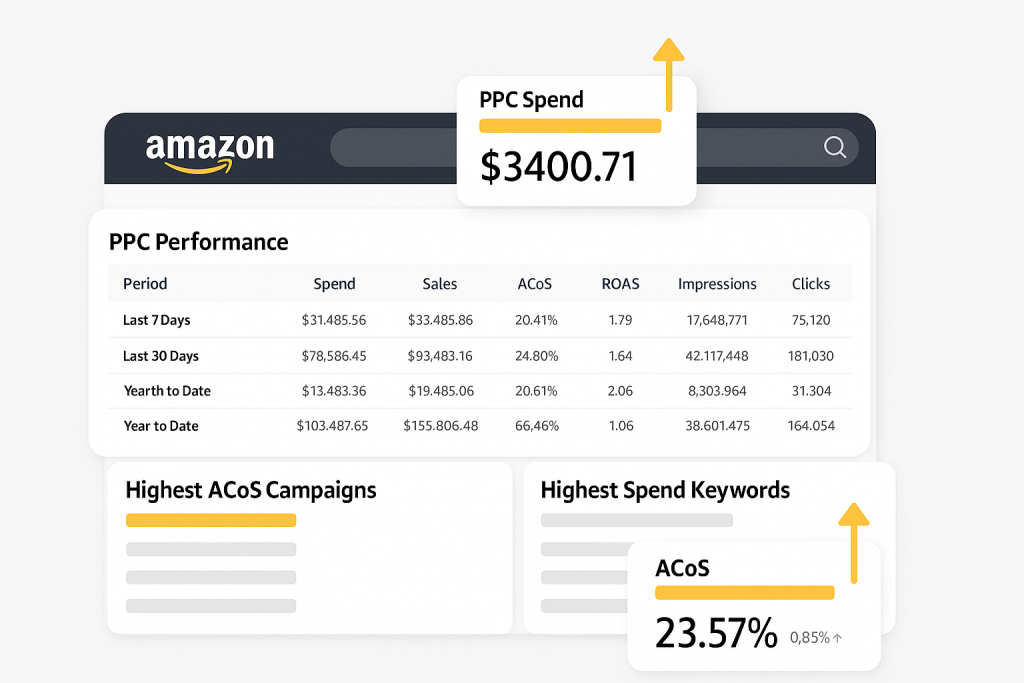
We’ve managed accounts that generated 90% or more of their revenue from a single PPC campaign. It worked, until Amazon’s auction dynamics shifted, CPCs jumped, and that one campaign’s ROAS collapsed in a single month, taking the whole business’s profitability with it.
A more durable amazon fba business spreads demand across several channels: organic ranking from strong keyword coverage, a mix of PPC campaign types (not just one automatic campaign), and increasingly, off-Amazon traffic through social or email that Amazon rewards with the External Traffic bonus in some categories. Learn more about structuring campaigns properly through our account management services, where we typically start by auditing exactly how concentrated a seller’s demand is before touching ad spend.
The goal isn’t to run ten channels badly, it’s to make sure no single lever, if it breaks, breaks the entire business. Even having two solid PPC campaign structures instead of one gives you room to pause and fix one while the other keeps generating sales.
Step 5: Build systems and documentation before you need them
Most sellers only write down their processes after something goes wrong: an account gets suspended, a VA quits, or a supplier switches specs without telling anyone. By then it’s too late to prevent the damage, you’re just doing cleanup.
Document your reorder trigger points (what inventory level tells you to reorder, and how far in advance), your supplier contacts and backup suppliers, your listing edit history, and your standard response templates for common customer messages. This sounds tedious in year one, but it’s exactly what separates a business that survives a founder’s two-week vacation from one that doesn’t.
We’ve seen accounts get suspended over listing violations that could have been avoided with a simple pre-launch checklist. A one-page document covering restricted keywords, required certifications, and image requirements takes an afternoon to build and can prevent a suspension that takes weeks to resolve.
Step 6: Watch cash flow like it’s the only metric that matters
Sales growth feels good, but cash flow is what actually keeps the lights on. FBA businesses have a specific cash trap: you pay suppliers upfront, wait weeks for production and shipping, then wait again for Amazon to pay out every two weeks, all while reordering before you’ve even collected on the last batch.
Track your cash conversion cycle explicitly: how many days pass between paying your supplier and receiving payment from Amazon for that inventory. If that number is 90 days and you’re reordering every 45 days, you have a structural cash gap that will eventually force you into either high-interest financing or a stockout.
Sellers who scale too fast on paper-thin cash reserves are some of the most common failures we see, not because the product didn’t sell, but because they ran out of cash to reorder while waiting on Amazon payouts. Build a cash buffer equal to at least one full reorder cycle before you push for aggressive growth.
Common mistakes (and how to avoid them)

- Chasing revenue over margin. A seller doing $50,000 a month at 8% margin is in a weaker position than one doing $25,000 at 25%. Track net profit weekly, not just top-line sales.
- Single-SKU dependency. If your entire business rides on one ASIN, a single negative review wave or a suspended listing can wipe out your income overnight. Build at least a second product before you scale ad spend on the first.
- Ignoring Amazon’s policy updates. Fee changes, review policy shifts, and category restrictions roll out with limited warning. Check Seller Central’s Announcements tab weekly, not quarterly.
- No backup supplier. One factory delay shouldn’t be able to shut down your entire reorder cycle. Qualify a second supplier even if you never use them, just to have the option.
- Reacting instead of reviewing. Sellers who only check their dashboard when something feels off tend to catch problems weeks after they started. A 15-minute weekly review of margin, inventory, and ad spend catches most issues early.
Wrapping up
Building an amazon fba business that lasts past year one comes down to a handful of unglamorous habits: real margin, documented processes, diversified demand, and cash discipline. None of it is exciting, but it’s what separates a business from a one-time win.
If you’re past the launch phase and want a second set of eyes on how your account is actually holding up, our team at Zonpal offers account management services built specifically for sellers trying to turn a first-year win into a business that lasts. We’re happy to start with a straightforward account review whenever you’re ready.