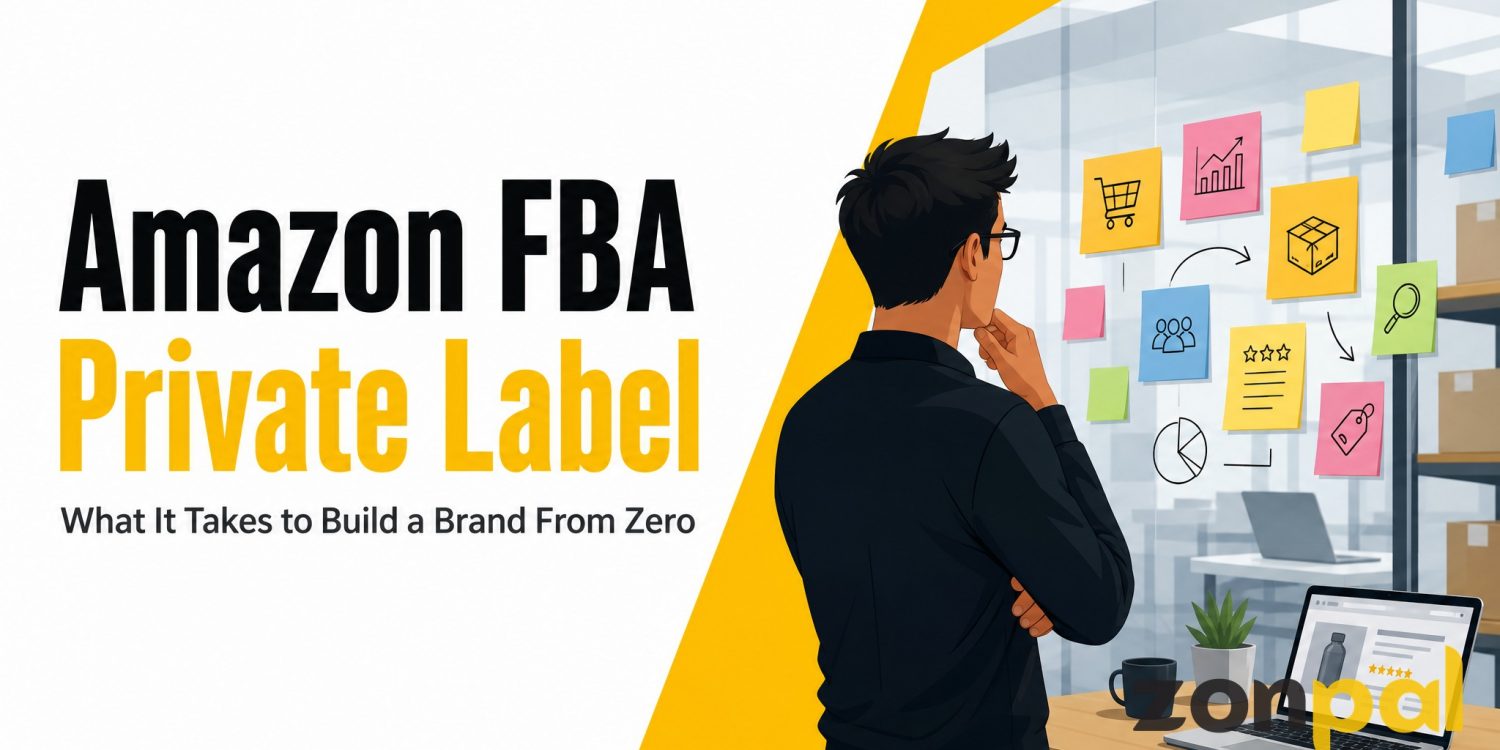
Every year, thousands of people watch a YouTube video about “$10K/month passive income” and decide to start an Amazon private label brand. Most of them quit within six months, not because the model is broken, but because they treated it like a side hustle instead of a real business.
Amazon FBA private label is one of the most accessible ways to build a physical product brand today. You don’t need a factory, a warehouse, or years of retail experience. But “accessible” doesn’t mean “easy.” This guide walks through what it actually takes to go from zero to a functioning private label brand on Amazon, based on how brands are actually built and scaled, not the highlight reel version.
What you need before you start

Before you touch Alibaba or Amazon Seller Central, get four things in order. First, capital. A realistic first-product budget for private label runs between $3,000 and $10,000, covering inventory, samples, photography, and initial PPC spend. Sellers who start with $500 usually run out of runway before the listing even ranks.
Second, time. Expect 10 to 15 hours a week for the first three months: sourcing calls, listing copy, supplier negotiation, and reviewing early sales data. This isn’t a “set it and forget it” model at launch, even though it can become more passive later.
Third, a business entity and basic compliance setup: an LLC (or equivalent), a business bank account, and a plan for sales tax if you’re US-based. Fourth, patience with a 90 to 120 day timeline before you see your first meaningful profit, since sourcing, shipping, and ranking all take real time.
If any of these four are missing, that’s the gap to close first, not the product idea.
Step 1: Understand what “private label” actually means
Private label means you’re sourcing an existing product from a manufacturer, then selling it under your own brand name and packaging. You’re not inventing a new product category. You’re taking something that already sells, and building a brand identity, listing, and customer experience around it that’s better than what’s currently on the market.
This matters because it changes what “research” should look like. You’re not asking “has anyone made this before?” You’re asking “can I make a version of this that ranks better, converts better, and builds repeat customers better than the top 10 listings right now?”
A simple example: a generic silicone baking mat exists in thousands of factories. A private label seller who adds better packaging, a clearer use-case (like “for air fryer baskets” instead of generic baking), and a sharper listing can outsell the original supplier’s white-label version by 3 to 5x on the same product.
Step 2: Choose a category using data, not instinct
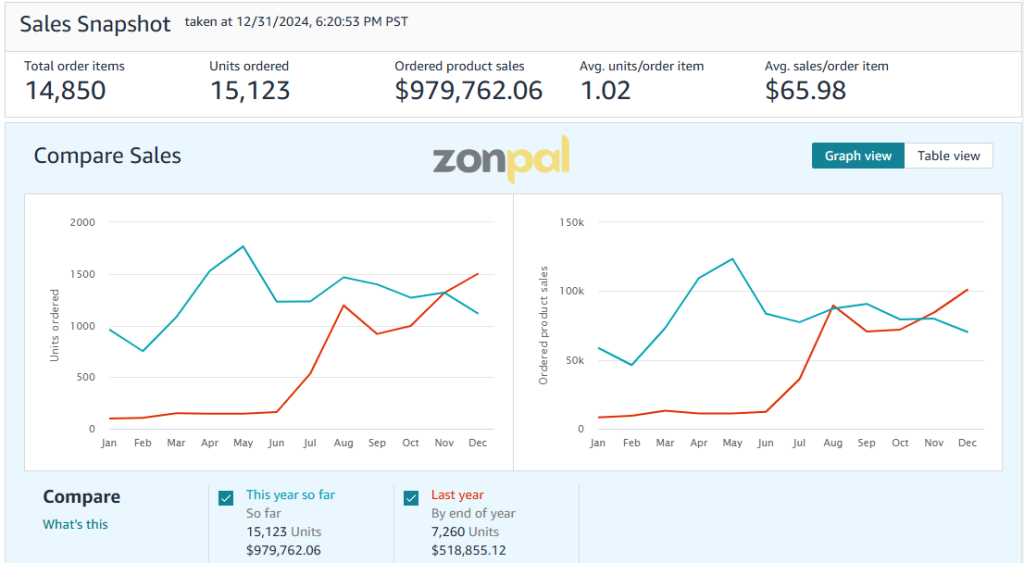
This is where most first-time sellers go wrong. They pick a product because they personally like it, or because a friend suggested it, instead of checking whether real demand and a viable margin exist.
A workable product should hit a few benchmarks: retail price between $18 and $50 (enough margin to cover Amazon’s roughly 15% referral fee plus FBA fees, still leaving 20-30% net), monthly search volume in the thousands (not tens of thousands, which usually means brutal competition), and a review count on top listings under 500, which signals the category hasn’t been dominated by one or two entrenched brands yet.
Tools like Helium 10 or Jungle Scout can pull this data quickly, but the number that matters most is the “opportunity gap”: are the top-ranking listings actually good, or are they outdated, poorly photographed, or badly reviewed? If the current leaders are weak, that’s your signal. If they’re well-optimized brands with 4.7+ stars and thousands of reviews, that’s a category to avoid as a first product.
We covered this process in more depth in our guide to Amazon product research, which walks through the specific metrics worth tracking before you commit to a niche.
Step 3: Validate before you commit money
Once you have two or three candidate products, validate them further before ordering inventory. Pull up the top 10 listings and read the actual 1 to 3 star reviews, not the 5 star ones. Customer complaints are a free product roadmap: they tell you exactly what’s broken about the current options.
One recurring pattern we’ve seen across dozens of client launches: a product category looks saturated on the surface (200+ listings), but almost none of them address a specific complaint showing up in 30% of negative reviews. That gap is often where a new brand can win fast, without needing to reinvent the whole product.
Also check seasonality. A product that spikes hard in November and dies in February can still work, but it changes your inventory planning and cash flow expectations. Google Trends and Amazon’s own search volume trends by month are enough to spot this early.
Step 4: Find and vet a manufacturer

Sourcing is where “private label” becomes real. Alibaba is the default starting point for most sellers, but the platform rewards people who know how to filter noise from real capability.
Contact at least 8 to 10 suppliers for the same product spec. Ask for: MOQ (minimum order quantity), unit cost at your target order size, lead time, and whether they’ve worked with Amazon sellers before (this usually means they understand FBA-compliant packaging and labeling requirements). Request samples from your top 3 candidates before committing to a full order, even if it costs an extra $50-150 per sample plus shipping.
Red flags worth walking away from: suppliers who won’t provide a business license number, quote prices that are 30%+ below every other supplier for the same spec (usually a quality corner is being cut somewhere), or refuse to discuss a third-party inspection before shipment. A $200 pre-shipment inspection is cheap insurance against a $5,000 inventory order arriving defective.
Budget 30 to 45 days for sample rounds and negotiation, and another 25 to 40 days for production and ocean freight if you’re shipping from China. Air freight cuts this to 7-10 days but at 4-6x the cost per unit, usually only worth it for your very first small batch to start selling faster.
Step 5: Build the brand, not just the product
This is the step that separates a real private label brand from a commodity reseller. Your brand needs: a name and logo that isn’t generic, packaging that photographs well (this matters more than people expect since your main product image is often the packaging shot), and a listing that tells a clear story about who this product is for and why it’s better.
Trademark registration through Amazon Brand Registry is worth doing early, not after you’ve launched. It typically costs $225-400 in USPTO filing fees (in the US) and takes 8-12 months to fully register, but you can often start the Brand Registry enrollment process once you have a filed trademark application, well before final approval. Brand Registry unlocks A+ Content, brand analytics, and protection against listing hijackers, all of which matter more once you start seeing traction.
Your listing copy should answer three questions in the first five seconds a shopper spends on it: what is this, who is it for, and why is it better than the alternative. Everything else (bullet points, A+ content, backend keywords) supports that core pitch.
Step 6: Launch and generate initial momentum
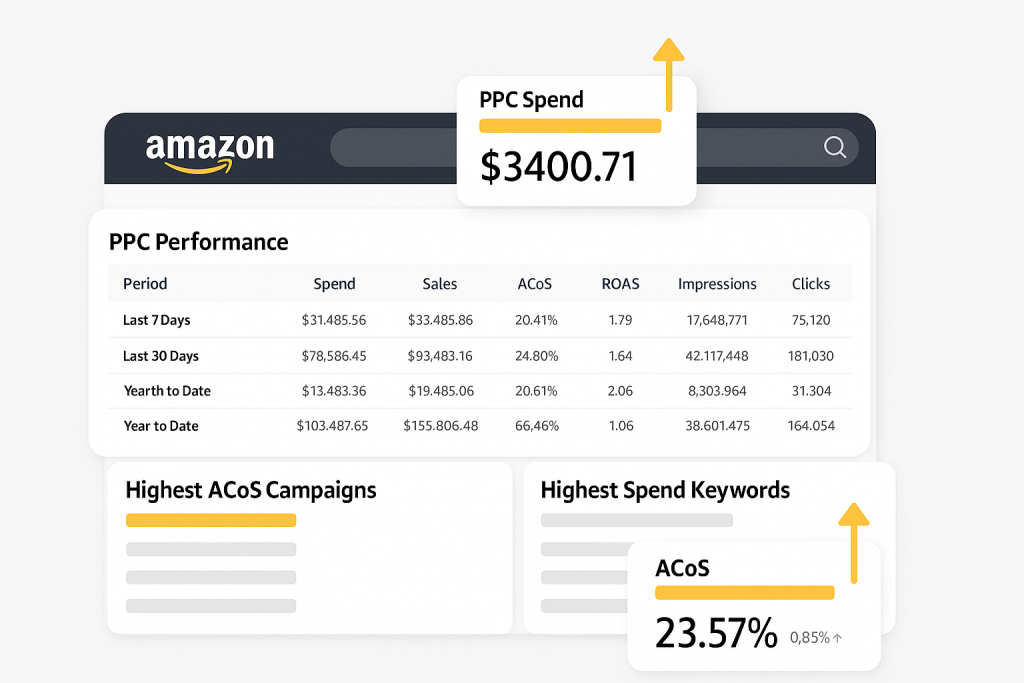
Launch week is where a lot of sellers underestimate what’s needed. A new listing with zero reviews and zero sales history has almost no organic visibility on day one. You need to manufacture initial momentum through a combination of PPC and, where compliant, early promotional pricing.
A realistic launch budget for PPC is $20-40 per day for the first 4-6 weeks, targeting a mix of exact-match keywords tied to your core search terms and broader category terms to gather data. Expect your ACoS (advertising cost of sale) to run high, sometimes 60-100%+, during this initial period. That’s normal. You’re paying for rank and review velocity, not profit, in month one.
Reviews matter enormously in this phase. Amazon’s Vine program (for enrolled Brand Registry sellers) can generate up to 30 reviews per parent ASIN from verified early customers, which is often the fastest legitimate way to build initial social proof. Combine this with a genuinely good product and responsive customer service, and a new listing can realistically hit 15-25 organic reviews within the first 60-90 days.
Common mistakes (and how to avoid them)
- Choosing a product based on personal interest instead of data. The product you’re passionate about and the product that sells are often two different things. Let search volume, margin, and review gaps drive the decision, not your own preferences.
- Skipping the sample stage to save time. A $100 sample that reveals a defect is far cheaper than a $6,000 inventory order that arrives with the same problem, times 1,000 units.
- Underestimating cash flow needs. Between inventory, PPC, and Amazon’s payment cycle (funds typically release every 14 days), sellers often run short on cash right when they need to reorder. Plan for at least two full inventory cycles of working capital before you launch.
- Copying competitors instead of improving on them. A near-identical product with a different logo rarely outperforms the market leader. The brands that win find a specific, provable improvement, whether that’s a design fix, a bundling angle, or solving a complaint the top listings ignore.
- Launching without a real pricing strategy. Pricing too low to “compete” erodes margin permanently once you raise it later, since past buyers notice and complain. Price based on your actual cost structure and target margin from day one.
Wrapping up
Private label on Amazon isn’t a shortcut to passive income, but it is one of the more accessible paths into building a real physical product brand, if you treat the research phase seriously. The sellers who succeed spend real time validating demand, vetting suppliers, and building a brand story before they spend a dollar on inventory.
If you’re still in the early research phase and want a second set of eyes on category selection, competitor gaps, or margin viability before you commit budget to inventory, our team offers dedicated Amazon product research support to help you validate a product idea before it becomes a five-figure commitment.