If you’ve talked to more than one Amazon FBA agency, you’ve probably noticed something frustrating: nobody quotes pricing the same way. One agency wants a flat retainer, another wants a cut of your ad spend, and a third wants a percentage of your total revenue. There’s no standard menu, which makes it hard to compare offers or know if you’re getting a fair deal.
This guide breaks down how amazon fba pricing actually works behind the scenes: the models agencies use, what usually drives the price up or down, and how to read a proposal without getting blindsided by hidden fees later.
What you need before you start
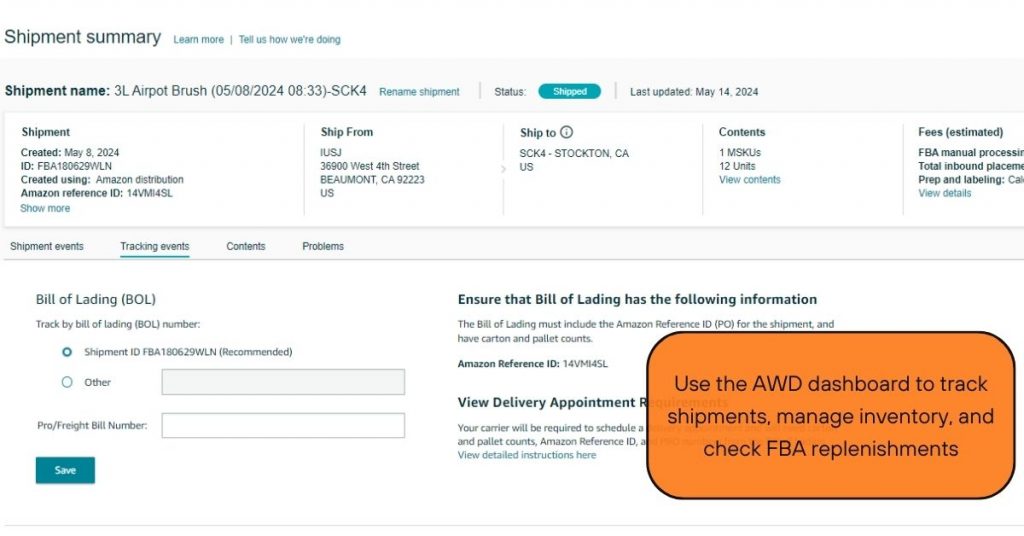
Before you can evaluate any agency’s pricing, you need your own numbers straight. Pull your last 90 days of revenue, ad spend, and net margin from Seller Central. Agencies price based on your account’s complexity, not just its size, so know your SKU count, how many marketplaces you sell in, and whether you’re running FBA, FBM, or both.
You should also know what you actually need help with. A brand that only needs PPC optimization will get a very different quote than one that needs full account management, listing overhauls, and inventory planning. Agencies often bundle services into tiers, and the tier you fall into depends on scope, not just budget.
Finally, have a rough idea of your current ACOS (advertising cost of sale) and TACOS (total advertising cost of sale). These two numbers come up in almost every pricing conversation, because agencies use them to estimate how much work is involved in getting your account profitable.
Step 1: The flat monthly retainer model
This is the most common structure for full-service Amazon management. You pay a fixed fee each month, usually somewhere between $1,500 and $8,000 depending on account complexity, and the agency handles a defined scope: PPC management, listing optimization, inventory alerts, and reporting.
The advantage is predictability. You know exactly what you’re paying regardless of how sales perform that month. The tradeoff is that flat retainers don’t automatically scale with your growth, so agencies typically re-negotiate the fee every 6 to 12 months as your catalog or ad spend grows.
We’ve seen brands with $50,000/month in revenue and brands with $500,000/month pay similar retainer ranges if their account structure is comparable in complexity, like a single marketplace with a manageable SKU count. Complexity, not just revenue, is what agencies price against.
Step 2: The percentage of ad spend model
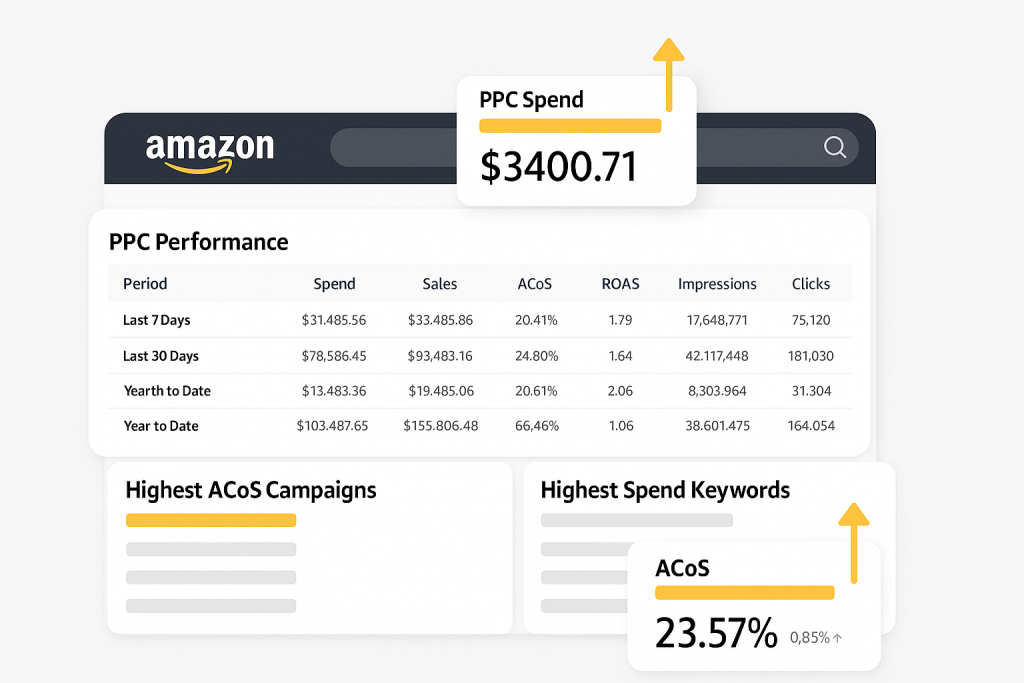
Common with agencies that focus heavily on PPC management. You pay a percentage of your monthly ad spend, typically in the 10% to 20% range, on top of the actual spend that goes to Amazon.
This model aligns incentives reasonably well when your goal is scaling ad spend efficiently. But it can create a conflict of interest: an agency paid a percentage of spend has less incentive to cut wasteful spend than one paid a flat fee. If you go this route, ask directly how the agency handles situations where reducing spend would actually improve your profitability.
A practical tip: if your ad spend is under $5,000/month, percentage-of-spend pricing often results in a fee too small to justify serious agency attention. Most agencies set a minimum monthly fee (often $1,000 to $1,500) to cover this gap.
Step 3: The percentage of revenue model
Some agencies, especially those offering full brand management, price against total sales rather than ad spend. This usually falls between 3% and 10% of monthly revenue, depending on scope.
This model works best for brands that want the agency deeply invested in overall growth, not just ad performance. It also means your costs rise directly with your sales, which can feel steep once you cross into six or seven figures monthly. Before signing, ask whether the percentage applies to gross revenue or net revenue after returns and refunds. That distinction alone can change your effective cost by a meaningful margin.
Step 4: Hybrid and tiered pricing
Many agencies, including us at Zonpal, use a hybrid structure: a smaller flat base fee to cover fixed operational work (account audits, weekly reporting, inventory monitoring) plus a smaller percentage tied to ad spend or revenue growth.
This tends to be the fairest structure for both sides. The agency has guaranteed baseline revenue to justify dedicating a team to your account, and you’re not paying a large flat fee if your account is still small. Tiered pricing usually looks like three or four packages, say Starter, Growth, and Scale, each with a defined set of deliverables and a price band.
When comparing tiered proposals, don’t just compare the headline number. Compare what’s actually included at each tier: number of PPC campaigns managed, frequency of listing updates, whether A+ content and brand store design are included, and how often you get a strategy call.
Step 5: Performance-based and commission pricing
Less common, but worth knowing about. In this model, the agency takes a lower base fee (or none at all) and earns a commission tied to incremental sales growth above a baseline. This sounds appealing because it looks “risk-free,” but read the fine print carefully.
The baseline matters more than the commission rate. If an agency sets your baseline too low, they can hit “growth” targets without doing much real work, while you pay commission on sales you might have gotten anyway. Ask exactly how the baseline is calculated and whether seasonal spikes (like Q4) are excluded from the calculation.
Performance-based pricing works best for brands with a proven, stable sales history, since a clear baseline is easier to set. For newer brands or those launching new products, this model is harder to price fairly on either side.
What’s typically included (and what’s not)
Regardless of the pricing model, the real risk in any agency contract is scope creep hidden in vague deliverables. Here’s what to check for before signing:
- PPC management: Confirm whether Sponsored Products, Sponsored Brands, and Sponsored Display are all included, or just Sponsored Products.
- Listing work: Ask how many listings are covered per month and whether A/B testing (via Amazon’s Manage Your Experiments) is included.
- Creative and design: Product images, A+ content, and brand store builds are often billed separately, even under “full-service” packages.
- Reporting cadence: Weekly dashboards versus monthly PDF reports is a real difference in how much visibility you’ll have.
- Inventory and supply chain: Some agencies monitor FBA inventory health and reorder points; many don’t touch this at all.
If a proposal doesn’t spell these out clearly, ask for a written scope of work before you sign anything. A vague scope is the single biggest reason brands feel like they overpaid six months later.
Common mistakes (and how to avoid them)
We’ve reviewed a lot of agency proposals brands bring us for a second opinion. The same mistakes show up again and again:
- Comparing only the headline price. A $2,000/month retainer with limited PPC coverage can cost more per outcome than a $3,500/month package that includes full-funnel ad management and listing optimization.
- Ignoring contract length and exit terms. Some agencies lock you into 6 or 12-month terms with steep early termination fees. Always ask what happens if the relationship isn’t working after month two.
- Not asking who does the actual work. A sales call with a senior strategist doesn’t guarantee your account is managed by that same person. Ask who your day-to-day point of contact will be.
- Choosing percentage-of-revenue pricing too early. If your brand is pre-scale, this model can eat into margins faster than a flat fee, especially in months with heavy promotions or returns.
- Skipping the audit step. Agencies that quote a price without first auditing your account (PPC history, listing quality, inventory health) are often pricing blind, which usually means the price will change once they actually dig in.
For a deeper look at what a proper account audit should cover before any pricing conversation, our Amazon account management breakdown walks through the specific checkpoints we look at.
How to compare two proposals side by side
Once you have two or three quotes in hand, build a simple comparison instead of relying on gut feeling. List each agency’s pricing model, the exact deliverables, contract length, and reporting frequency in a single table. Then divide the monthly fee by the number of core deliverables (PPC campaigns managed, listings optimized, reports delivered) to get a rough cost-per-deliverable figure.
This exercise usually reveals that the “cheaper” quote isn’t cheaper once you account for what’s excluded. It also gives you concrete questions to bring back to each agency, like asking why one quote is 30% higher for what looks like the same scope. Good agencies will have a clear answer tied to team size, tooling, or account complexity, not a vague “we’re just worth it.”
If you’re also running PPC in-house and considering whether to outsource it, our guide on Amazon PPC management covers the cost tradeoffs of doing it yourself versus bringing in a specialized team.
Wrapping up
There’s no single “correct” way agencies structure amazon fba pricing, and that’s exactly why it’s worth understanding the models before you sign anything. Flat retainers give predictability, percentage models align incentives with growth, and hybrid structures usually offer the fairest balance for mid-sized brands. What matters most is matching the pricing model to your account’s stage and getting a clear, written scope so nothing gets lost between the sales call and the actual work.
If you want a second opinion on a proposal you’ve received, or want to see how our own pricing compares for your specific account setup, you can reach out to the Zonpal team and we’ll walk through the numbers with you directly.