Beauty brands live and die by two things on Amazon: what’s actually in the product, and what real customers say about using it. Shoppers in this category read ingredient lists closer than almost any other vertical, then scroll straight to reviews to check if the claims hold up. If your listing doesn’t answer both questions fast, you lose the sale to a competitor who does.
We’ve optimized listings for skincare, haircare, and personal care brands where the difference between a 12% and a 22% conversion rate came down to how ingredients were presented and how reviews were used inside the listing itself. This guide walks through exactly how to rebuild a beauty listing around those two pillars, step by step.
What you need before you start

Before touching a single bullet point, pull your current listing data. You’ll need your last 90 days of conversion rate, click-through rate from search, and your full review set (not just the star average, the actual text).
You also need your ingredient deck: full INCI names, concentration ranges if disclosed, sourcing info, and any certifications (cruelty-free, EWG Verified, USDA Organic, dermatologist-tested). If your brand doesn’t have this documented in one place yet, get it from R&D or your formulator first. Guessing at ingredient claims is how brands end up with compliance flags or 1-star reviews about false advertising.
Last, set up a simple review-tracking sheet. Categorize every review from the last 6 months by theme: skin reaction, texture, scent, results timeline, packaging. This becomes your raw material for the rest of the process.
Step 1: Map your ingredients to actual customer concerns
Most beauty listings list ingredients like a chemistry syllabus: “Aqua, Glycerin, Niacinamide, Sodium Hyaluronate.” That means nothing to a shopper comparing five serums in ten minutes.
Instead, map each key ingredient to the specific concern it solves and use the customer’s language, not the lab’s. For a niacinamide serum, we rewrote one client’s ingredient callout from “Contains 5% Niacinamide” to “5% Niacinamide to visibly reduce pores and even out tone within 4-6 weeks.” That single change, tested through Amazon’s Manage Your Experiments tool, lifted click-to-conversion by double digits over an 8-week test window.
Do this for your top 3-4 active ingredients only. Listing every ingredient with equal weight dilutes the ones that actually drive the purchase decision. Pick the ones your reviews already mention as effective and lead with those.
Step 2: Rebuild your bullet points around ingredient proof, not adjectives
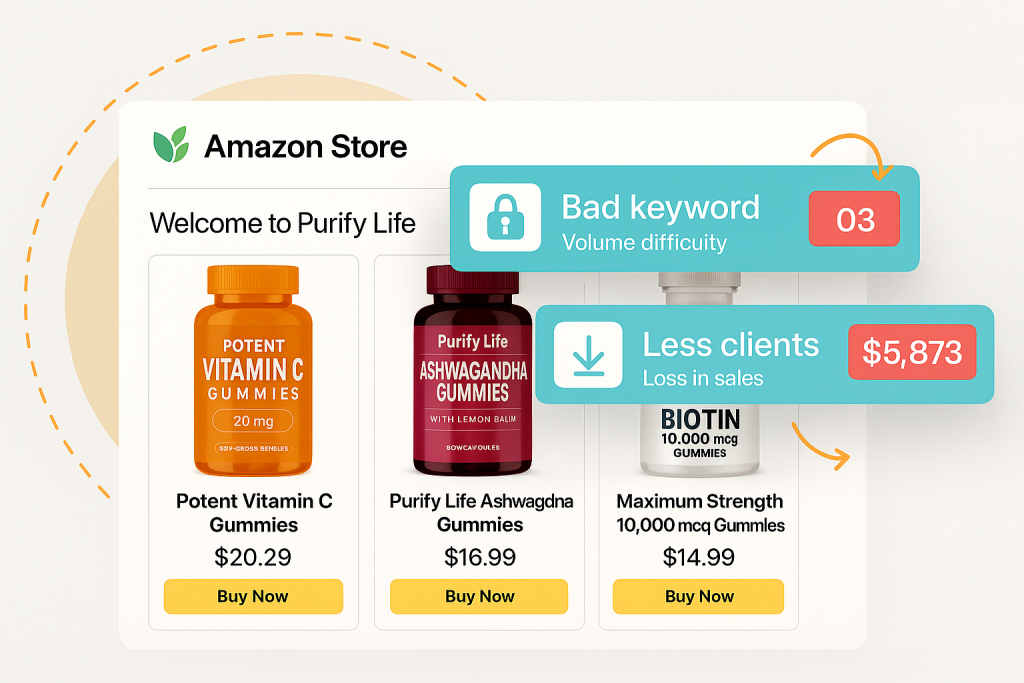
Generic bullets (“Nourishing formula,” “Gentle on skin,” “Premium quality”) don’t survive contact with a shopper who’s comparing your $28 serum against six others in the same search results.
Replace adjectives with ingredient-backed claims plus a source or mechanism. A structure that consistently works for beauty listings:
- Bullet 1: Lead ingredient + what it does + how long results take
- Bullet 2: Secondary ingredient + who it’s formulated for (skin type, hair type)
- Bullet 3: What’s NOT in it (sulfate-free, paraben-free, fragrance-free) if that’s a differentiator
- Bullet 4: Usage instructions tied to a routine (AM/PM, frequency)
- Bullet 5: Trust signal (dermatologist-tested, made in the USA, third-party lab tested)
One haircare brand we worked with moved “third-party lab tested for heavy metals” from the product description into bullet 5. Reviews mentioning “trust” and “safe for kids” increased noticeably in the following quarter, and that bullet directly addressed a concern that kept showing up in their 3-star reviews before the change.
Step 3: Turn your review data into listing copy
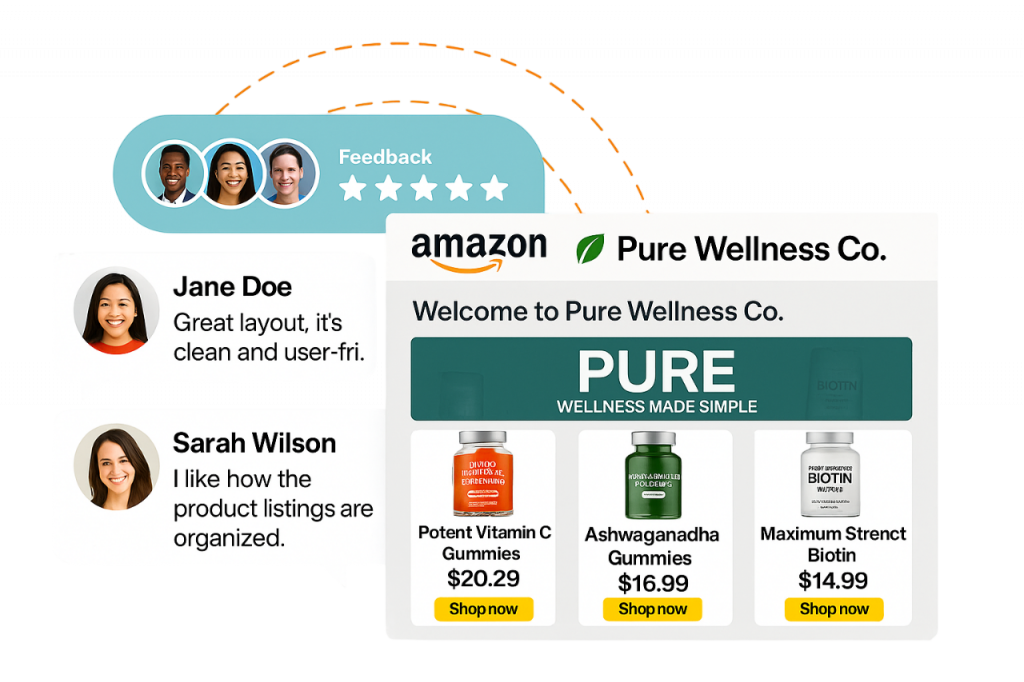
Your reviews are already telling you what to fix and what to amplify. Most brands read them for damage control but never mine them for copy.
Go through your categorized review sheet from the prep step and separate them into two buckets: objections (why someone almost didn’t buy, or returned it) and validations (unprompted praise for a specific result or ingredient).
Validations go straight into your bullets and A+ Content. If customers keep saying “cleared up my breakouts in 2 weeks” without you asking, that’s stronger proof than any brand claim you could write. Objections tell you what to preempt in your copy before the shopper even has the concern. If reviews mention “smells too strong” repeatedly, address scent directly in a bullet or A+ module rather than letting it surface only after purchase.
We ran this process for a skincare brand and found their top three unprompted review phrases (“no breakouts,” “absorbs fast,” “not greasy”) weren’t mentioned anywhere in the listing. Adding them into the title, bullets, and A+ headers correlated with a jump in conversion rate over the following 60 days, without any change to price or ad spend.
Step 4: Use A+ Content to answer the ingredient question visually
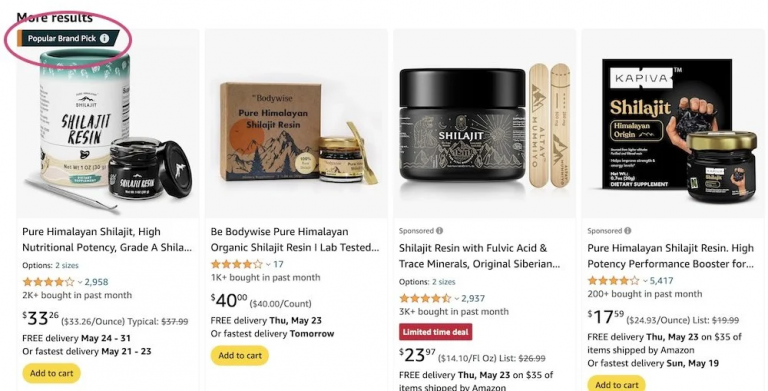
Text-heavy ingredient lists don’t convert well as static bullets, but they work extremely well as visual modules in A+ Content. Beauty shoppers want to see the formula, not just read about it.
Build at least one A+ module dedicated to an “ingredient breakdown” format: an icon or image for each key active, paired with a one-line benefit and a percentage or concentration if you’re allowed to disclose it. Pair this with a “what’s not inside” module listing excluded ingredients (parabens, sulfates, phthalates, synthetic fragrance) since this has become a major purchase driver for beauty and personal care shoppers over the last few years.
If your brand qualifies for Brand Registry, add a comparison chart module showing your formula against a generic “leading brand” alternative on 3-4 attributes that matter (natural ingredient percentage, cruelty-free status, dermatologist tested, made in USA). Comparison charts are one of the highest-converting A+ formats we use across beauty accounts, largely because shoppers in this category are actively comparing multiple listings side by side before deciding.
Step 5: Build a proactive review response and update cadence
Reviews for beauty products change faster than almost any other category because reactions, results, and expectations shift with skin type, season, and even shipping conditions affecting product texture.
Set a monthly cadence to reread your last 30 days of reviews and check for new recurring themes. If a new complaint pattern shows up (a reformulation causing texture complaints, a batch issue causing separation), update your listing copy and A+ Content before it snowballs into a rating drop.
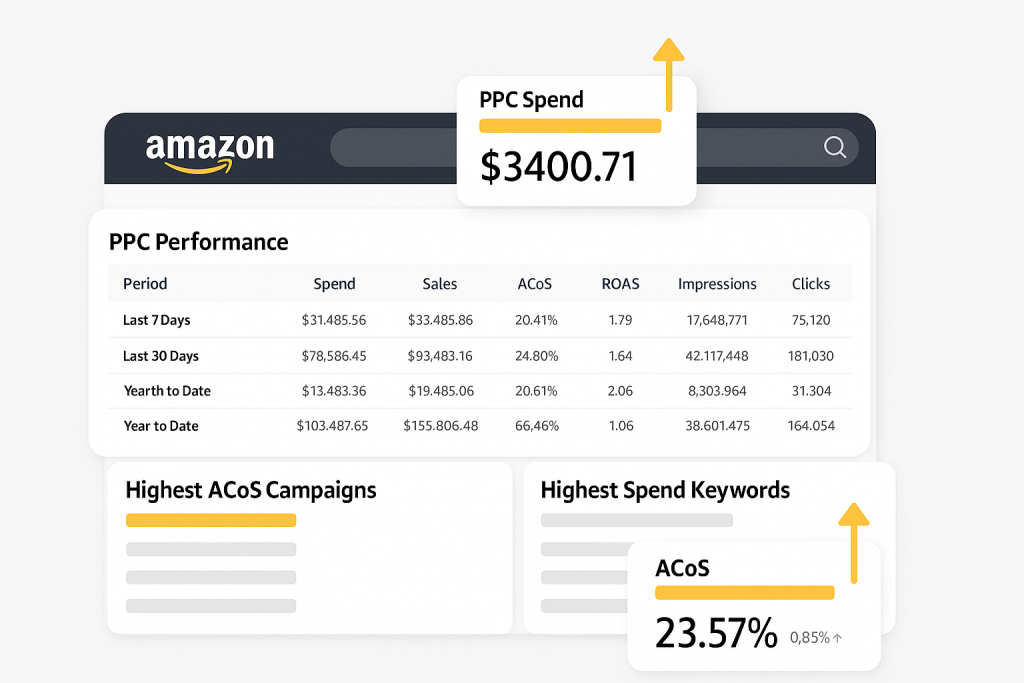
Respond to critical reviews when the platform allows seller feedback, and prioritize responses that clarify ingredient safety or usage instructions, since these responses often become public-facing FAQ answers for future shoppers reading that same review thread. This is also a good moment to revisit your PPC targeting strategy, since a listing update that resolves a common objection can justify testing higher bids on previously underperforming keywords.
Step 6: Keep your ingredient claims compliant as you optimize
Beauty listings get flagged and suppressed more often than most categories because ingredient and health claims sit close to FDA and FTC regulatory lines. Before publishing any updated copy, run every claim through a simple filter: can you substantiate it with lab data, clinical testing, or a documented formulation percentage?
Avoid absolute language like “cures,” “eliminates,” or “guaranteed results,” even if your reviews use that language. Customers can say it, your listing can’t. Replace with substantiated, testable phrasing: “clinically shown to reduce,” “formulated to visibly improve,” “reported by 90% of users in an independent study” (only if that study exists and you can produce it if Amazon requests documentation).
We’ve seen beauty listings suppressed for weeks over a single unsubstantiated ingredient claim buried in bullet 3. The fix took ten minutes, but the suppression cost the brand nearly three weeks of sales during a launch window. A compliance pass should be the last step in every listing update, not an afterthought.
Common mistakes (and how to avoid them)
A few patterns show up repeatedly when we audit beauty listings that aren’t converting:
- Listing every ingredient with equal emphasis. Shoppers skim. Lead with your top 3-4 actives only.
- Copying claims from competitor listings. If you can’t substantiate it for your specific formula, don’t use it, even if a top competitor does.
- Ignoring negative reviews about skin reactions. These need a direct response and, if recurring, a listing update clarifying who the product is (and isn’t) formulated for.
- Static A+ Content that never gets updated. Reformulations, new certifications, or shifting review themes should trigger a content refresh, not a “set it and forget it” approach.
- Using adjectives instead of proof. “Gentle,” “nourishing,” and “luxurious” don’t move conversion. Ingredient percentages, timelines, and third-party testing do.
Wrapping up
Beauty listings convert when the ingredient story and the review evidence work together instead of sitting in separate corners of the page. Shoppers want proof, not adjectives, and your existing reviews already contain the exact language that will make your next customer trust the listing enough to click “buy.”
If your team doesn’t have the bandwidth to run this process monthly across your full catalog, that’s exactly the kind of ongoing work our team handles for beauty and personal care brands through our listing creation and optimization service. We’ll audit your current listings, rebuild the ingredient and review architecture, and keep it updated as your review data evolves, so you’re not starting this process from scratch every quarter.