The sourcing landscape for Amazon sellers has shifted dramatically over the past few years. What used to be a simple “find a cheap supplier” approach has now evolved into a far more strategic process. In 2025, building a profitable Amazon business depends heavily on Amazon sourcing strategy decisions that protect your margins, ensure product consistency, and strengthen long-term scalability.
From our experience working with private-label brands and managing supply chains, the vast majority of ranking drops, margin losses, and cash-flow issues are rooted in weak sourcing systems. That’s why this guide focuses on helping you understand sourcing from a strategic, practical, and modern perspective.
Defining Strategic Sourcing for the Amazon Seller
Strategic sourcing goes beyond picking a supplier and placing an order. It involves designing a long-term foundation that supports profitability, stability, and competitive advantage. Understanding what “strategic” truly means is the first step toward building a resilient FBA operation. This is also where an amazon fba sourcing strategy for beginners often fails, simply because new sellers focus on price instead of long-term value.
Strategic sourcing vs. reactive (traditional) procurement
Reactive sourcing typically involves the following steps: you identify a product idea, browse Alibaba, send messages to multiple suppliers, and select the one that offers the lowest price. It’s fast, but extremely risky.
Strategic sourcing takes a very different approach. It begins with profit modeling, SKU validation, risk evaluation, and long-term planning. You consider supplier reliability, cost structure, logistics pathways, and total landed cost — not just unit price.
From our experience, sellers who adopt this mindset tend to scale faster and avoid the usual pitfalls: inconsistent quality, delays, stockouts, and unexpected cost spikes.
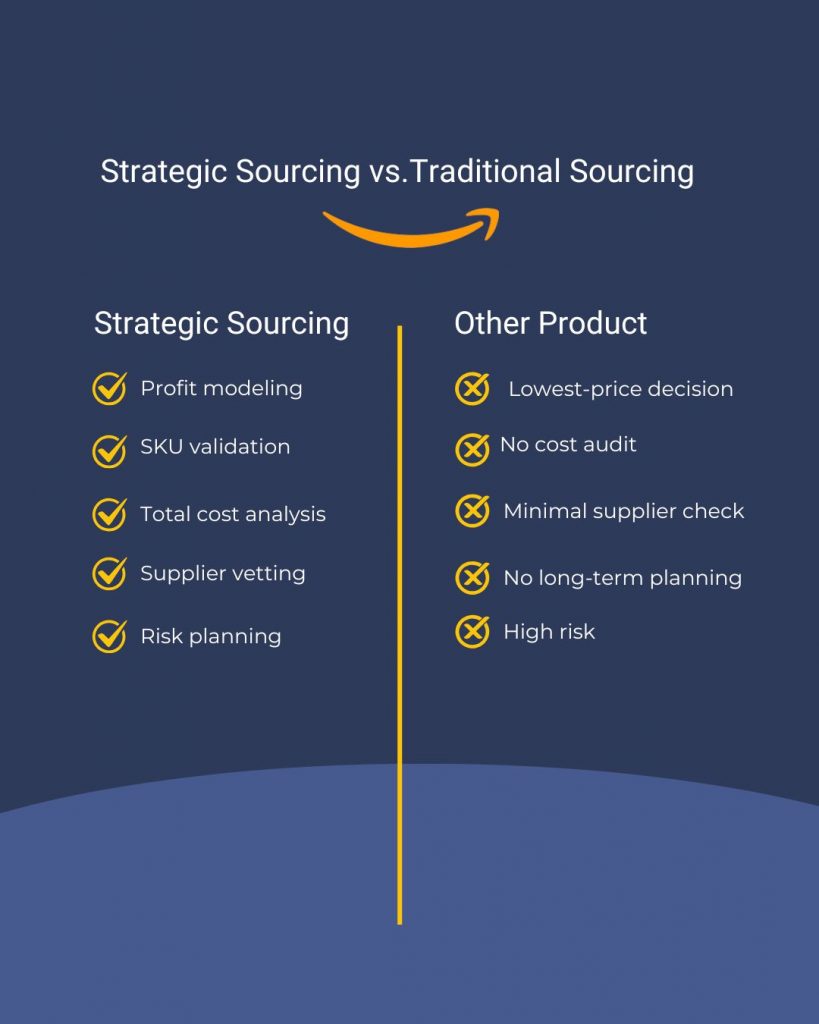
Strategic sourcing vs. reactive (traditional) procurement
The direct impact on net profit, cash flow, and brand value
Your Amazon sourcing strategy ultimately determines your:
- Net profit (through optimized cost structure)
- Cash flow (through negotiated payment terms)
- Brand value (through consistent product quality and fewer returns)
One brand my team worked with increased net profit by 18% in six months simply by optimizing their supplier portfolio without adding a single new SKU.
A strong sourcing system is often the hidden engine behind top-performing Amazon brands.
The 7-Phase FBA Sourcing Success Framework
To simplify the process, we’ve broken down strategic sourcing into a seven-phase framework. This structure helps sellers build systems instead of relying on guesswork — ultimately reducing risk and improving profit consistency.
Phase 1: Define your target profit (the cost audit)
Start by calculating your target profit and ideal landed cost. You need clear numbers before any supplier conversation begins. This includes:
- Expected FBA fees
- Packaging costs
- Shipping methods and seasonal rate changes
- PPC spend per unit
- Safety margin for material cost fluctuations
💡 Pro Tip: Use tools like Amazon FBA Calculator and Sellerboard to model different scenarios before committing to suppliers.
Phase 2: Niche mapping & market opportunity deep dive
Choosing a product requires more than checking demand — it’s about understanding your niche. We analyze customer pain points, competitor performance, and seasonal trends. Tools like Helium10 Xray and Keepa help map pricing patterns, stock fluctuations, and search volume.
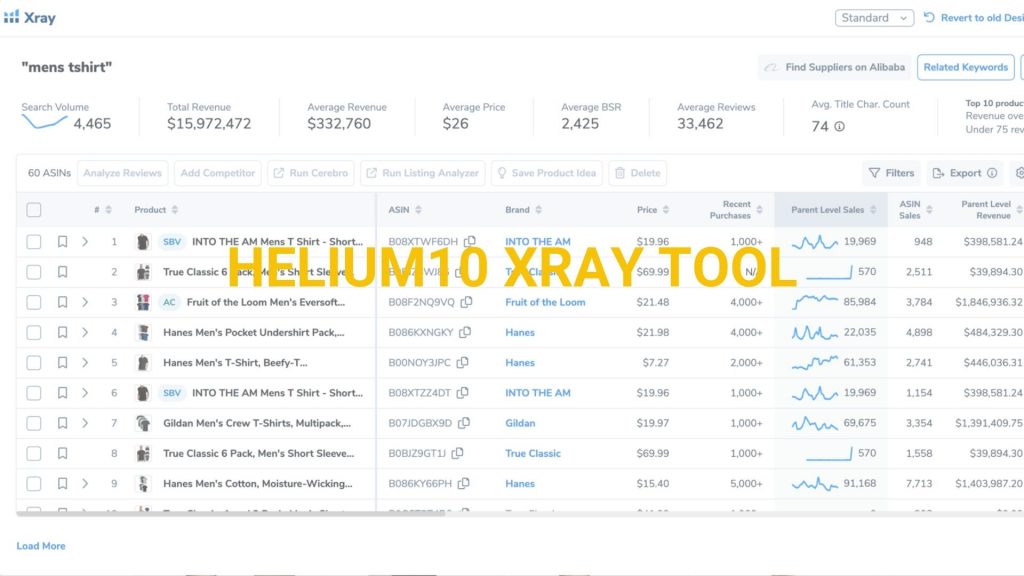
Helium10 Xray helps map pricing patterns, stock fluctuations, and search volume
Consider the example of “slow feeder bowls.” While the market seemed crowded, review analysis revealed repeated complaints about cheap plastic and odour. By sourcing FDA-approved silicone versions, the client differentiated the product and captured a premium segment.
This deep analysis reduces the risk of launching products that appear profitable on the surface but fail in real-world performance.
Phase 3: Sourcing strategy blueprint (pl, wholesale, arbitrage)
Each Amazon model has its own sourcing logic:
- Private Label (PL): Focus on customization, materials, molds, branding, and long-term supplier partnership.
- Wholesale: Success relies on reliable distributors, MAP agreements, and brand authorization.
- Online/ Retail Arbitrage: Speed, stock availability, and replenishment matter more than manufacturing partnerships.
In short, your amazon business global sourcing strategy should align with your business model, not the other way around.
Phase 4: Build a vetted supplier portfolio
Relying on a single supplier is risky. Our team prefers a small portfolio of 2–3 primary suppliers plus a backup. We evaluate them through 1688/Alibaba review verification, video audits, and sample testing.
For example, one client used a new supplier who initially promised low cost but lacked production capacity. By having a vetted secondary supplier, they avoided delays during a Q4 spike. Building this portfolio ensures you’re not scrambling when things go wrong.
Phase 5: Advanced negotiation & contract locking
Negotiation is more than getting a lower price. It includes payment terms, minimum order flexibility, production priority, and stability of raw material costs. Contracts should lock in quality standards and protect intellectual property.
💡 Negotiation is also about building trust: suppliers are more willing to prioritize clients who share forecasts, pay reliably, and communicate consistently.
Phase 6: Establish mandatory quality control gates
Quality control prevents negative reviews and return spikes. A single defective shipment can destroy ranking. Our approach uses three inspection stages: raw materials, mid-production, and pre-shipment. We also verify packaging durability and compliance certifications.
📦 Setting QC standards higher than Amazon’s minimum is always worth the investment.
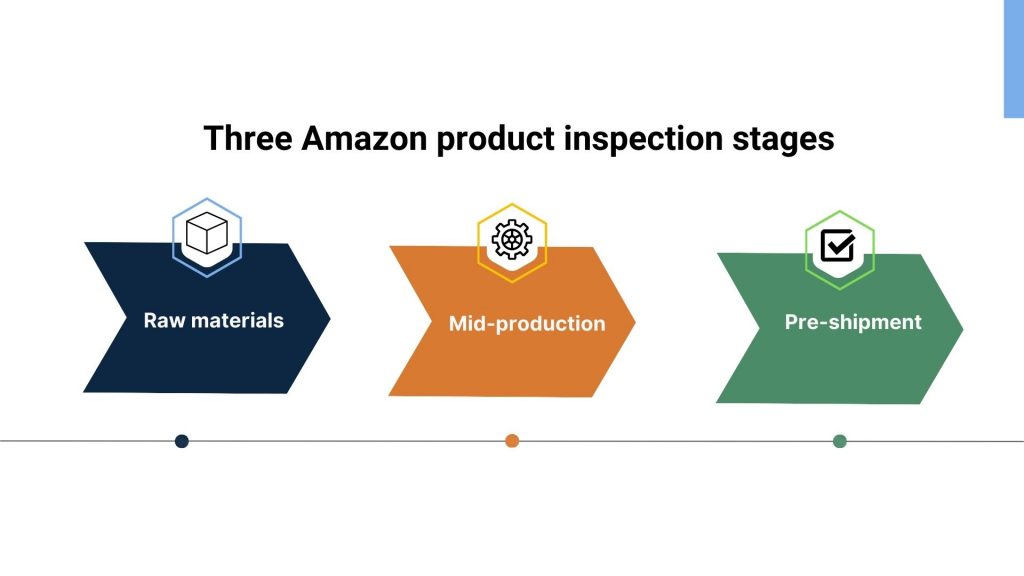
Establish mandatory quality control gates
Phase 7: Optimize logistics & manage supplier partnership
Logistics significantly affect profitability. We optimize shipping by striking the right balance between air and sea freight, consolidating shipments, and utilising 3PL warehouses. Tools like Portcast and Freightos help track shipments and predict delays.
Equally important is supplier partnership management. Regular performance reviews, transparent forecasts, and clear communication create stronger relationships. Suppliers who value the partnership will prioritize your orders during peak seasons or global disruptions, giving you a competitive edge.
>>> Read more: How To Source Products To Sell On Amazon <<<
Advanced Strategies: Cost Optimization and Margin Protection
Once your supplier network and basic sourcing framework are in place, the next step is advanced strategies that protect your margins and optimize total costs. These approaches ensure profitability even in volatile shipping, manufacturing, or market conditions.
Total cost analysis (TCA) – Going beyond the unit price
Many sellers make the mistake of evaluating suppliers solely on the unit price. In reality, the unit price is only the starting point. True profitability comes from understanding the full cost of bringing a product to Amazon and keeping it there.
A comprehensive Total Cost Analysis (TCA) includes:
- Manufacturing cost – the supplier’s FOB price.
- Shipping and freight – including sea, air, and last-mile transport fees. Tools like Freightos and Portcast can model fluctuating costs.
- Tariffs and duties – which can differ by product category and destination. Services like SimplyDuty help estimate these accurately.
- Packaging and prep – special packaging or inserts can increase cost but reduce damages and returns.
- FBA fees – including storage, pick & pack, and weight/dimensional fees. Amazon’s own FBA calculator or Sellerboard can simulate these.
- Returns and defects – poor quality can drive up hidden costs through refunds, replacements, and negative reviews.
- Cash flow impact – longer lead times tie up capital, adding an opportunity cost.
For example, a seller sourcing a kitchen appliance through a factory with a $3/unit cost was cheaper. However, once shipping, customs, and higher defect rates were accounted for, the total landed cost exceeded that of a slightly more expensive but reliable supplier by 12%. Choosing the “cheaper” unit price would have destroyed margins.
💡 Insight: TCA allows you to compare suppliers realistically. Sometimes paying a bit more per unit yields higher net profits due to reduced hidden costs and better reliability.
Leveraging advanced negotiation techniques (payment terms, volume, rebates)
Once TCA identifies profitable suppliers, the next step is advanced negotiation. A strong contract and payment strategy can significantly improve cash flow and margins.
Key negotiation tactics include:
- Payment terms adjustment – e.g., negotiating 20% upfront and 80% post-shipment can ease cash flow constraints.
- Volume-based pricing and rebates – committing to higher annual volume can unlock discounts or rebates. This works particularly well with factories that rely on consistent production.
- Shared tooling or material investments – co-investing in molds or special materials can reduce per-unit cost without burdening the supplier.
- Priority production guarantees – securing production slots during peak season ensures timely delivery and reduces stockout risk.
- Bundling and packaging negotiations – getting suppliers to include inserts, polybags, or custom packaging at no extra charge reduces operational costs downstream.

Leveraging advanced negotiation techniques
Negotiation isn’t just about cost; it’s also about creating partnerships. Suppliers value predictable clients who share forecasts and communicate clearly. This often leads to preferential treatment, faster production, and flexibility in emergencies.
Contract management for future cost stability
Even after securing terms, a contract is your safety net. Without proper documentation, you remain exposed to price hikes, late shipments, or quality failures.
A robust sourcing contract should include:
- Price locks and escalation clauses – to handle raw material fluctuations without eroding margins.
- Quality standards and defect thresholds – specifying acceptable defect rates and required testing methods.
- Lead time and production guarantees – including penalties for missed deadlines.
- Payment terms and rebates – clearly outlining due dates, early-pay discounts, or annual rebate conditions.
- IP and branding protections – critical for private label sellers to prevent copycats or unauthorized use of logos and moulds.
💡 Insight: Proper contract management transforms your sourcing from a reactive cost negotiation into a stable, predictable engine for profit and growth.
Mastering Supply Chain Risk and Resilience
In 2025, a profitable product can still fail if your supply chain is fragile. Building resilience means preparing for disruptions, diversifying sources, and maintaining consistent quality so your business can withstand delays, geopolitical events, or unexpected supplier issues.
Multi-region sourcing: The “China + N” strategy for diversification
Relying solely on one country, especially China, exposes sellers to risk. Tariffs, political tensions, labor shortages, and environmental regulations can all disrupt supply. The “China + N” strategy mitigates this risk by combining a primary supplier in China with additional suppliers in alternative regions such as Vietnam, India, Turkey, or Mexico.
This approach offers several advantages:
- Geopolitical Risk Reduction: If trade restrictions or tariffs impact one country, your secondary supplier can fill the gap.
- Lead Time Flexibility: Some regions may have faster turnaround for specific products, allowing you to balance shipping options.
- Cost Optimization: Alternative regions may offer cheaper labor or materials for certain product categories.
For example, a client producing stainless steel kitchenware in China added a Vietnamese supplier as backup. During a sudden export delay in China, they were able to airship a portion of inventory from Vietnam, avoiding stockouts and lost sales.
💡 Tip: Tools like Alibaba, 1688, and Global Sources help identify qualified suppliers in multiple regions, while Portcast or Flexport can model shipping times and costs from each region.
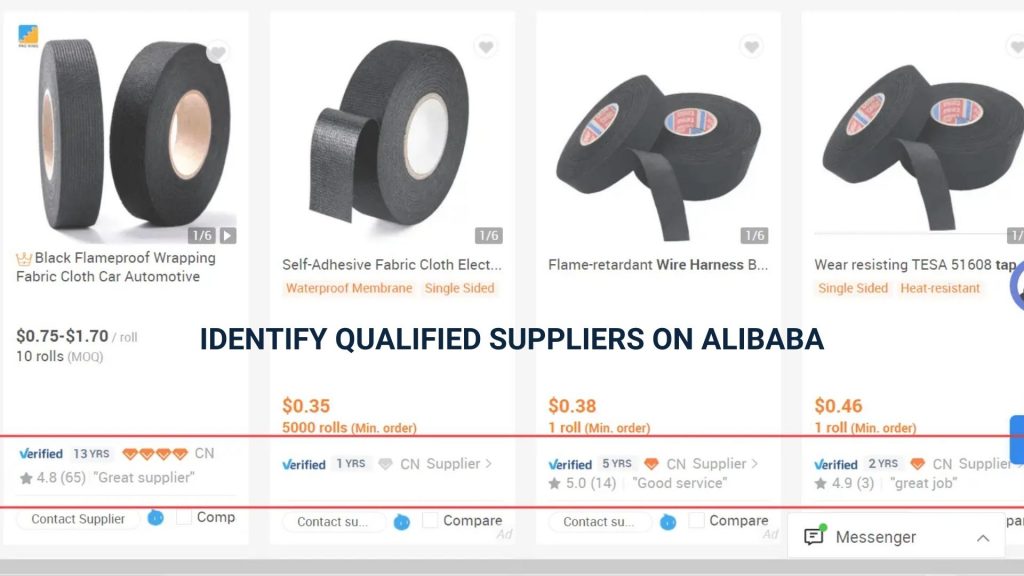
Identify qualified suppliers on Alibaba
Contingency planning for FBA stockouts and shipping delays
Even with diversified suppliers, delays can occur. Contingency planning ensures your listings stay in stock and your ranking remains stable.
Effective strategies include:
- Buffer Inventory: Keep additional inventory in a 3PL warehouse to cover unexpected demand spikes or shipment delays.
- Dual-Supplier Strategy: Assign one supplier as primary and another as backup for critical SKUs.
- Flexible Freight Options: Use a combination of sea, air, and express courier options to manage lead time fluctuations. Tools like Freightos and Flexport provide real-time shipping cost and timing estimates.
- Seasonal Planning: Pre-position inventory ahead of high-demand periods like Q4 or Prime Day.
Stockouts not only affect immediate sales but also reduce ranking and increase PPC spend once the listing is back in stock. Contingency planning prevents these long-term consequences.
Compliance insurance: Setting QC standards higher than Amazon’s minimums
Maintaining compliance goes beyond meeting Amazon’s baseline requirements. High-quality standards protect your brand, reduce returns, and prevent account suspensions.
Consider the following areas:
- Material Safety: Verify that raw materials meet FDA, CPSIA, CE, or REACH standards where applicable.
- Durability and Functionality: Conduct drop tests, weight tests, and functional stress tests beyond Amazon’s minimums.
- Packaging and Labeling: Ensure barcodes, warnings, and labeling comply with all regulations and reduce damage in transit.
- Third-Party Testing: Use labs like QIMA, SGS, or Intertek to validate compliance independently.
📦 Pro Tip: Think of QC as insurance. Spending slightly more upfront to exceed Amazon’s standards can save thousands in returns, lost ranking, and account risk.
Future-Proofing Your Sourcing: Technology and Key Trends
The sourcing landscape is evolving rapidly, and sellers who embrace technology gain efficiency, accuracy, and scalability. From AI-driven insights to sustainable sourcing and automation, future-proof strategies help Amazon sellers stay competitive while reducing risk and operational complexity.
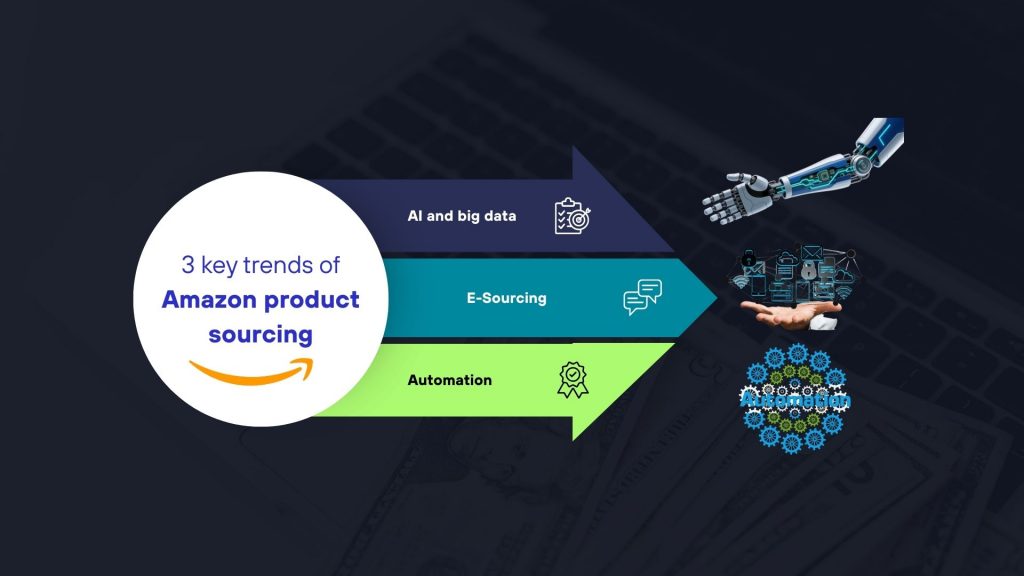
3 key trends of future-proofing Amazon sourcing
Leveraging AI and big data
Artificial Intelligence (AI) and big data analytics are transforming how sellers source products. These technologies allow you to predict trends, analyze supplier performance, and make smarter, faster decisions.
For instance, AI tools like Helium10 Trendster, Jungle Scout Opportunity Finder, and Keepa can detect rising product demand before it becomes competitive, helping you plan sourcing in advance. Big data platforms also track pricing fluctuations, supplier reliability, and historical shipping delays, allowing for precise forecasting.
AI can also help in supplier evaluation. Platforms can analyze reviews, certifications, production capacity, and historical performance, helping you quantify risk before committing to a new supplier.
The shift to E-Sourcing (ethical & sustainable)
Sourcing is no longer purely transactional; ethical and sustainable practices are increasingly expected by consumers and regulators. E-sourcing platforms that integrate sustainability metrics are becoming a key differentiator for brands.
For example, sellers now consider suppliers who provide eco-friendly materials, transparent labor practices, and recyclable or reduced packaging.
Sustainable sourcing can also enhance your brand story. For instance, you produce reusable kitchenware, emphasize BPA-free silicone and recycle packaging. Not only accomplish this appeal to environmentally conscious buyers, but it also strengthens your ranking and customer loyalty.
Ethical sourcing is not just about marketing — it reduces compliance risks, aligns with global regulatory trends, and ensures the supply chain remains resilient against disruptions tied to environmental or labor violations.
Automation in product vetting and quote management
Automation simplifies repetitive, time-consuming tasks, allowing sellers to focus on strategy. Modern tools streamline product vetting, supplier comparison, and quote management.
For example, automation platforms like Alibaba RFQ, 1688 sourcing tools, and SourcingGuides can manage multiple supplier inquiries, track quotes, and compare production timelines. Automated tracking ensures you never lose sight of MOQ, unit price, or lead times.
Our team often leverages automation to pre-screen suppliers, verify certifications, and collect production samples efficiently. For one client launching a 10-SKU product line, automation reduced supplier vetting time from three weeks to five days, allowing faster market entry without compromising quality.
📊 Additionally, automated dashboards can consolidate shipping estimates, defect tracking, and compliance checks, providing a real-time view of your supply chain performance. This ensures decisions are data-driven and timely, even across multiple regions.
Conclusion
Strategic sourcing in Amazon FBA may seem like just “finding a supplier,” but it is the backbone of your profitability, brand reputation, and long-term growth. A well-structured, resilient Amazon sourcing strategy not only reduces costs and avoids stockouts but also safeguards your margins against unexpected disruptions, quality issues, or shipping delays. By carefully selecting suppliers, negotiating terms, and implementing robust quality control, you create a supply chain that supports sustainable scaling and competitive advantage.
If navigating multi-region sourcing, supplier vetting, cost optimization, and logistics feels overwhelming, or if you want to ensure your product sourcing delivers maximum profit and reliability, the Zonpal team is ready to assist. Our Product Sourcing service helps you identify, evaluate, and secure the best suppliers while optimizing costs and mitigating risks, building a high-performing supply chain that supports your Amazon business from launch to long-term growth.