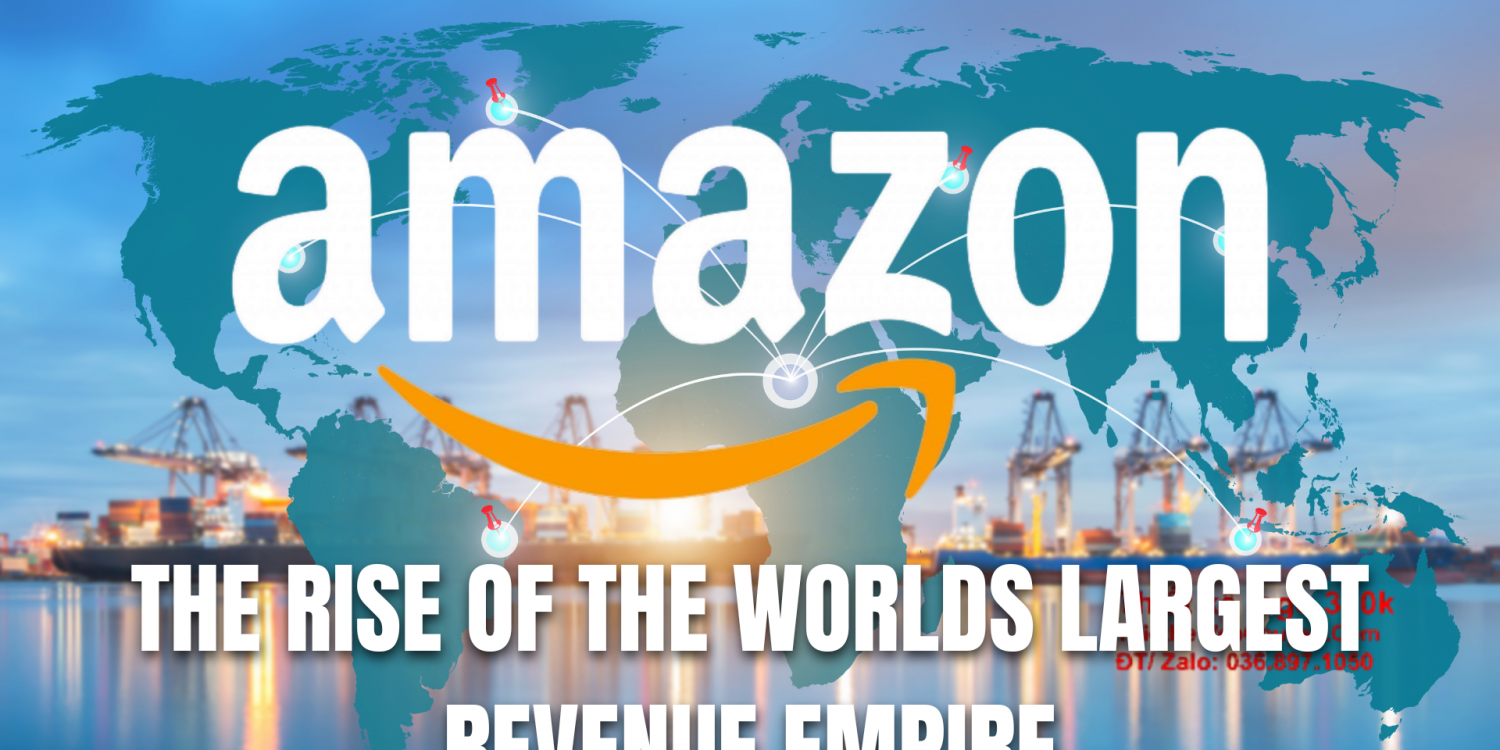
February 19, 2026, Amazon officially overtook Walmart to become the largest enterprise in the world by revenue. With a staggering record of $717 billion, Amazon did not just claim a crown held by Walmart for over a decade; it signaled the absolute victory of the digital ecosystem model over traditional brick-and-mortar retail.
The journey from a modest online bookstore founded by Jeff Bezos in 1994 to a global titan dominating cloud computing, logistics, and Artificial Intelligence (AI) is nothing short of legendary.
1. The Secret Behind the $717 Billion: More Than Just a Storefront
To the average consumer, Amazon is a brown cardboard box at the doorstep. However, looking under the hood reveals that revenue lead is built on a sophisticated multi-engine architecture that Walmart simply cannot replicate.
The Power of Amazon Web Services (AWS)
AWS is the brain and the bank account. In the race to $717 billion, AWS served as the “deciding factor” that finally broke Walmart’s decade-long siege.
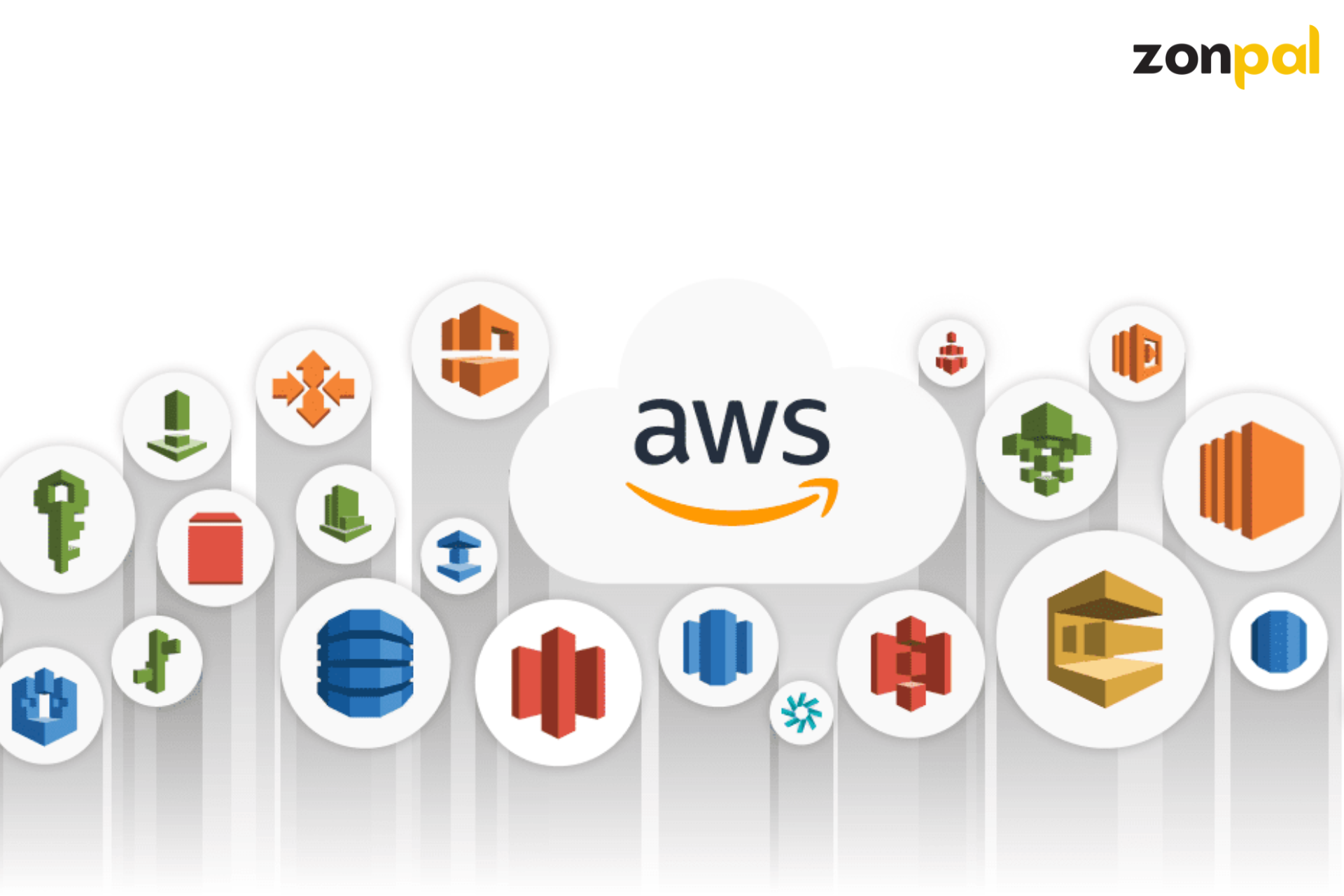
The Power of Amazon Web Services
While Walmart’s $713.2 billion revenue is built on the sweat and physical labor of moving goods through 10,000 physical stores, Amazon’s breakthrough comes from the frictionless, high-margin world of technology infrastructure.
Why This Matters for AWS vs. Walmart Rivalry
The “DNA” of AWS gives Amazon a technological flywheel. As more companies use AWS for AI, Amazon gains more data and more capital. This capital is then reinvested into Robotics for their warehouses and Predictive AI for their delivery routes.
Walmart is a master of the Supply Chain, but Amazon is the master of the Information Chain. In 2026, information has proven to be more scalable and more profitable than physical goods. By controlling the “Cloud,” AWS doesn’t just sell products; it owns the environment where those products are discovered, marketed, and analyzed.
2. The Generational Divide
The rivalry between Amazon and Walmart is frequently reduced to a “price war” or a struggle for market share.
However, by 2026, it has become clear that this is a clash between two fundamentally different philosophies of how a corporation should inhabit the world. One is built on atoms (the physical), and the other is built on bits (the digital).
2.1. Walmart: The Bastion of Physical Presence
Walmart remains the undisputed master of the tangible world. While Amazon dominates the screen, Walmart dominates the “dirt”, the actual physical neighborhoods where people live, breathe, and eat.
The 10-Mile Rule and Real Estate Dominance: More than 90% of the U.S. population lives within a 10-mile radius of a Walmart store. This is a level of physical penetration that is nearly impossible to disrupt.
For Walmart, every store is not just a shop; it is a multi-modal hub, a pharmacy, a grocery store, a bank, and a fulfillment center all rolled into one.
Logistics of the Heavy and the Immediate: Walmart perfected the art of “cross-docking” and heavy-duty terrestrial logistics decades before the first domain name was registered. Their strength lies in the Physical Touchpoint.
There is a psychological security in “The Instant”, the ability to walk into a building, feel the weight of a product, and walk out with it immediately. For heavy goods, perishables, and emergency needs, Walmart’s physical fortress remains a formidable barrier to Amazon’s digital reach.
The Human Element: Walmart’s DNA is rooted in the “Associate” model. With millions of employees, they represent a massive segment of the global workforce.
Their strategy focuses on improving the in-store experience through human interaction, even as they introduce shelf-scanning robots and automated checkouts.
2.2. Amazon: The Empire of Data and Invisible Infrastructure
In stark contrast, Amazon dominates the intangible. They do not want to be a store you visit; they want to be the “Invisible Infrastructure” that facilitates your entire existence. With over 2.7 billion monthly visits, Amazon is no longer a website, it is a digital habit.
AI Infrastructure Mastery and the “Mind-Reading” Experience: This technological vertical integration allows them to apply AI at a scale that Walmart simply cannot match.
- Predictive Shipping: Amazon often begins moving a product toward a local delivery hub before the customer even clicks “Buy,” based purely on predictive data.
- Hyper-Personalization: While Walmart sees a “customer segment,” Amazon sees a “singular individual.” Their algorithms create a shopping experience so tailored to your specific past behaviors that it feels like mind-reading, reducing the “friction of thought” in the purchasing process.

Amazon: The Empire of Data and Invisible Infrastructure
Control of the Information Flow: Every interaction is a data point:
-
Search Intent: What you looked for but didn’t buy.
-
Alexa Interactions: The ambient sounds and requests within your home.
-
Kindle Habits: What ideas and topics interest you at a foundational level.
-
Prime Video: Your cultural tastes and emotional triggers.
The Feedback Loop: This data creates a “Flywheel” effect. The more data Amazon collects, the better the AI becomes; the better the AI, the more people shop; the more people shop, the more data is collected.
This creates a surgical precision in driving consumption that traditional retail, limited by the walls of a physical building, can never achieve.
3. Selling “Infrastructure for Modern Life”
Industry analysts have reached a consensus: calling Amazon a “retailer” in 2026 is as inaccurate as calling an electricity provider a “lightbulb shop.”
Amazon has undergone a fundamental metamorphosis. It has evolved into a global infrastructure provider, a foundational layer of the modern economy that is almost impossible to bypass. This “Infrastructure Strategy” is the primary reason it was able to finally eclipse Walmart’s decades of retail dominance
3.1. Deep Penetration: The Prime Ecosystem as a Lifestyle OS
Amazon has achieved what marketers call “Total Wallet Share,” but more importantly, they have achieved “Total Time Share.” Through the Prime Ecosystem, Amazon has woven itself into the fabric of daily human behavior, creating a “Lifestyle Operating System” (OS) that influences almost every sensory experience:
The Entertainment Infrastructure (Prime Video & Music): Amazon is no longer just “renting” movies to you; they are shaping global culture. By investing billions into high-tier content, they ensure that your leisure time is spent within their digital walls. This creates a powerful emotional lock-in that traditional retailers can never replicate.
The Auditory and Smart Home Infrastructure (Alexa & Ring): Through Alexa and Ring, Amazon provides the “ears and eyes” of the modern household. This is the Infrastructure of Security and Convenience.
The Health and Wellness Infrastructure: With the expansion of Amazon Clinic and Pharmacy, the “Infrastructure for Life” now includes your medical data and prescriptions. By 2026, Amazon has positioned itself as the guardian of your well-being, providing the logistical backbone for healthcare delivery.
3.2. The Infrastructure of Infrastructures: Powering the Competitors
Perhaps the most brilliant and terrifying, aspect of AWS’s growth is its role as the “Infrastructure of Infrastructures.” Amazon has reached a level of dominance where even its competitors must pay them to exist.
The Logistics Infrastructure (FBA): AWS built the world’s most advanced private postal service. They don’t just ship their own products; they provide the logistics infrastructure for millions of other businesses. In 2026, Amazon’s fleet of planes, electric vans, and autonomous drones is a utility that the global economy depends on.
The Computational Infrastructure (AWS): As discussed, AWS provides the “digital soil” in which the modern internet grows. Amazon has successfully commoditized the “Cloud,” making it as essential as water or gas.
The AI Infrastructure (Bedrock & Titan): In the AI era of 2026, AWS is the leading provider of the models that other companies use to build their own AI. They are selling the “hammers and nails” for the AI revolution. By providing the AI models for the entire economy, Amazon ensures that it profits from every technological breakthrough, regardless of which company makes it.
4. Zonpal Amazon Agency: Partnering with the New World King
As Amazon ascends to the top of the global revenue charts, the opportunities for individual brands and SMEs (Small to Medium Enterprises) are exploding. Zonpal serves as your strategic navigator in this $717 billion ecosystem:
- Leveraging AI Power: We help you utilize Amazon’s latest AI algorithms to ensure your products appear in front of the right buyers among those 2.7 billion monthly visitors.
- Building International Storefronts: We transition traditional businesses into digital-first powerhouses, capturing the 10x growth rate of the online market.
- Brand as an Asset: In a sea of products, Zonpal ensures your brand isn’t just a commodity. We build distinct brand identities that drive sustainable, long-term revenue.
- Navigating Policy Evolution: As the world’s largest revenue entity, Amazon faces intense scrutiny and frequent policy changes. Zonpal keeps you compliant and safe.
5. Market Implications and the Billionaire Tier
Reaching the #1 spot brings both prestige and pressure. While Amazon leads in revenue, the stock market’s eyes are also on Nvidia (valued at $4.5 trillion), which provides the hardware “heart” for Amazon’s data centers.
On a personal level, founder Jeff Bezos currently holds a net worth of $228 billion, ranking him as the fourth wealthiest person on Earth. His wealth is a direct reflection of investor confidence in the Amazon “flywheel”, the idea that every part of the business feeds and accelerates the others.
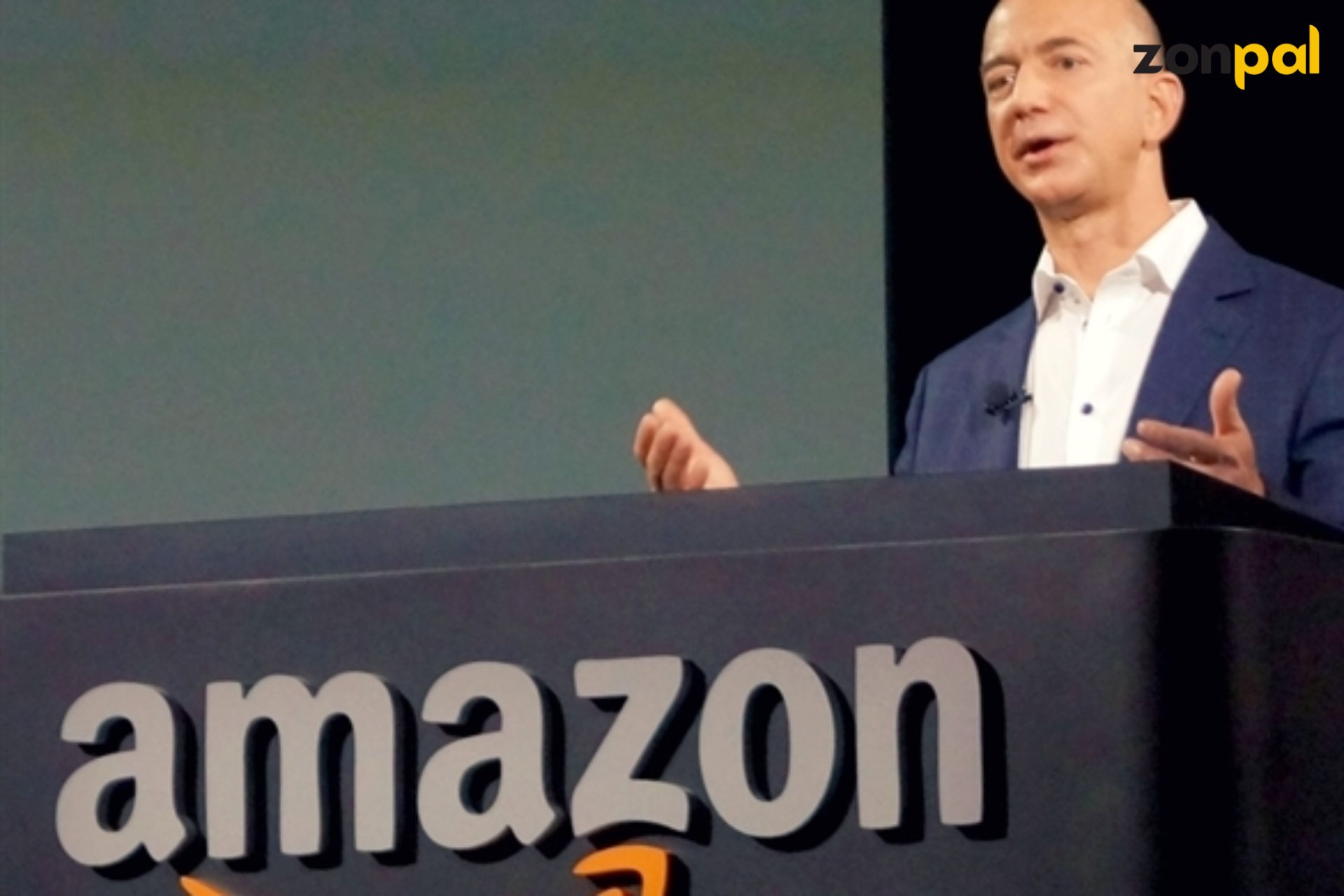
Founder Jeff Bezos currently holds a net worth of $228 billion
6. Conclusion
The $717 billion milestone is not a finish line; it is a launchpad. As we enter the heart of the AI era, Amazon’s dominance in cloud computing and data gives it an unfair advantage over any traditional retailer. Those who learn to navigate this giant with the help of experts like Zonpal Agency will find their names on the map of global commerce.