If you sell Home & Kitchen products on Amazon, you already know the category is brutal. Buyers scroll through pages of near-identical spatulas, storage bins, and knife sets, and they decide in under 10 seconds whether your listing is worth a click. A weak title, blurry lifestyle image, or vague bullet point can bury a genuinely good product under a pile of competitors that simply present themselves better.
This guide walks through exactly how we approach listing optimization for Home & Kitchen brands: what to fix first, how to write copy that converts, and which image and A+ Content choices actually move conversion rate. By the end, you’ll have a clear checklist to apply to your own catalog.
What you need before you start
Before touching a single word of copy, pull three things together: your current listing metrics (conversion rate, click-through rate, and units session percentage from Business Reports), your top 10 competitor ASINs, and a keyword list built from actual search volume data, not guesses.
You also need product photography that’s at least studio-quality on white background, ideally with 2-3 lifestyle or in-use shots already shot or planned. If your images are still on your to-do list, optimization work should wait. No amount of clever copy fixes a listing with three grainy phone photos.
Finally, decide who owns this project internally. Listing optimization touches copywriting, design, and sometimes PPC strategy at the same time. Home & Kitchen brands that treat it as a one-off task instead of an ongoing process tend to see conversion gains fade within a quarter as competitors catch up.
Step 1: Nail down your core keywords with real search intent
Home & Kitchen shoppers search in very specific ways. Someone looking for a “vegetable chopper” might actually want a “manual food processor” or “onion dicer,” and each of those terms carries different intent and different conversion expectations.
Start by pulling search term data from your existing PPC campaigns if you have them running, then cross-reference with a keyword research tool to find volume and relevancy. Group keywords into three buckets: primary (what the product literally is), secondary (use cases and materials), and long-tail (specific problems it solves, like “dishwasher safe” or “for small kitchens”).
For a stainless steel mixing bowl set, primary might be “mixing bowls,” secondary could include “nesting bowls” or “stainless steel bowls with lids,” and long-tail could be “mixing bowls for baking small kitchen.” Each bucket earns a different placement in your title, bullets, and backend terms.
Step 2: Write titles that convert, not just rank
Amazon gives you roughly 200 characters for most Home & Kitchen titles, though the visible portion on mobile is much shorter, often under 80 characters. That means your most important keyword and your strongest selling point need to appear first.
A common mistake we see is titles stuffed with every keyword variation in random order: “Mixing Bowls Set Stainless Steel Nesting Bowls Kitchen Bowls with Lids Baking Bowls Prep Bowls.” It reads like spam and buyers skip past it. Instead, structure titles as: Brand + Core Product + Key Differentiator + Material/Size + Use Case.
Something like “Brand Name Stainless Steel Mixing Bowls Set, 6-Piece Nesting Bowls with Airtight Lids for Baking and Meal Prep” hits the primary keyword early, includes a differentiator (airtight lids), and closes with use case. It’s readable and it still carries the keywords that matter for search.
Step 3: Build bullet points around use cases and objections
Bullet points are where most Home & Kitchen listings lose the sale. Sellers list generic features (“durable,” “high quality,” “easy to clean”) without explaining why that matters to someone standing in their kitchen trying to decide.
We rewrite bullets around three things: the problem it solves, the objection it removes, and the proof that backs it up. For a knife set, instead of “high carbon stainless steel blades,” try “Stays sharp through months of daily chopping, no weekly sharpening needed, thanks to high carbon stainless steel construction tested for edge retention.”
Every bullet should answer an unspoken question a buyer has before adding to cart: Will this fit my drawer? Is it actually dishwasher safe or just labeled that way? Will the lid actually seal or will it leak in my bag? Address those directly and you’ll see fewer returns along with better conversion, since expectations are set correctly upfront.
Step 4: Design images that sell the “in-use” moment
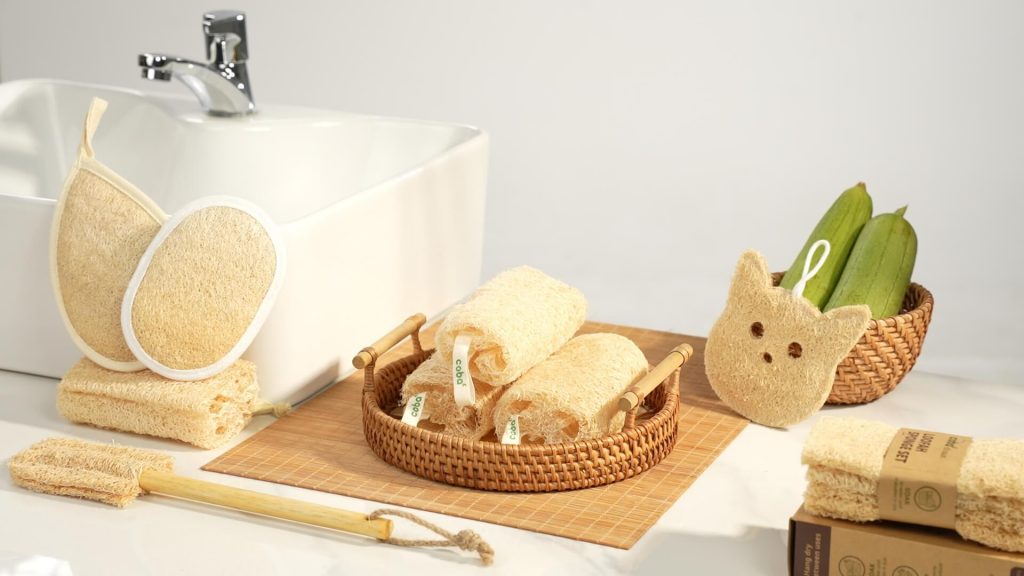
Home & Kitchen is one of the most visual categories on Amazon. Buyers want to picture the product on their counter, in their cabinet, or in their hands before they trust it enough to buy.
Your main image needs to be clean, on white background, and compliant with Amazon’s image requirements, but images 2 through 7 are where conversion actually happens. We recommend at minimum: one image showing scale (a hand holding the product or it next to a common object), one lifestyle shot in an actual kitchen setting, one infographic highlighting 2-3 key specs, and one comparison image if your product outperforms a specific alternative (like glass versus plastic, or manual versus electric).
A brand we worked with in the kitchen storage space added a single infographic image showing capacity comparisons against a leading competitor. That one image change alone contributed to a measurable lift in conversion rate within the following month, without any changes to price or PPC spend.
Step 5: Optimize A+ Content for trust and cross-sell
A+ Content isn’t just a nice-to-have for Home & Kitchen brands, it’s often the deciding factor between two similarly priced, similarly reviewed products. Buyers who scroll down that far are already interested. Your job is to close the gap between interested and convinced.
Structure A+ modules around: a brand story module (short, one paragraph, not a full history lesson), a comparison chart against your own product line or key competitors, a “how it works” or “what’s included” module with clear photography, and a lifestyle module showing the product across different use cases (meal prep, entertaining, storage, etc).
If you’re enrolled in Brand Registry, Premium A+ Content with video adds another layer of trust, especially for higher-priced Home & Kitchen items like cookware sets or countertop appliances where buyers do more research before purchasing. We’ve found video modules particularly effective for products with a learning curve, like multi-function cookers, where a 20-second demo answers more questions than three paragraphs of text ever could.
Step 6: Clean up backend keywords and search terms

Backend search terms are the most neglected part of listing optimization, mostly because they’re invisible to buyers and easy to forget once the visible copy is done. But they still matter for discoverability, especially for keyword variations you couldn’t fit naturally into your title or bullets.
Use the full character allowance, avoid repeating words already in your title (Amazon’s algorithm already indexes those), skip punctuation and filler words, and never include competitor brand names, which violates Amazon’s terms of service and can trigger a listing suppression.
For a Home & Kitchen product, backend terms are a good place for spelling variations (“colour” versus “color” for UK/AU listings), synonyms your main copy didn’t use (“chopping board” if your title says “cutting board”), and seasonal terms if relevant, like “holiday gift” for a gift-worthy product during Q4.
Common mistakes (and how to avoid them)
We see the same handful of mistakes across Home & Kitchen catalogs, regardless of brand size:
- Keyword stuffing in titles. It hurts readability and mobile click-through more than it helps ranking. Prioritize clarity over cramming in every variation.
- Generic bullet points with no proof. “Durable” and “high quality” mean nothing without a specific detail or claim backing them up.
- Ignoring mobile preview. Over half of Amazon traffic is mobile. If your title, first bullet, and main image don’t work on a small screen, you’re losing sales before the buyer even scrolls.
- Treating optimization as a one-time task. Competitors update their listings constantly. A listing optimized a year ago is likely stale today, especially in a fast-moving category like Home & Kitchen.
- Skipping A+ Content because “the product speaks for itself.” It rarely does, especially against competitors who invested in comparison charts and lifestyle imagery.
If any of these sound familiar, they’re usually the fastest wins available in your account right now, faster than launching a new product or increasing ad spend.
Wrapping up
Listing optimization for Home & Kitchen brands isn’t a single fix, it’s a combination of keyword strategy, copy that addresses real buyer objections, imagery that sells the in-use moment, and A+ Content that builds trust before the click to buy. Small, specific changes, like a comparison infographic or a rewritten bullet point, often move conversion rate more than a price cut ever would.
If you’d rather have a team that lives in Home & Kitchen listings every day handle this for you, our listing creation and optimization service covers keyword research, copywriting, image direction, and A+ Content design end to end. We typically start with an audit of your current listings against top competitors, so you know exactly where the gaps are before we touch anything.