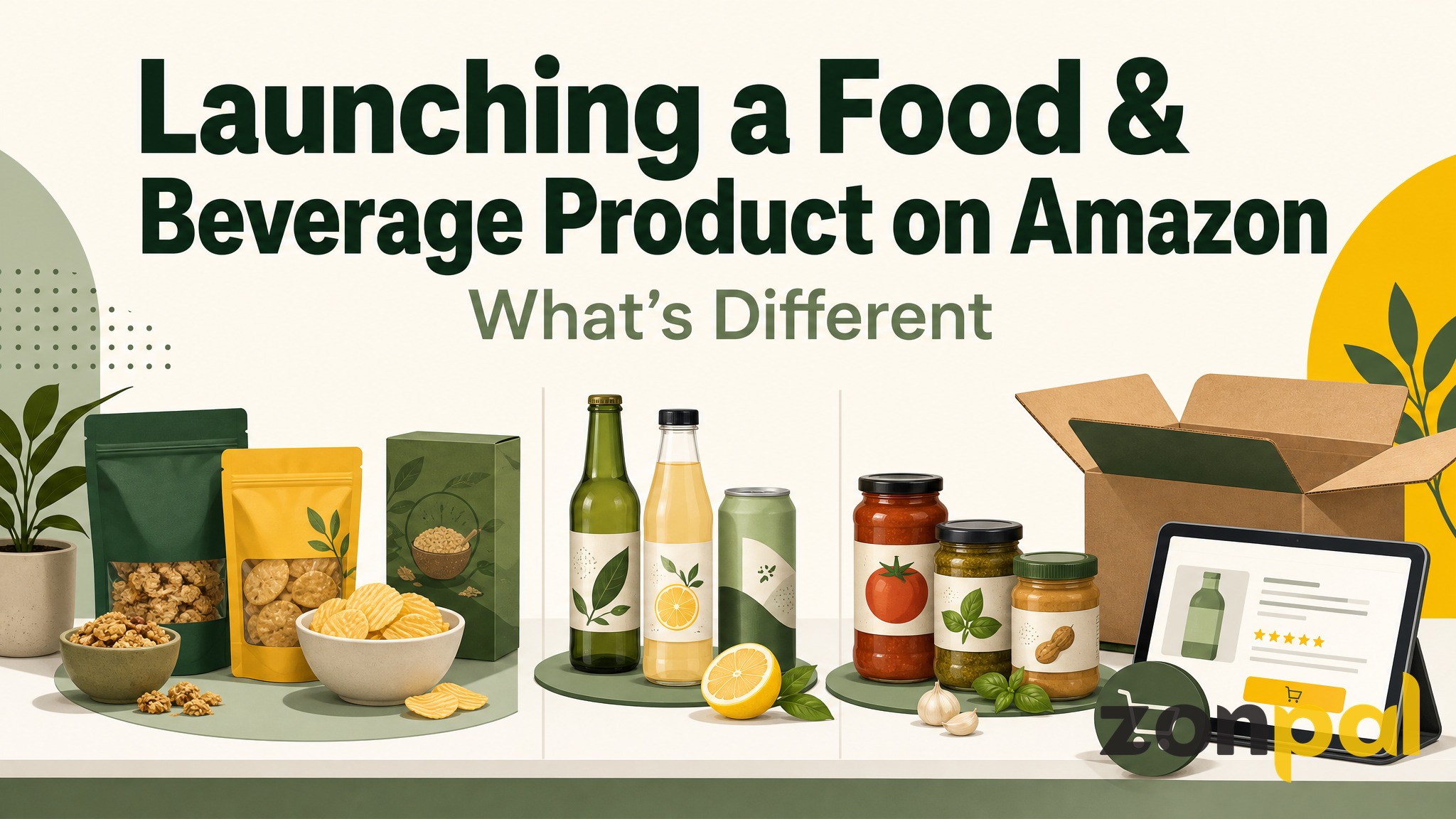

Most Amazon sellers who move from general merchandise into food and beverage assume the playbook stays the same. Find a gap, source a product, launch with PPC and reviews. Then the first shipment gets flagged at customs for missing nutrition labeling, or the listing gets suppressed because the ingredient claim triggers an FDA review.
Food and beverage (F&B) is one of the least forgiving categories on Amazon. Shelf life, labeling law, and category-specific approval gates can stall a launch for weeks before a single unit sells. This guide walks through what actually changes when you launch F&B on Amazon, and how to build a research process that catches the landmines before they cost you inventory.
What you need before you start
Before you touch keyword tools or supplier quotes, you need three things in place that don’t matter as much in other categories.
First, a category approval plan. Many F&B subcategories on Amazon (supplements, certain beverages, baby food) require you to apply for ungating before you can list. This isn’t automatic and can take one to three weeks depending on the documents Amazon requests.
Second, a compliance reference point. You need to know whether your product falls under FDA labeling rules, USDA rules, or both, because the label requirements differ. If you’re importing, you also need to know whether the country of origin affects import documentation for food products specifically, which is stricter than general merchandise customs clearance.
Third, realistic margin math that accounts for cold chain or expedited freight if your product is perishable. F&B often has thinner margins than other categories once you factor in shelf life losses and FBA storage limits on aging inventory.
Step 1: Map the regulatory layer before you pick a product
In most categories, product research starts with demand. In F&B, it starts with “can I legally sell this the way I want to sell it.”
Every food product sold in the US needs to comply with FDA labeling requirements: nutrition facts panel, ingredient list in descending order by weight, allergen declarations, and net weight statement. If your product makes a health claim (“supports immunity,” “boosts energy”), that claim needs substantiation or you risk a takedown, not just a warning.
We’ve seen sellers source a promising snack product, get samples approved, then discover during listing setup that Amazon’s category gate requires proof of FDA facility registration for the manufacturer. If your supplier doesn’t have that on file, your launch stalls until they do.
The fix is sequencing: confirm the regulatory path (FDA registration, labeling compliance, any required certifications like organic or non-GMO if you plan to claim them) before you commit to a supplier or order samples. This single step eliminates the majority of F&B launch delays we see.
Step 2: Validate demand and margin with category-specific filters
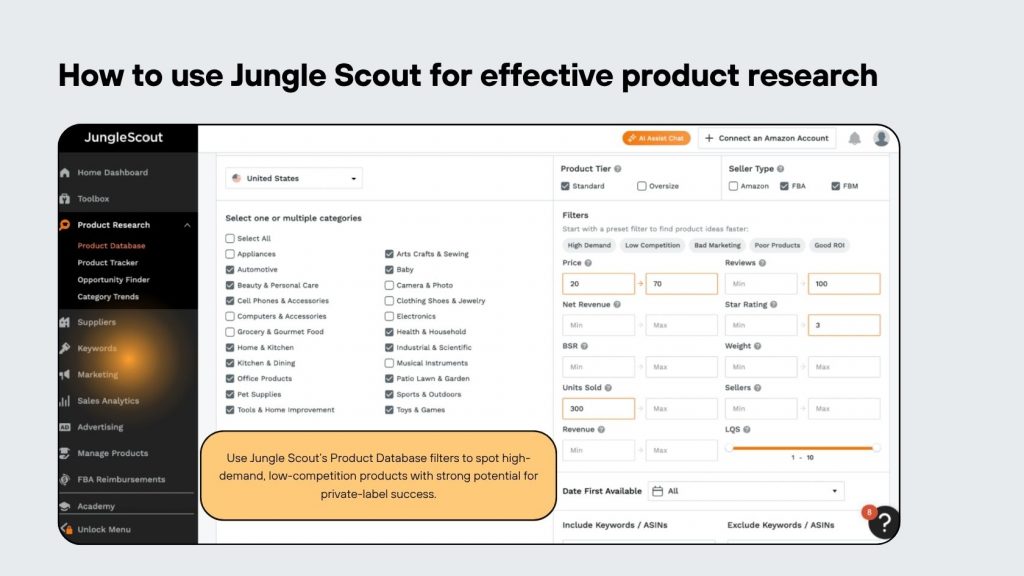
Standard product research tools (search volume, competitor review count, estimated sales) still apply, but you need to layer in F&B-specific filters that other categories don’t require.
Check shelf life against your fulfillment plan. If a product has a 9-month shelf life and you’re sending it to FBA, Amazon’s inventory age policies mean you need sell-through fast enough that units don’t sit past the point where Amazon flags them as expiring inventory. A product with a 6-month shelf life is a much harder FBA fit than one with 18 months.
Look at return and complaint patterns in competitor reviews specifically for taste, packaging damage, and “arrived expired” complaints. F&B products get 1-star reviews for reasons that don’t apply to other categories, like a jar arriving with a broken seal or a product tasting different from a previous batch. These reviews tell you where competitors are cutting corners on packaging or quality control, which is often your opening.
On margin, build your model with realistic freight assumptions. Perishable or temperature-sensitive F&B often can’t ship via standard ocean freight without additional packaging costs (insulated liners, ice packs, faster transit times), which changes your landed cost math versus a non-perishable product in the same category.
Step 3: Rethink sourcing around consistency, not just cost
In most categories, sourcing research focuses heavily on unit cost and MOQ. In F&B, consistency of taste, texture, and formulation matters as much as price, because inconsistency is what kills repeat purchase and tanks your review rating.
We recommend requesting at least two production batches from a shortlisted supplier before committing, not just one sample batch. Taste and texture can shift between small sample runs and full production runs, especially with natural ingredients that vary by harvest or season. A supplier who nails the sample but can’t replicate it at scale is a bigger risk in F&B than in almost any other category.
Also verify the supplier’s food safety certifications match what your target market requires. In the US, that typically means confirming FDA facility registration and, depending on the product, HACCP or similar food safety plan documentation. Skipping this check is one of the more common mistakes we see sellers make when they treat an F&B supplier search like a general product sourcing search on a typical Amazon sourcing checklist.
Step 4: Build a listing that satisfies compliance and still converts
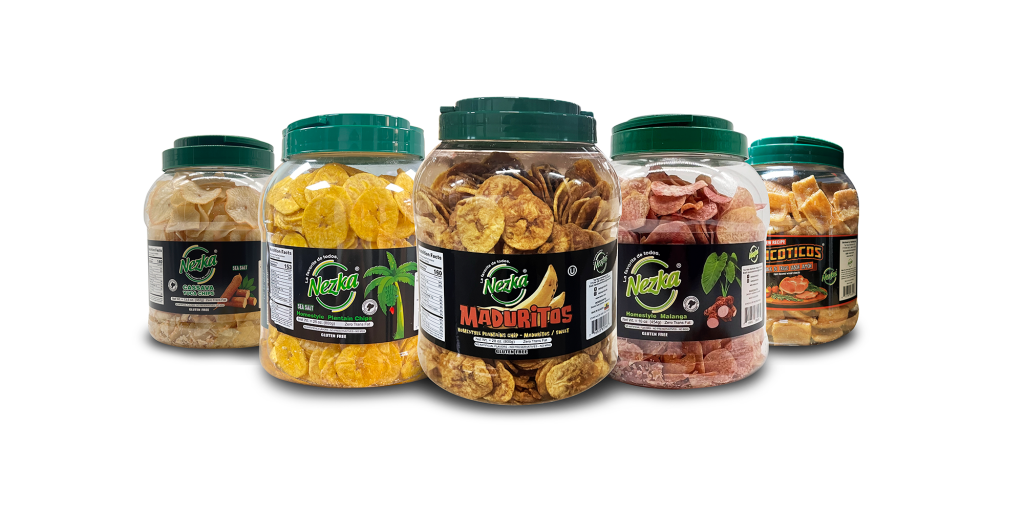
Your product listing images need to include a clear, legible nutrition facts panel and ingredient list, not just lifestyle shots. Amazon increasingly requires this for F&B listings, and buyers expect it before they’ll trust a food product from a brand they don’t recognize.
Write your bullet points around what actually drives F&B purchase decisions: taste, texture, use case, and dietary fit (gluten-free, keto, low-sugar, allergen-free). These functional claims convert better in F&B than generic value propositions like “premium quality” because buyers are making a health and taste decision, not just a price comparison.
Be precise with claims. If you say “no artificial preservatives,” your ingredient list needs to back that up exactly, because F&B buyers (and competitors) read ingredient lists closely and will flag inconsistencies in the review section, which then becomes public and hard to walk back.
If you’re unsure how detailed your compliance documentation needs to be for a specific subcategory, this is a good moment to get a second set of eyes before you launch. This is one of the areas where a structured product research process pays for itself, because catching a labeling gap before launch is far cheaper than a suppressed listing after you’ve already sent inventory to FBA.
Step 5: Plan your launch timeline around approval lead time, not ad spend
In most categories, launch planning centers on PPC budget and review velocity. In F&B, the bottleneck is usually approval lead time: category ungating, any required certifications, and Amazon’s own review of your listing content before it goes live.
Build a buffer of two to four weeks into your launch calendar specifically for approvals. We’ve seen sellers set a launch date, book influencer or PPC campaigns around it, then have to push everything back because category approval took longer than expected. That wasted ad spend and missed campaign windows are avoidable with better sequencing.
Once you’re cleared to launch, review velocity still matters, but weight your review generation strategy toward taste and freshness feedback specifically. Early reviews that confirm “arrived fresh” and “tastes great” do more to convert new F&B buyers than generic 5-star ratings, because taste and freshness are the two things buyers can’t verify from a product image.
Common mistakes (and how to avoid them)
These are the errors we see most often when sellers move into F&B for the first time:
- Sourcing before confirming regulatory fit. Always confirm FDA/USDA labeling requirements and any needed certifications before you order samples, not after.
- Ignoring shelf life in FBA planning. Match your inventory replenishment cadence to your product’s shelf life, or you’ll eat losses on aging stock Amazon flags for removal.
- Treating sample batches as production-ready. Request at least two production-scale batches before committing to a supplier for a food or beverage product.
- Weak or missing label imagery. Include clear nutrition facts and ingredient list images in your listing gallery from day one.
- Underestimating approval lead time. Build a two to four week buffer for category ungating and compliance review into your launch calendar.
Wrapping up
Launching F&B on Amazon rewards sellers who front-load the compliance and sourcing diligence that other categories let you skip. The product research phase does more work here than in almost any other vertical, because the mistakes it prevents (a stalled ungating request, an inconsistent production batch, a mislabeled ingredient list) are expensive to fix once inventory is already in FBA.
If you’re evaluating an F&B product idea and want a second opinion on the regulatory and sourcing risk before you commit capital, our product research service is built to catch exactly these gaps early. We’ll help you validate demand, margin, and compliance fit before you place a supplier order.