Amazon PPC management is one of those tasks that looks simple from the outside and gets messy fast once you’re inside an account with 15+ SKUs, multiple campaign types, and a budget that needs to scale without torching your margins. Sellers usually ask us the same question after a few months of running ads themselves: should we keep doing this in-house, or hand it to an agency?
There’s no universal answer, but there is a way to make the decision with actual numbers instead of gut feeling. Below, we break down what DIY Amazon PPC management really costs in time and money, what agencies typically charge, and a framework you can use to figure out which path fits your current stage.
What DIY Amazon PPC management actually requires

Running your own PPC isn’t just “turn on auto campaigns and check back weekly.” A functioning in-house setup needs someone who understands match types, negative keyword hygiene, bid adjustments by placement, and how to read a search term report without panicking over a single bad day.
At minimum, you need one person spending 5 to 10 hours a week per active catalog of 10 to 20 SKUs. That includes bid adjustments, budget pacing, new keyword harvesting, negative keyword additions, and campaign restructuring as products move through their lifecycle. If your catalog is larger or you’re running multiple marketplaces, that number climbs fast.
You also need tools. A basic PPC tech stack usually includes a keyword research tool, a bid automation tool or rule-based system, and some way to pull and analyze search term reports beyond what Seller Central gives you natively. Most of these run somewhere between $50 and $300 a month depending on the tool and catalog size.
What agency Amazon PPC management actually costs
Agency pricing models vary, but most fall into two buckets: a flat monthly fee, or a percentage of ad spend, often somewhere in the 10% to 15% range once you’re past the entry-level tier. Flat fee models are more common for larger ad budgets because a percentage of spend stops making sense once a brand is pushing tens of thousands of dollars a month in ads.
What you’re paying for isn’t just “someone else does it.” You’re paying for a team that has already seen the failure patterns: campaigns that stall at $0 orders, ACOS creeping up after a listing change, a competitor’s bid war eating your placement. An experienced manager catches these in days, not weeks.
The real time cost: DIY vs agency
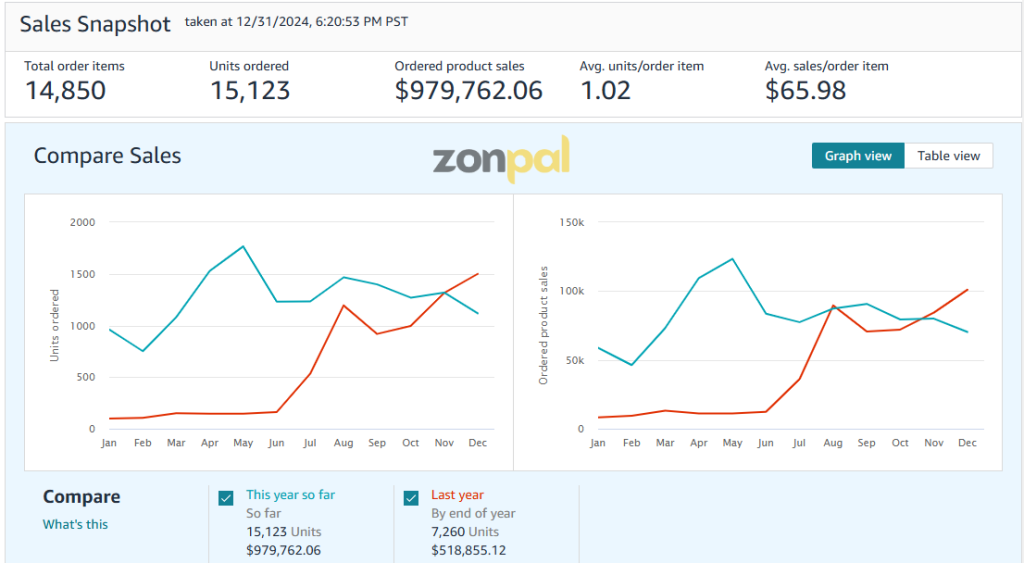
Here’s where most sellers underestimate DIY. It’s not the 5 to 10 hours a week of active management that hurts, it’s the ramp-up time before someone on your team is actually good at it. Most in-house hires or founders take 3 to 6 months of trial and error before their PPC decisions stop being guesses.
During that ramp-up window, you’re paying in wasted ad spend, not just salary. A new PPC manager testing bid strategies on a live account will burn budget on keywords that never should have scaled, or pull back too early on ones that needed more data. That’s real money, even if it doesn’t show up as a line item labeled “training cost.”
An agency skips that ramp-up because the team has already run this playbook across other accounts (details kept confidential, but patterns repeat constantly). You’re not paying them to learn on your dime. That’s the actual value exchange, not just hours saved.
The real cost comparison: tools, salary, and opportunity cost
Let’s put this side by side with rough numbers for a mid-size catalog doing around $50,000 to $150,000 a month in revenue.
- DIY in-house: part-time or full-time PPC manager salary (varies widely by market, often $35,000 to $70,000 a year fully loaded for a dedicated hire), plus $100 to $300/month in tools, plus 3 to 6 months of ramp-up inefficiency.
- Agency: flat fee or percentage of spend, typically landing between $1,000 and $4,000+ a month depending on ad budget and scope, with no ramp-up period and no tool subscriptions on your side.
At lower ad budgets, DIY often wins on raw cost. At higher ad budgets where even a 2-3% improvement in ACOS translates into thousands of dollars a month, the agency fee tends to pay for itself through performance gains alone, not just time saved.
When DIY makes sense

DIY management works well in a few specific situations. If you’re pre-launch or just launched and running under $3,000 to $5,000 a month in ad spend, the stakes per mistake are low enough that learning in-house is a reasonable trade-off.
It also works if you or a team member already has PPC experience from a previous brand or role. The ramp-up cost we mentioned above mostly disappears if someone already knows how to read a search term report and build a campaign structure that scales.
Finally, DIY makes sense if your catalog is small and stable, say 3 to 5 hero SKUs with established sales history. Less complexity means less room for the kind of mistakes that compound over time.
When agency Amazon PPC management makes sense
The case for an agency gets stronger as complexity increases. If you’re running 20+ SKUs, multiple marketplaces, or a mix of branded and generic keyword strategies, the coordination alone becomes a full-time job that’s hard to do well part-time.
It also makes sense if your ad spend has crossed the point where small percentage improvements matter more than the fee itself. At $20,000+ a month in spend, a 3% ACOS improvement can be worth more than what most agencies charge in a month.
We’ve seen accounts come to us after 6+ months of flat or declining PPC performance, not because the seller wasn’t trying, but because they were spread across sourcing, listing updates, and customer service, with PPC getting whatever attention was left over. That’s usually the real trigger point, not a specific revenue number.
A simple framework to decide

Instead of guessing, run through these four questions honestly:
- Ad spend level: Are you under or over roughly $10,000/month? Under tends to favor DIY, over tends to favor outsourcing.
- Internal expertise: Does anyone on your team have hands-on PPC experience, or would this be a first attempt?
- Time availability: Can you realistically commit 5-10 hours a week, every week, without it getting deprioritized when other fires come up?
- Catalog complexity: Are you managing 5 SKUs or 50, on one marketplace or three?
If you answered “DIY-favorable” to three or more of these, keep it in-house for now and revisit in 90 days. If you answered “agency-favorable” to three or more, the math usually works out in your favor to outsource sooner rather than later.
Common mistakes sellers make with this decision
A few patterns show up again and again when sellers get this wrong in either direction:
- Staying DIY too long out of sunk cost: “I already learned this much, I should keep going” even when the account has stalled for months.
- Hiring an agency with no clear scope: expecting them to also fix listing copy, images, or inventory issues that are outside PPC management entirely. Pair PPC work with a proper listing optimization pass if conversion rate is the real bottleneck, not just ad spend.
- Switching too often: changing between DIY and agency every few months resets the learning curve each time and tanks performance data continuity.
- Judging agencies only on fee percentage: a cheaper fee with worse campaign structure costs more in wasted spend than a slightly higher fee from a team that actually optimizes.
- Ignoring the handoff period: whether moving from DIY to agency or vice versa, budget 2-3 weeks of overlap to transfer campaign history and historical data properly.
If you’re still building out your foundational Amazon PPC management knowledge before making this call, our complete PPC guide for FBA sellers covers campaign structure and bid strategy basics worth knowing either way, since even agency-managed accounts benefit from an owner who understands what’s happening under the hood.
Wrapping up
There’s no version of this decision that’s purely emotional or purely financial. It’s about matching your current ad spend, catalog complexity, and internal bandwidth to the approach that actually fits where your brand is right now, not where you hope to be in a year.
If your account has crossed into the complexity or spend range where the numbers favor outsourcing, our team manages campaigns for FBA brands at this stage every day. You can see how we approach Amazon PPC management and whether it fits your current setup before committing to anything.